

Roof Insurance Claim Process in Austin, TX


Roof Insurance Claim Process in Austin, TX
If a hailstorm recently moved through your part of Austin, your roof may have damage you cannot see from the ground. Hail bruises shingle granules, cracks field tabs, and compromises flashing in ways that stay invisible until water finds its way inside, sometimes months later. By then, a straightforward claim becomes a complicated one.
RoofsOnly.com works alongside Austin homeowners through the entire claim process: from the inspection that determines whether you have a legitimate claim, through the adjuster meeting, through the settlement review and into the repair or replacement itself. We have handled hundreds of claims across Travis, Williamson and Hays County. We know what insurers look for and where claims get undervalued.
“The number one thing that makes or breaks an approval is a detailed inspection report with clear photos, written commentary on each finding, and a cover letter that tells the insurance company exactly why this claim should be approved. You have to play by their rules to win their game.”
— Jake Mullin, Owner, RoofsOnly.com
This page walks you through each step so you know what to expect before you make the first call. Schedule a free inspection or call (512) 746-7090 and we will get out to your property fast.
Understand Your Policy Before You File
Your policy type determines how much your insurer will pay and what your out-of-pocket costs will be. This is the most important thing to know before anything else happens.
Replacement Cost Value (RCV) vs. Actual Cash Value (ACV)
These are the two main coverage types for roof damage. The difference directly affects your payout.
Replacement Cost Value (RCV): Your insurer pays what a comparable new roof costs to install, minus your deductible. This is the better policy. If your roof qualifies for full replacement under RCV, you receive the full replacement cost in two installments.
Actual Cash Value (ACV): Your insurer pays replacement cost minus depreciation. A 15-year-old asphalt roof on a 20-year lifespan has depreciated significantly. You may receive 25 cents on the dollar compared to what a new roof costs. ACV policies result in much higher out-of-pocket expenses for the homeowner.
Check your policy declarations page to confirm which type you have. If you are not sure, call your insurer and ask directly before you file anything.
Chart: RoofsOnly.com Field Data
What You Actually Receive: ACV vs. RCV on an $18,000 Roof
Scenario: Austin home, 2,200 sq ft, architectural shingles, 12-year-old roof, $2,500 deductible
* Depreciation rate and recoverable depreciation amounts vary by insurer and policy terms. Values shown are illustrative based on typical Austin-area claims.
Your Deductible
Most Texas homeowner policies carry either a flat dollar deductible or a percentage-based deductible for wind and hail claims. Percentage deductibles, typically 1 to 2 percent of your home’s insured value, add up fast on higher-value Austin properties. Know your number before you start the process. A $400,000 home with a 2 percent wind/hail deductible means $8,000 out of pocket before your insurer pays anything.
Filing Deadlines in Texas
Texas gives you two years from the date of the storm to file a claim. Do not wait. Damage worsens over time and delayed claims are harder to substantiate. The sooner you document, the stronger your position.
The RoofsOnly.com Insurance Claim Process, Step by Step
Every claim we handle follows the same eight-step process. Knowing the sequence upfront removes the stress of not knowing what comes next.
Chart: Typical Claim Timeline
How Long Each Stage Takes
Based on Austin-area claims outside of major storm surge periods. Timelines extend after large hail events when adjusters and crews are backlogged.
Step 1: Free Roof Inspection
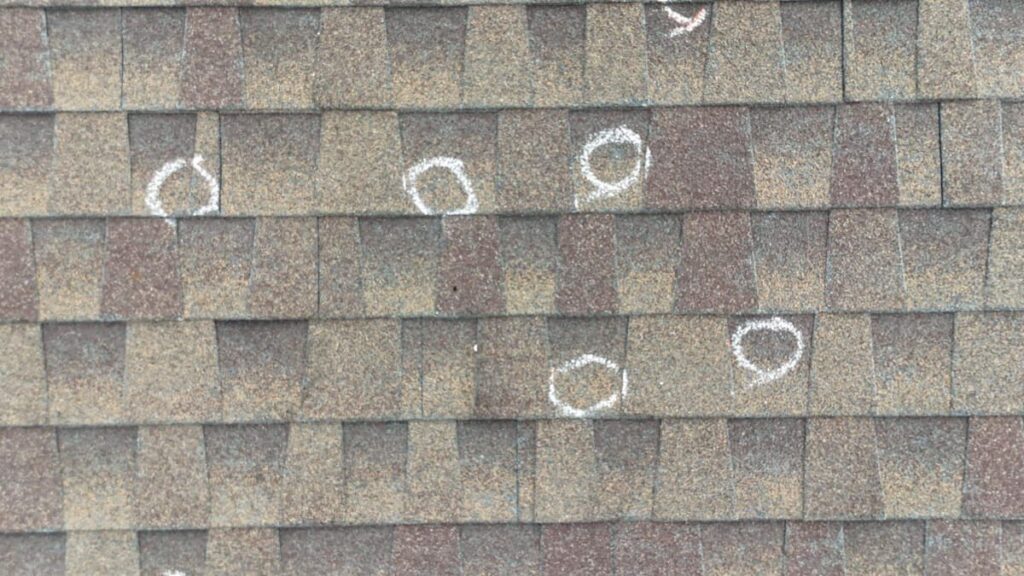
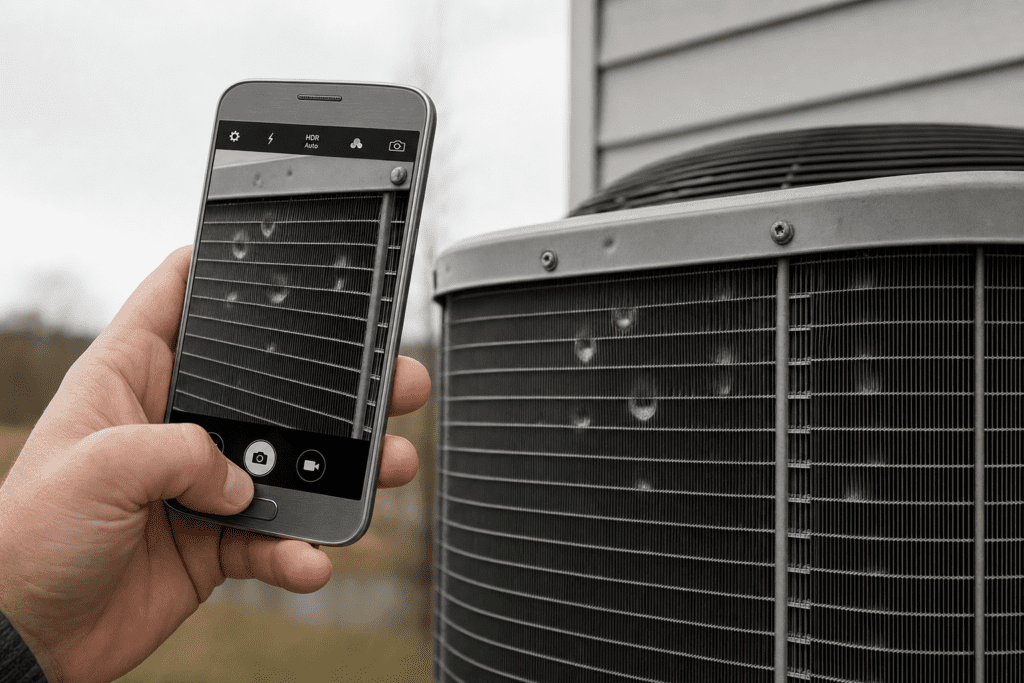
The process starts with us walking your entire roof surface, not looking from the driveway. We document what we find with the same methodology insurance adjusters use. We look for hail strikes on shingles, ridge caps and hip caps; granule loss consistent with impact damage; bruising where the mat beneath the granules has been compromised; damage to soft metals including gutters, downspouts, vents, flashing and AC units; and wind damage including lifted edges, missing shingles and damaged ridge. We also separate pre-existing wear from storm-caused damage, because that distinction matters to your insurer. If we find legitimate damage, we document it thoroughly. If we do not, we will tell you honestly. We do not file claims that are not supported by the evidence.
Step 2: Decide Whether to File
Not every roof with hail hits warrants a claim. Before you file, consider how significant the damage is relative to your deductible, whether it is widespread or isolated, what your coverage type is, and whether you have filed recent claims that could affect your premium. Filing a claim that gets denied, or that results in a payout smaller than your deductible, still shows on your record and may affect your premium. We help you make this call before you contact your insurer.
Step 3: File the Claim
Contact your insurance company directly to report the claim. You will need the date of the storm, a description of the damage and your policy number. Your insurer assigns a claim number and schedules an adjuster inspection, typically within a few days to two weeks. After a major hail event, adjusters across Austin can be backlogged. Follow up if you do not hear back within a week.
Step 4: The Adjuster Inspection
This is the most critical step. The adjuster’s job is to assess damage and determine what your insurer will pay. Adjusters are generally fair, but they work under time pressure and damage gets missed. We strongly recommend having a RoofsOnly.com inspector present during the adjuster’s visit. We point out damage the adjuster may overlook, particularly on soft metals and non-obvious areas. We speak the same technical language, discussing damage in terms of square counts, impact density and industry standards. Call us when your adjuster appointment is scheduled. We will be there.
Step 5: Review the Settlement Document
Within 5 to 10 business days after the adjuster visit, your insurer sends a settlement document showing what they will pay and how they arrived at that number. Do not accept this at face value. Common issues we find include missing line items for clearly damaged components, measurement errors that reduce the total payout, material substitutions specifying lower-grade products, recoverable depreciation not released under RCV policies, and code upgrade costs missing from the scope. If the settlement does not cover the legitimate scope of work, we file a supplement with additional documentation. Supplements are a normal, routine part of the process.
Step 6: Approval and Initial Payment
Under RCV policies, payment comes in two installments. The first check is the ACV amount, replacement cost minus depreciation, released upfront to begin the work. The second check, the recoverable depreciation, is released after the work is completed and you submit the final invoice. We walk you through exactly when and how to collect both checks.
Step 7: Repair or Replacement
Once payment is in hand, we schedule and complete the work. We are an Owens Corning Preferred Contractor, which demonstrates to insurers that we meet the installation standards backing manufacturer warranties. All work includes a RoofsOnly.com workmanship warranty on top of manufacturer material warranties.
Step 8: Documentation for Your Records
Keep copies of everything: the adjuster’s report, the settlement document, all correspondence and the final invoice. This matters if future issues arise related to the same damage and is important for disclosure if you sell the home.
Why Roof Insurance Claims Get Denied or Underpaid
Understanding where claims fail helps you avoid the same outcome. These are the five most common reasons we see claims come back short.
Chart: RoofsOnly.com Claim Review Data
Top Reasons Austin Roof Claims Are Denied or Underpaid
Based on claims reviewed by RoofsOnly.com across Travis, Williamson and Hays County
Adjuster scope errors. Adjusters work quickly across many inspections. Damage to soft metals, secondary surfaces and non-obvious areas gets missed. Having a RoofsOnly.com inspector present at your adjuster meeting is the most effective way to prevent this.
Pre-existing damage. If your roof had deterioration before the storm, insurers may attribute the damage to wear rather than the storm event. Timely filing and clear storm-specific documentation address this directly.
Insufficient documentation. Claims without clear photographic evidence of storm-caused damage are harder to substantiate. Our inspection process produces the same documentation standard insurers use themselves.
Missed filing deadlines. Texas gives you two years from the storm date. Fresh damage is easier to document and attribute to a specific event. Waiting weakens your position.
Policy exclusions. Some policies exclude certain damage types or carry specific reporting requirements. Know your policy before you file. We help you read it.
Why Work With RoofsOnly.com on Your Claim
We attend adjuster meetings. Most roofing contractors drop off a report and wait. We show up with your adjuster and advocate for a complete scope.
We handle supplements. If the initial settlement is short, we prepare and submit the supplement with documentation. No extra charge.
We do not take a percentage of your settlement. Public adjusters charge 10 to 15 percent of the settlement. We manage the same process as part of working with us, at no additional cost to you.
We are credentialed. Owens Corning Preferred Contractor status signals to insurers that our installations meet manufacturer warranty standards. That matters at settlement review.
330-plus five-star reviews across Google, BBB, Thumbtack and Trustpilot. Read what Austin homeowners say about working with us.

Frequently Asked Questions About Roof Insurance Claims in Austin
Do I need a public adjuster?
In most straightforward Austin roof damage claims, no. Public adjusters charge 10 to 15 percent of the settlement. We attend adjuster meetings, review settlements and handle supplements as part of working with us, at no additional cost. For unusually complex or disputed claims, we will tell you honestly if a public adjuster makes sense.
Will filing a claim raise my insurance premium?
It can. Texas insurers may increase premiums after claims, though they cannot non-renew your policy solely because of weather-related claims. This is one of the factors to weigh before you file, particularly if the payout would be close to your deductible. We help you think through the math before you call your insurer.
What if my claim is denied?
A denial is not necessarily final. You have the right to appeal and request a re-inspection. In Texas you also have the option of invoking the appraisal clause in your policy, which brings in independent appraisers from both sides to resolve the dispute. We help you understand your options and prepare the documentation for an appeal.
How long does the whole process take?
From initial inspection to completed roof, the typical timeline is four to eight weeks under normal adjuster workloads. After a major storm event in the Austin area, adjuster appointments and roofing crews both back up. We manage the timeline and keep you informed at each stage.
What is recoverable depreciation and how do I collect it?
Under an RCV policy, your insurer holds back the depreciation amount until work is completed. Once you submit the final invoice showing the full replacement cost was paid, the insurer releases that withheld amount. This is recoverable depreciation. We remind you to collect it and help with the paperwork. Do not skip this step. It is often several thousand dollars.
Do you work directly with my insurance company?
Yes. Once you have a claim number, we handle communication with your insurer regarding scope of work, supplements and documentation. You remain the policyholder and make all final decisions. We handle the back-and-forth.
What if hail hit my roof but my deductible is $5,000?
This is common in Austin with percentage-based deductibles on higher-value homes. We help you calculate the actual net payout before you file and weigh whether filing makes financial sense. Sometimes the honest answer is that it does not, and we will tell you that.
What does the free inspection include?
A full surface walk of your roof, documentation of all damage found with photos, an honest assessment of whether the damage supports a claim and a written summary you keep regardless of whether you proceed. No charge. No obligation. Learn more on our free roof inspection page.
Schedule Your Free Roof Insurance Inspection in Austin
If a storm has recently hit your neighborhood, the window to document and file is now. Call (512) 746-7090 or fill out the contact form and we will schedule your inspection fast. No cost, no obligation, no pressure.
We serve homeowners across Austin, Cedar Park, Round Rock, Georgetown, Leander, Pflugerville, Kyle, Buda, Dripping Springs and the surrounding areas of Travis, Williamson and Hays County.
Schedule Your FREE Roof Inspection