

Roofing Materials for Austin Homes | RoofsOnly.com


The Complete Guide to Roofing Materials for Austin Homeowners
Choosing the right roofing material is one of the most important decisions you’ll make as a homeowner — and in Austin, that decision carries more weight than in most parts of the country. We deal with triple-digit summer heat, seasonal hailstorms that can total a roof in minutes, heavy UV exposure year-round, and occasional ice events that catch both roofs and homeowners completely off guard. What works in the Pacific Northwest or the Midwest isn’t necessarily what works here.
At RoofsOnly.com, we’ve installed and replaced roofs across the Austin metro for years — from South Austin bungalows to newer construction in Pflugerville and Round Rock. We’ve seen firsthand how different materials hold up over time in our specific climate, and we’ve had a lot of conversations with homeowners who wish they’d known more before they bought their last roof.
This guide breaks down every major residential roofing material available to Austin homeowners — what each one is, how it performs in Central Texas conditions, what it costs, and who it’s best suited for. Whether you’re replacing an aging asphalt roof, building a new home, or just trying to understand your options before you start calling contractors, this is the resource we wish every homeowner had before they made their decision.
Why Your Roofing Material Choice Matters More in Austin
Austin’s climate creates a uniquely demanding environment for roofing systems. Summers regularly push past 100°F, and rooftop surface temperatures during peak heat can reach 160°F or higher — enough to accelerate the aging of roofing materials that aren’t designed for it. UV radiation here is intense and relentless. Materials that are rated for a 30-year lifespan in more temperate climates often show meaningful degradation well before that in Central Texas.
Then there’s hail. The corridor from San Antonio through Austin and up toward Waco sits squarely in what storm researchers call “Hail Alley” — one of the most active hail zones in the entire country. A severe hailstorm doesn’t just crack shingles or dent metal. It can compromise the waterproofing membrane beneath your roofing surface, leaving your home vulnerable to leaks that may not show up until months later. The material you choose determines how much protection you have when that storm comes through.
Cost matters too, but it’s worth thinking about total cost over the life of a roof rather than just upfront installation price. A roofing material that costs 30% more to install but lasts twice as long — or survives hailstorms that would require a full replacement on a lesser product — often ends up being the more affordable option over a 20-year window. We’ll break all of that down for each material below.
A Note From Our Owner
“The roofing material conversation is one I have with homeowners every single day, and the honest truth is there’s no single right answer — but there is a right answer for your house, your neighborhood, and your budget. What I always tell people is to stop thinking about what’s cheapest today and start thinking about what’s going to protect their home ten years from now. That’s the conversation we try to have every time.”
— Jake Mullin, Owner, RoofsOnly.com
Types of Residential Roofing Materials Available in Austin
There are five primary roofing material categories we work with at RoofsOnly.com for residential properties in the Austin area. Each has a distinct performance profile, cost range, and ideal use case. Below is an overview of each — click through to the dedicated material pages for deeper dives into pricing, installation details, and specific product recommendations.
- Asphalt Shingles — The most widely installed roofing material in the U.S., and the most affordable entry point for most homeowners. Available in 3-tab and architectural styles, with impact-resistant options that perform significantly better in hail.
- Metal Roofing — A long-term investment that outperforms asphalt in heat resistance, longevity, and storm durability. Standing seam and metal shingles are both popular in Austin’s newer construction market.
- Concrete Tile — A heavier, high-durability option with strong curb appeal and excellent heat performance. Common in Spanish and Mediterranean-style homes throughout the Austin area.
- Clay Tile — The original tile roofing material, with a distinctive look and impressive longevity. Heavier and more expensive than concrete tile, but often the preferred choice for high-end custom homes.
- Stone-Coated Steel — A premium hybrid product that combines the look of traditional roofing materials with the structural strength and hail resistance of steel. Growing rapidly in popularity across Central Texas.
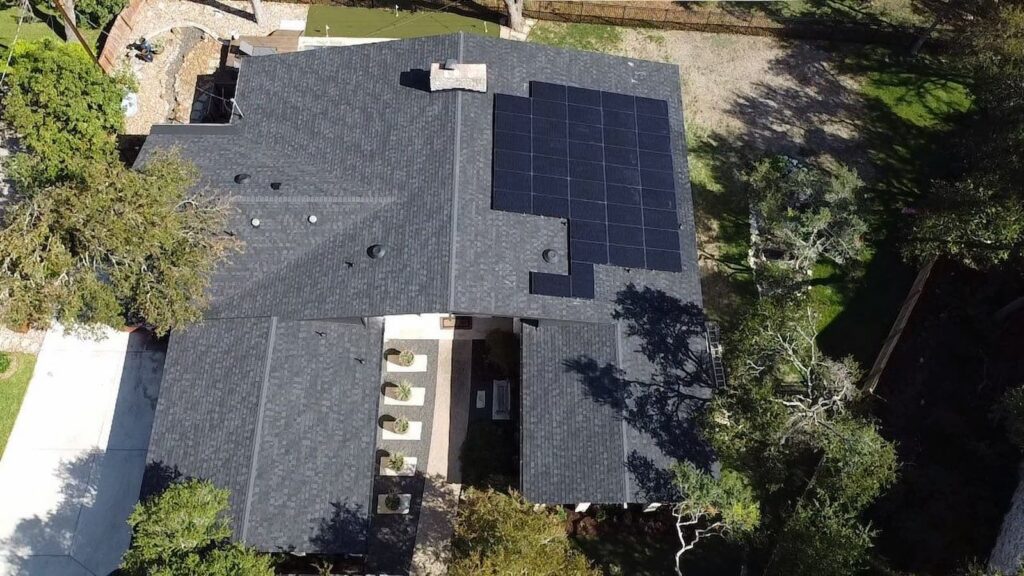
Asphalt Shingles — The Most Common Roof in Austin
Drive through almost any Austin neighborhood built in the last 40 years and the majority of roofs you see will be asphalt shingles. There’s a reason for that: they’re cost-effective, widely available, easy to install, and they come in enough colors and profiles to match virtually any home style. For most homeowners doing a standard replacement on a budget-to-mid-range project, asphalt is still the default — and often the right call.
That said, not all asphalt shingles are created equal — and this distinction matters a lot in Austin specifically.
3-Tab vs. Architectural Shingles
The traditional 3-tab shingle is thinner, lighter, and less expensive, but it has largely been replaced by architectural (also called dimensional or laminate) shingles, which are thicker, more durable, and better looking. If you’re replacing a roof today in Austin, we almost always recommend going architectural unless there’s a very specific budget constraint.
Impact-Resistant Shingles — A Game Changer for Austin Homeowners
One of the most important upgrades available in the asphalt shingle category is impact resistance. Class 4 impact-resistant (IR) shingles are engineered to withstand hailstones without cracking or breaking through the surface — and in Austin’s hail environment, that’s not a nice-to-have, it’s a serious consideration.
Beyond the protection they offer, Class 4 IR shingles can qualify you for a significant discount on your homeowner’s insurance premium — sometimes 20–30% depending on your carrier. Over the life of the roof, those insurance savings can offset much of the cost difference between standard and impact-resistant products. It’s one of the first things we discuss with any Austin homeowner doing a full replacement.
Asphalt Shingle Performance in Central Texas
- Lifespan: 15–30 years depending on product quality, installation, and how many major hailstorms you take during that window.
- Heat performance: Standard asphalt shingles can soften and blister in extreme heat. Algae-resistant and reflective options help, but this material is more susceptible to UV degradation than metal or tile.
- Hail resistance: Standard architectural shingles provide limited protection. Class 4 IR shingles offer significantly better performance and are worth the upgrade in this market.
- Cost: The most affordable roofing option — typically the lowest installed cost per square foot of any material.
- Best for: Homeowners looking for a reliable, cost-effective replacement with a wide range of color and style options.
→ Read our complete guide to asphalt shingle roofing in Austin
Metal Roofing — Built for Texas Heat and Hail
Metal roofing has made a significant leap from its agricultural and commercial origins into mainstream residential construction across Austin and Central Texas — and it’s not hard to understand why. In a climate defined by brutal heat, UV exposure, and hailstorms, the performance profile of metal roofing checks a lot of boxes that asphalt simply can’t match.
We install metal roofs regularly throughout the Austin metro, and we’ve seen how they hold up over time compared to asphalt. The difference in long-term performance is real and meaningful — particularly for homeowners who plan to stay in their home for 20 years or more.
Standing Seam vs. Metal Shingles
There are two primary metal roofing options for residential homes. Standing seam metal roofing uses continuous vertical panels with raised seams that interlock above the roofline — no exposed fasteners, excellent waterproofing, clean modern look. It’s the premium option and the longest-lasting. Metal shingles are designed to mimic the look of asphalt, wood shake, or tile while delivering the structural benefits of steel — a good middle ground for homeowners who want metal performance without the industrial aesthetic.
Metal Roofing Performance in Central Texas
- Lifespan: 40–70 years for standing seam. Metal shingles typically 30–50 years. Either option substantially outlasts standard asphalt.
- Heat performance: Excellent. Metal reflects solar radiation rather than absorbing it, which can reduce attic temperatures and lower cooling costs. Many metal roofing products qualify for ENERGY STAR ratings.
- Hail resistance: Steel roofing panels are inherently hail-resistant. Most standing seam products achieve Class 4 impact ratings — the highest available — without any additional modification.
- Noise: A common concern, but largely a non-issue with proper insulation and solid decking underneath. Modern installations are significantly quieter than older corrugated metal roofs.
- Cost: Higher upfront investment than asphalt, but lower lifetime cost when you factor in longevity, fewer replacements, and insurance premium savings.
- Best for: Homeowners planning long-term ownership who want maximum durability, energy efficiency, and hail protection.
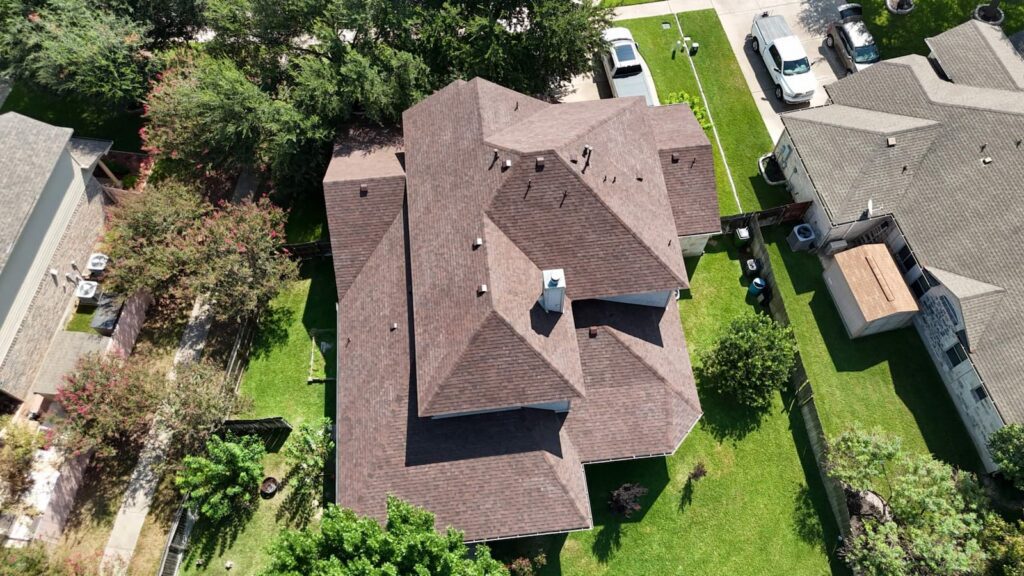
Concrete Tile Roofing — A Top Roofing Material for Austin Homes
Concrete tile roofing has been a staple of Spanish and Mediterranean-style architecture for decades, and it’s easy to see why it remains one of the most popular premium roofing options across the Austin area. It’s heavy, long-lasting, and it holds up exceptionally well in heat. If you’ve driven through neighborhoods like Steiner Ranch, Barton Creek, or the Hill Country areas west of 620, a significant portion of the tile roofs you see are concrete.
Concrete tile is made from sand, cement, and water — molded under pressure and cured to create individual tiles that interlock across the roof surface. The result is a roof that’s highly resistant to UV degradation, handles heat well, and can last 40–50 years with proper maintenance. Individual tiles that crack or break can be replaced without disturbing the rest of the roof, which lowers long-term maintenance costs significantly compared to asphalt.
Concrete Tile Performance in Central Texas
- Lifespan: 40–50 years with proper underlayment and maintenance. The underlayment beneath the tiles typically needs to be replaced at the 20-25 year mark even when the tiles themselves are still intact.
- Heat performance: Excellent. Concrete tile naturally creates an air gap between the tile surface and the roof deck, which provides passive ventilation and reduces heat transfer into the attic.
- Hail resistance: Good, but not immune. Large hailstones can crack individual tiles. The good news is that cracked tiles can be replaced individually rather than requiring a full roof replacement.
- Weight: Concrete tile is heavy — typically 900–1,100 lbs per square (100 sq ft). Your home’s structure needs to be able to support it. We assess this before every tile installation.
- Cost: Mid-to-high range. More expensive than asphalt to install, but lower long-term cost per year when you account for the extended lifespan.
- Best for: Mediterranean, Spanish, or Tuscan-style homes in Austin where the aesthetic is a priority alongside long-term durability.
→ Read our complete guide to concrete tile roofing in Austin
Clay Tile Roofing — A Premium Roofing Material for Austin Homes
Clay tile is the original tile roofing material, and it has been used on buildings across hot, sunny climates for thousands of years. The terracotta and barrel tile profiles that define so much of the architecture in Spain, Mexico, and the American Southwest are clay — and many of those roofs are centuries old. When a material has that kind of track record in heat and sun, it’s worth paying attention to.
In Austin, clay tile roofing is most common in high-end custom homes where aesthetics are a top priority. It has a richer, more varied color depth than concrete tile — the tones are more natural and complex, and they don’t fade the way painted or pigmented concrete can over time. If you want the best-looking tile roof available, clay is the material.
Clay Tile Performance in Central Texas
- Lifespan: 50–100 years. Clay tile is one of the longest-lasting roofing materials available, with many installations outliving the buildings they protect.
- Heat performance: Outstanding. Like concrete tile, the natural air gap beneath clay tile provides passive ventilation that keeps attic temperatures lower. Clay’s thermal mass also helps regulate temperature extremes.
- Hail resistance: Clay tiles are more brittle than concrete and more susceptible to cracking from large hail. However, like concrete, individual damaged tiles can be replaced without affecting the rest of the roof.
- Weight: Comparable to or slightly heavier than concrete tile. Structural assessment is required before installation.
- Cost: The most expensive tile option. Clay tile commands a premium over concrete both in materials and labor — but it’s also the last roof you’ll ever need to replace.
- Best for: High-end custom homes where long-term aesthetics and maximum lifespan are the primary goals. Homeowners who want to install a roof once and never think about it again.
Stone-Coated Steel — The Fastest-Growing Option in Austin
Stone-coated steel is the roofing product we talk about more than almost anything else right now, and for good reason. It sits in a category of its own — it looks like asphalt, wood shake, or tile (depending on the profile you choose), but it’s built on a steel core that brings the structural durability of metal roofing with it. For Austin homeowners who want maximum hail protection and long-term value but don’t love the modern look of standing seam metal, stone-coated steel is frequently the answer.
The construction is straightforward: a formed steel panel is coated with stone granules — the same type used on asphalt shingles — bonded with an acrylic film. The result is a product that’s visually indistinguishable from traditional roofing materials at street level but performs like metal under the surface. Brands like DECRA and Gerard have established long track records with these products in hail-prone markets.
Stone-Coated Steel Performance in Central Texas
- Lifespan: 40–70 years. Stone-coated steel carries some of the most comprehensive manufacturer warranties available, with many products warranted for 50 years or more.
- Heat performance: Very good. The steel substrate reflects heat effectively, and many products carry cool-roof ratings that can contribute to lower utility bills.
- Hail resistance: Excellent — Class 4 rated across most product lines. This is the primary reason we recommend stone-coated steel to homeowners in Austin who have experienced repeated hail damage or want to avoid future claims.
- Weight: Significantly lighter than concrete or clay tile. Stone-coated steel can typically be installed over existing shingles on structurally sound decks without additional reinforcement.
- Aesthetic flexibility: Available in shingle, shake, tile, and barrel profiles — meaning it can match the look of almost any existing roofing style.
- Cost: Premium over standard asphalt, but comparable to or less than standing seam metal. The insurance savings from Class 4 rating frequently offset the cost difference over time.
- Best for: Austin homeowners who want superior hail and heat protection with a traditional roof appearance. Particularly well-suited for areas of the Austin metro that see repeated storm damage.
→ Read our complete guide to stone-coated steel roofing in Austin
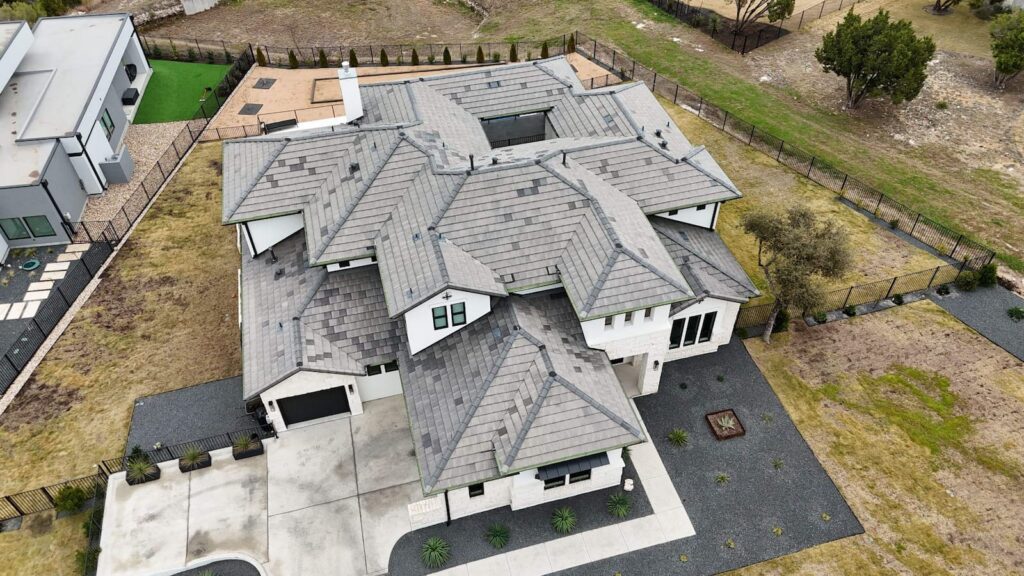
Our Standing Seam Installation Process
Standing seam is a precision system — the quality of the installation is just as important as the quality of the panels. We don’t sub out our metal roofing work. Every standing seam roof we install is handled by our own certified crew from the first nail to the final walkthrough.
- Step 1 — Free Roof Inspection: We evaluate your current roof, document existing damage with photos, assess the deck condition, and check structural integrity before anything else. You’ll know exactly what we’re working with before we quote.
- Step 2 — Panel Selection and Consultation: We walk you through panel profile options, gauge selection, color choices, and Kynar 500® finish variants. You’ll see physical samples and we’ll explain the tradeoffs at each decision point — no guessing.
- Step 3 — Full Tear-Off and Deck Inspection: We remove the existing roofing material down to the deck, inspect every square foot for rot, water damage, or structural issues, and make any necessary repairs before panels go on. This step is non-negotiable on every installation we do.
- Step 4 — Underlayment and Panel Installation: Proper high-temp underlayment goes down first, then panels are installed to manufacturer specifications. Most residential standing seam installs complete in 3–7 days depending on roof size and complexity.
- Step 5 — Final Walkthrough and Warranty Documentation: We walk the completed roof with you, confirm all flashing, penetrations, and ridge caps are finished to our standards, and hand over your full warranty documentation before we leave the job site.
Frequently Asked Questions About Standing Seam Metal Roofing
How much does standing seam metal roofing cost in Austin?
Standing seam carries a higher upfront cost than asphalt shingles, stone-coated steel, and metal shingles. For an average Austin home, installed costs typically range from $18,000 to $40,000+ depending on roof size, complexity, panel selection, and whether any deck repairs are required. The only way to get an accurate number is a free in-person estimate — costs vary too much by project for a reliable ballpark without seeing the roof.
Will a standing seam roof be loud when it rains?
No — not with a proper installation. When standing seam panels are installed over solid decking with high-temp underlayment, the sound difference from a shingle roof during rain is minimal. This is one of the most persistent myths about metal roofing, and nearly every homeowner tells us afterward that it’s quieter than they expected.
How long will a standing seam roof last in Austin’s climate?
A properly installed standing seam roof with Kynar 500® finish will last 40–70 years in Central Texas conditions. That compares to 15–18 years for a standard asphalt shingle roof in the same climate. Over a 40-year window, a homeowner with asphalt may go through two to three full replacements while a standing seam owner replaces theirs zero times.
Does standing seam roofing hold up against hail?
Yes — better than any other residential roofing material available. Most 24-gauge steel standing seam panels carry Class 4 impact ratings, the highest classification in the UL 2218 standard. That means they’re tested to withstand a 2-inch steel ball dropped from 20 feet without tearing, cracking, or creating an opening. In Austin’s hail environment, that rating is not a marketing footnote — it’s the primary reason we recommend standing seam to homeowners who have been hit multiple times.
Can standing seam be installed on any roof pitch?
Standing seam has a minimum pitch requirement — typically 3:12 or greater, though some panel profiles can go lower. For homes with flat or very low-slope sections, a different system may be required for those areas while standing seam covers the rest of the roof. We assess pitch and roof geometry during our free inspection and will identify any sections that require a different approach before we quote.
Do I need to do anything to maintain a standing seam roof?
Standing seam requires significantly less ongoing maintenance than asphalt roofing, but it’s not entirely maintenance-free. We recommend keeping gutters clear, ensuring penetrations and flashing remain properly sealed, and scheduling a periodic inspection every 5–10 years to catch any minor issues before they develop into larger ones. The panels themselves require essentially no ongoing maintenance — it’s the transition points and accessories that warrant occasional attention.
Ready to Get a Standing Seam Estimate?
Get a Free Standing Seam Estimate in Austin
If you’re seriously considering standing seam, the best next step is a free in-person inspection and consultation. We’ll walk your property, evaluate your current roof, walk through panel and color options with you, and give you a transparent quote — with no pressure and no obligation to move forward.
Call us at (512) 746-7090 or reach out through our contact form to get scheduled. We serve homeowners across Austin, Cedar Park, Round Rock, Leander, Georgetown, Pflugerville, and surrounding communities throughout the greater Austin metro.
Also see: Metal Roofing in Austin → | Compare all roofing materials →
Contact Us for Expert Standing Seam Installation in Austin
RoofsOnly.com installs standing seam metal roofing across Austin and the surrounding communities. We know the products, we know the climate, and we’ll give you a straight answer about whether standing seam is the right call for your home. Call (512) 746-7090 or visit our main office at 1005 Meredith Drive, Suite B, Austin, TX 78748.
GET A FREE ESTIMATE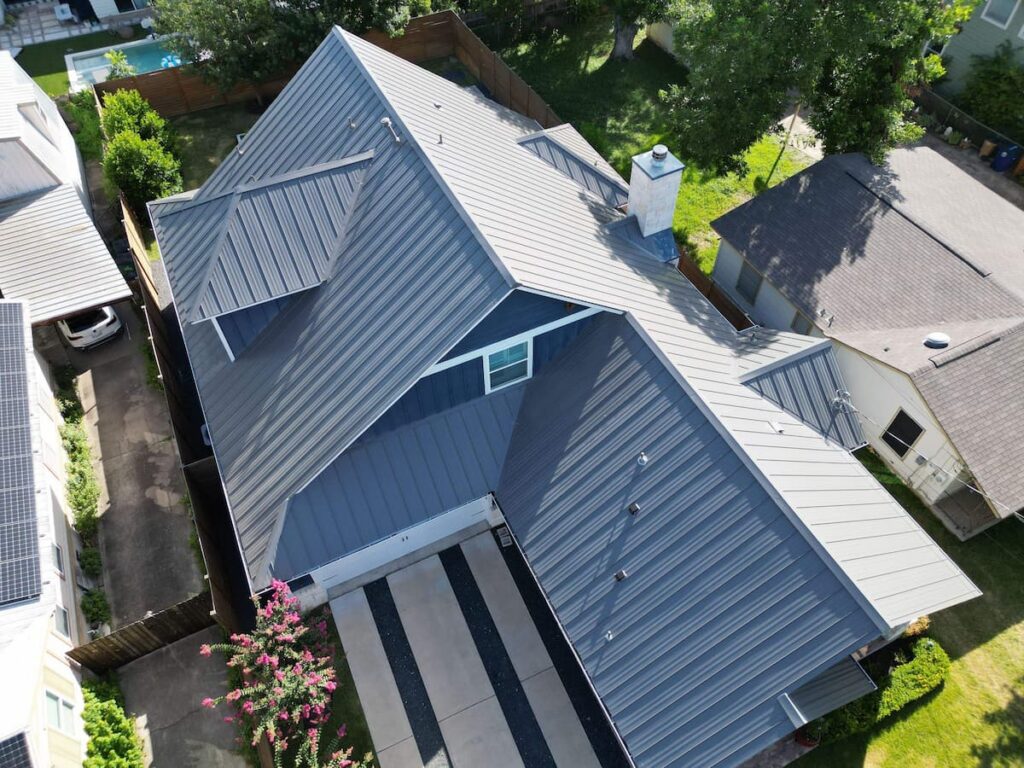
Schedule Your FREE Roof Inspection