
How to Read a Roofing Estimate Without Getting Taken — Line Items Every Austin Homeowner Should Understand

How to Read a Roofing Estimate Without Getting Taken — Line Items Every Austin Homeowner Should Understand
We handed an estimate to a homeowner in Pflugerville a few weeks back and watched her eyes go straight to the bottom. Total cost. That was the only number she looked at. “That’s a little higher than the other guy.” We asked if the other estimate showed what shingles they were using. She flipped back through it. One page. A hand-written total and a signature line.
That’s the one she almost signed.
We see this constantly. Homeowners get two or three bids, line them up, and pick the lowest number — which sounds reasonable until you realize those numbers can represent completely different scopes of work. One contractor might be planning a full tear-off with synthetic underlayment and new flashing. Another might be laying shingles over your existing ones with felt paper and no decking inspection. Same bottom line, entirely different roof.
A roofing estimate isn’t a price tag. It’s a scope of work. If you don’t know what each line means, you can’t compare bids. Here’s what every line should mean, and what to watch for.
Tear-Off / Removal
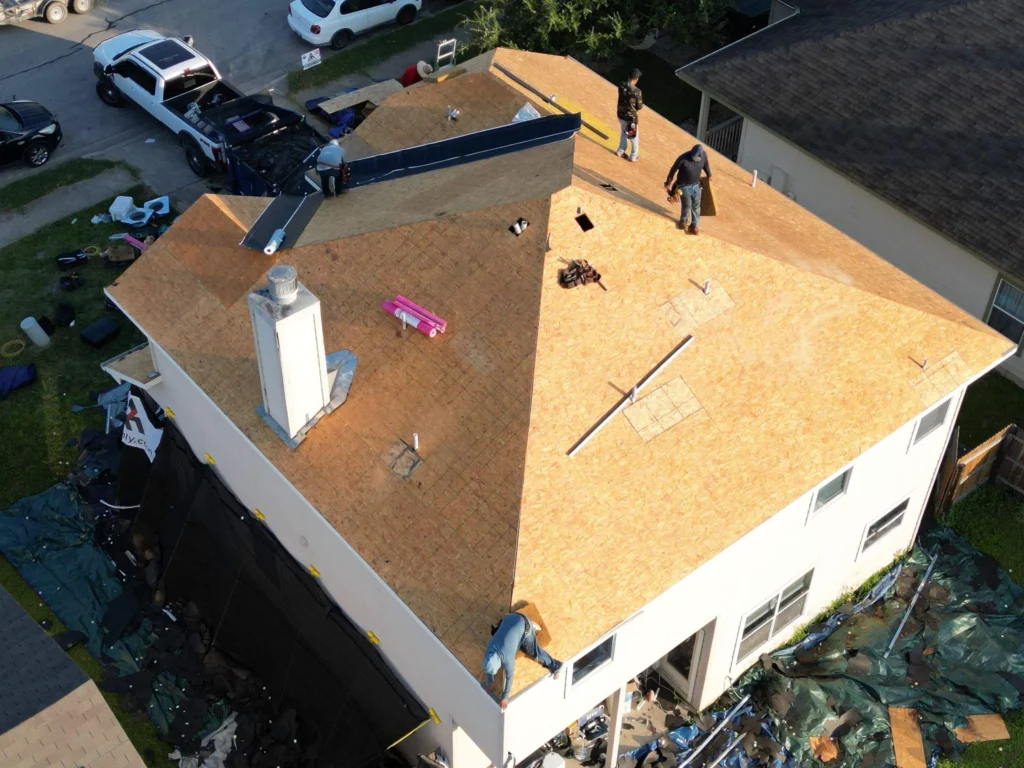
This line covers stripping your existing shingles, underlayment, and any damaged material down to the decking. It matters because tear-off and overlay are not the same job, and the difference affects your roof’s lifespan, warranty eligibility, and the contractor’s ability to inspect what’s underneath.
Overlays — installing new shingles over old ones — are cheaper upfront. They’re also not permitted in many Austin-area municipalities after a second layer, and most shingle manufacturers will void their warranty on an overlay. If your estimate doesn’t specifically say “complete tear-off,” ask. Vague language here is a problem.
This line should also reflect labor and material handling. Tearing off and loading a 2,500 sq ft roof onto a dump trailer is real work. If tear-off isn’t a separate line item, it may not be accounted for at all.
Shingle Type and Grade
The estimate should name the manufacturer, the product line, and the grade. Not just “architectural shingles.” Something like: Owens Corning Duration Series, Onyx Black, Class 4 impact-rated. That level of specificity matters.
3-tab shingles are thin, flat, and cheap — almost no one in the Austin market should be installing them on a residential replacement in 2025. Architectural (dimensional) shingles are the standard. Designer shingles step up from there in thickness, wind resistance, and aesthetics.
In Central Texas, we push impact-rated products hard. A Class 4 shingle can mean the difference between a full insurance claim and a full out-of-pocket replacement after a Georgetown-sized hail storm. “Shingles, 30 squares” on an estimate is not a spec — that’s a note on a napkin. Texas weather puts real demands on roofing materials, and what’s installed matters as much as how.
Underlayment
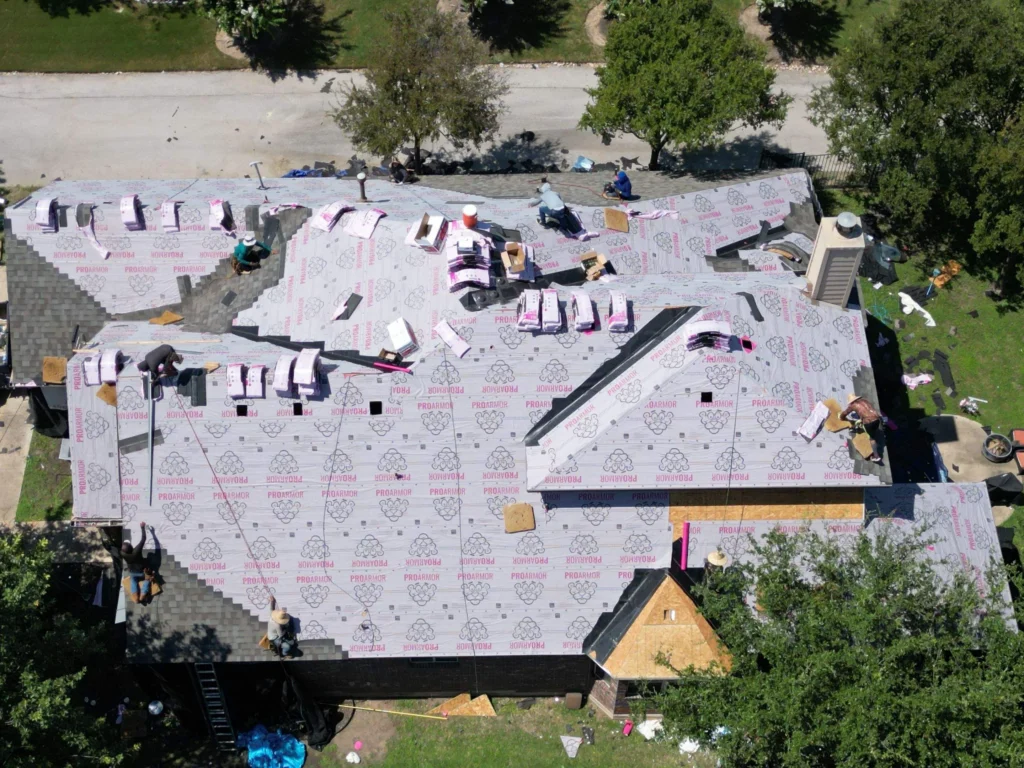
Underlayment goes between your decking and your shingles. Two options: traditional felt or synthetic. The estimate should specify which one.
Felt is cheaper. Synthetic is better — especially here. It handles UV exposure better during installation, doesn’t absorb moisture the same way, and outlasts felt under your shingles. Underlayment is the last line of defense when a shingle fails. The upcharge for synthetic is usually $200–$400 on a typical Austin-area home. Worth it every time in a state with 100-degree summers.
Decking Repairs
Roof decking — the OSB or plywood underneath everything — gets inspected during tear-off. Some of it will be soft, rotted, or delaminated. The estimate should handle this one of two ways: either a fixed allowance with a defined per-sheet or per-board rate (e.g., “$75/sheet of OSB, first 3 sheets included”), or a separate line item that clearly states the pricing method.
What it should never say: “decking TBD” or a lump-sum catch-all like “$500 for any necessary repairs.” That blank check turns into a surprise invoice on day one of your project. A complete roof replacement should price this transparently. Ask any contractor who gives you vague language here to define their per-unit rate in writing before you sign.
Flashing
Flashing is the metal that seals every roof penetration and transition — drip edge along eaves and rakes, step flashing at walls and dormers, chimney flashing, and pipe boot collars around vent stacks. Flashing failures are one of the most common causes of roof leaks, and they’re almost always underpriced by contractors cutting corners.
Every component should be replaced on a full replacement. Old pipe boots crack in Texas heat. Old drip edge rusts. If the estimate doesn’t list flashing explicitly — drip edge, step flashing, pipe boots — ask for a straight answer on each. “We’ll reuse the existing flashing” is not acceptable on a full replacement. Full stop.
Ridge Vent / Ventilation
Attic ventilation isn’t optional and it shouldn’t be an upsell. Proper ventilation — intake at the soffits, exhaust at the ridge — keeps your attic from turning into an oven that degrades shingles from the underside and drives up your AC bill. Ridge vent should be a line item. If it’s missing, ask whether it’s being installed and why it isn’t priced. Same with any box vents or turbines being capped or replaced.
Starter Strip and Hip & Ridge Cap
These are separate products from field shingles and should be priced separately. Starter strip is factory-sealed and goes along eaves and rakes before the first shingle course — engineered to prevent blow-offs. Hip and ridge cap is a thicker, flexible product that covers every hip and ridge line.
Contractors cutting costs sometimes cut field shingles in half and use them as starter. Some skip proper ridge cap. Both hurt wind resistance and longevity. If your estimate just says “shingles” with no separate line for starter and cap, ask explicitly.
Dump Fees / Haul-Off
Tear-off material has to go somewhere. A full tear-off generates several thousand pounds of shingle waste. Dump fees in Austin typically run $200–$400. Some contractors build this into labor. Either way, it needs to be accounted for on the estimate — not handed to you as a surprise invoice after the crew leaves.
Permit Fees
Austin requires a permit for roof replacements. So do Cedar Park, Round Rock, and most surrounding municipalities. Permit fees are usually $150–$400 in Travis and Williamson counties and belong on the estimate. Any contractor who tells you permits aren’t required is either mistaken or avoiding inspection. Always ask who pulls the permit before you sign — it should be the contractor, not you.
Warranty Details
A roofing warranty is two separate things and both should be in writing. The manufacturer warranty covers shingle defects. The workmanship warranty covers installation — how long the contractor stands behind their labor.
Understanding what each warranty covers changes how you evaluate bids. A 50-year shingle warranty means nothing if the contractor has a 1-year workmanship warranty and is out of business in three years. We install Owens Corning products under their Preferred Contractor program — that gives homeowners access to warranty coverage a non-credentialed installer can’t offer. Get every warranty term in the contract.
Red Flags to Watch For
- No line items — just a total. This is a blank check. You have no idea what you’re getting.
- No manufacturer or product name listed. “Architectural shingles” tells you nothing about impact rating, wind resistance, or warranty eligibility.
- Verbal promises not in writing. “Don’t worry, we’ll take care of the flashing” doesn’t hold up when you have a leak six months later.
- “We’ll figure out decking when we get up there.” Every contractor knows decking often needs repairs. An honest one prices it transparently upfront.
- No mention of permits. If permits aren’t on the estimate, ask directly. Choosing the right contractor means finding one who operates above board, not around code enforcement.
- No warranty information at all. A contractor who can’t tell you what they warrant or for how long isn’t someone you want on your roof.
What a Good Estimate Looks Like
A professional estimate is usually two to three pages. It names every material by manufacturer and product line. Labor is broken out from materials. Decking repair rates are listed per unit. Permit fees, dump fees, and warranty terms are all there. And it’s signed by a licensed contractor with a physical address — not just a phone number.
That’s what we provide on every job, from a repair in Bee Cave to a full replacement on a Steiner Ranch two-story. The cost of a roof replacement varies a lot by scope and materials — and a transparent estimate is how you know exactly what that scope is.
The Cheapest Estimate Usually Isn’t the Best Value
Look, we’re not going to tell you to ignore price. Price matters. But the reason lowball estimates are cheap is almost always found in those line items — lesser shingles, felt instead of synthetic, flashing reused instead of replaced, no decking allowance, overlays instead of tear-offs. You won’t see those differences if you only look at the total.
We had a homeowner in Round Rock come to us after the fact last year. She’d gone with the lowest bid — $3,200 less than ours. Six months after installation she had a leak at the chimney because the step flashing had been reused. The repair cost her more than the difference in the original bids.
Get at least three estimates. Make sure they’re itemized. Ask questions about anything vague. A contractor who gets annoyed that you’re asking about their material spec is telling you something important.
If you want a detailed, line-by-line estimate for your Austin-area home — from a GAF-certified, Owens Corning Preferred crew that’s been doing this for years — give us a call at (512) 746-7090 or reach out through our site. We’ll walk you through every number before you sign anything.
