
Why Your Roof Insurance Claim Got Denied (And What Austin Homeowners Should Do Next)

The adjuster came out on a Tuesday. Spent maybe twenty minutes on the roof. Took some photos on his phone. Wrote a few things on his clipboard. Said he’d send the report over.
The letter showed up nine days later.
“We have determined that the reported damage does not meet the threshold for a covered loss under your policy.”
That’s a direct quote from a letter a Round Rock homeowner showed me last month. She’d had a limb go through her back porch roof during the March 14 storm. The shingles on the main house were beat up too, but the insurance company said no. Wear and tear. Cosmetic. Pre-existing. You pick the word — they all mean the same thing when you’re the one holding the letter.
Key Takeaways
Your claim can get denied even when the damage is obvious from the ground — adjusters work from different incentives than you do.
The denial letter is not the end. It’s the start. Most people don’t know they can appeal, and insurance companies count on that.
Detailed documentation flips claims: photos of every slope, chalked test squares and soft metal hit counts.
Austin is hard on roofs. Hail comes through every spring. The insurance industry knows this and writes policies accordingly.
The Claim That Got Denied
I want to walk through a real denial because it’ll show you what’s actually happening behind the scenes.
Client in Cedar Park. April hail event. Marble-sized hail, maybe a little bigger in spots. Her car had dents. The back of the car, where the rear windshield meets the roof — that whole panel was dimpled. Hood was dimpled too. You could run your hand across it and feel it.
Her roof was a 14-year-old architectural shingle. Owens Corning. Still had some life on paper.
Adjuster came out. Said he saw a few hits but not enough to call it. Recommended partial repair of maybe six shingles. Wrote the report. Claim denied for full replacement.
Here’s what he missed. Or didn’t miss — he probably saw it. But didn’t document it.
On hailstorms, you get impact on the soft metals first. Gutters, vents, flashings. Because those deform visibly while asphalt shingles can hide their damage under granule loss that only really shows up months later. When we went up, her gutter aprons were pockmarked. The turbine vents on the ridge had dents in them. The ridge cap itself had three clear hits where you could see granule loss down to the mat.
We pulled the adjuster’s report. He’d photographed one slope. Not the north slope. Not the gutters. Not the vents.
That’s not incompetence, necessarily. It’s just how the job gets done when you’re looking at eight houses a day.
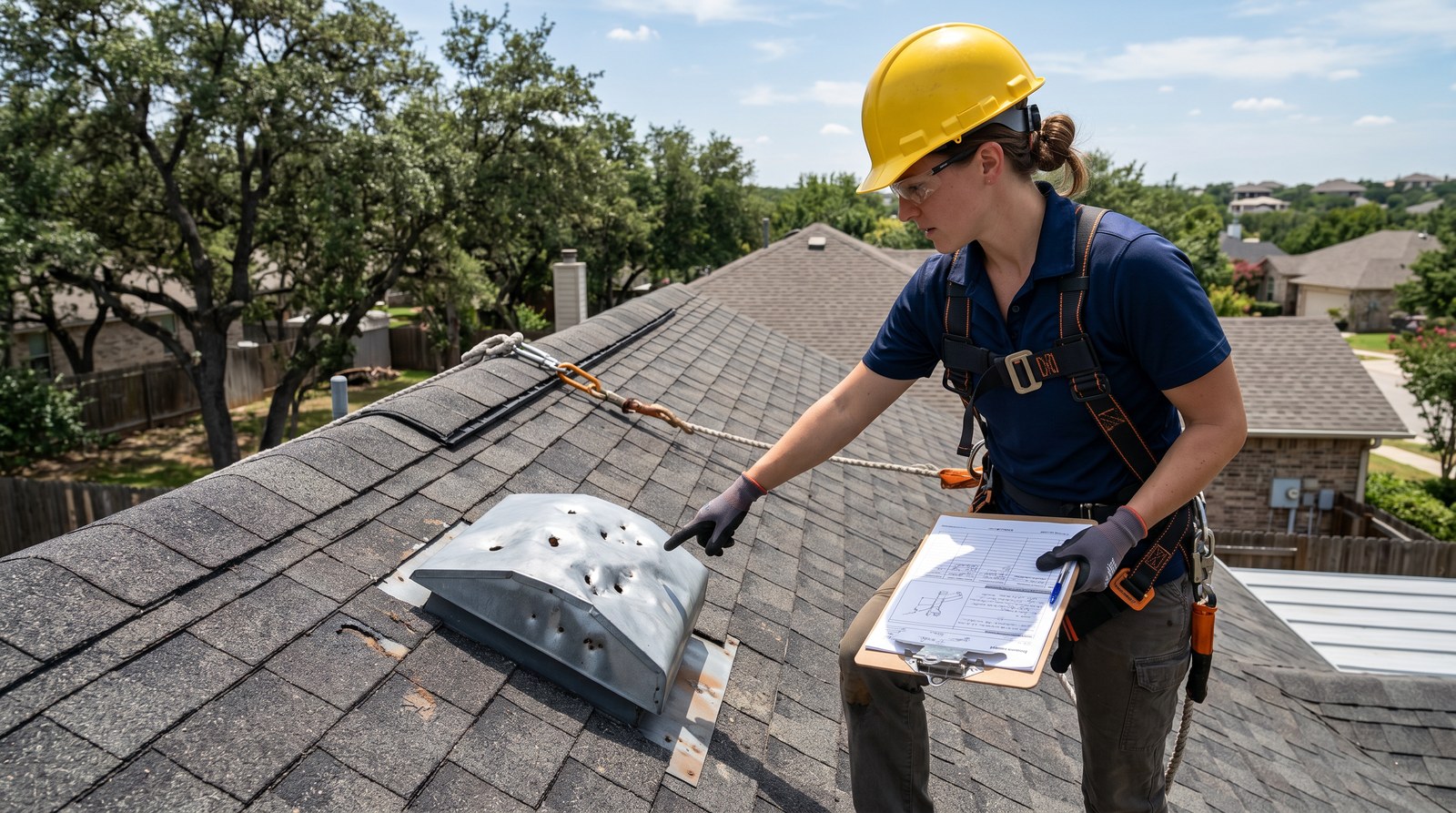
Reasons Claims Get Denied in Austin
I’ve seen these come up over and over. Not in any particular order.
Wear and tear classification
This is the big one. Insurance doesn’t cover roofs that are just old. If your roof is failing because it’s been baking in Austin sun for 18 years, that’s on you. But the problem is — storms make old roofs fail faster. A 15-year-old roof that got through spring with maybe two more years left in it can get reduced to six months by one bad hailstorm. The insurance company says old. The reality is storm accelerated the failure.
Cosmetic damage exclusions
Check your policy for the word “cosmetic.” Some policies — especially on metal roofs — specifically exclude hail damage that’s considered cosmetic. Meaning if the dents don’t affect function, they’re not covered. Problem is, function is subjective. A dented metal panel holds up fine until it doesn’t.
Delayed reporting
Waited too long after the storm? That can sink a claim. Most policies want you to report damage within a year, some within six months. And even if you’re inside that window, a long gap between storm and inspection gives the insurer room to argue the damage came from something else.
Policy language
Actual Cash Value versus Replacement Cost Value. People don’t usually know the difference until it matters. ACV pays you the depreciated value of your roof. If your 18-year-old roof had a replacement cost of $22,000, ACV might pay you $4,000. That’s not a denial exactly, but it’s a denial of the amount that would actually get the work done.
What the Adjuster Is Actually Doing Up There
Quick reality check. The adjuster is not your advocate.
I don’t mean that cynically. I mean it literally. The adjuster works for the insurance company. Their job is to determine what’s owed under the policy. The company’s incentive is to pay the minimum that’s owed. Those two incentives line up. Yours doesn’t.
Most adjusters are good people. Some are genuinely thorough. But they’re moving fast, they’re measuring against company standards, and they know the appeals process discourages most homeowners from pushing back. If a claim gets denied and the homeowner goes away, that’s a win for the company. Most people go away.
The ones who don’t — that’s when things change.
What To Do When You Get the Denial Letter
Take a breath. Then do these things in this order.
Read the letter carefully
Look for the specific reason. Was it wear and tear? Was it not enough damage? Was it a policy exclusion? The language they use tells you what you’re pushing back against. A denial for “insufficient damage” is completely different from a denial for “cosmetic exclusion” and the arguments you make are different too.
Request the full report
You have the right to see the adjuster’s report. Call and ask for it. Get every photo. Get every measurement. This is the document you’ll be arguing against, so you need to know what it says.
Get an independent inspection
This is where we come in. A roofer who documents damage the way insurers review claims, with photos, measurements and test squares, produces a report the adjuster has to take seriously. Not a sales pitch. A professional damage report with photos, measurements, and language that matches what insurance underwriters understand.
Request a reinspection
With your independent report in hand, you can request a reinspection. Sometimes they send the same adjuster. Sometimes they send a different one. Sometimes they send a senior field adjuster. Every time, the dynamic changes because now there’s documentation on the table that contradicts the original finding.
Escalate if needed
If reinspection doesn’t do it, you can escalate to the claims department supervisor. After that, you can file a complaint with the Texas Department of Insurance. And after that, you can get a public adjuster or an attorney involved. Most claims don’t need to go that far. But knowing the path exists changes how the insurance company talks to you.
What Good Documentation Actually Looks Like
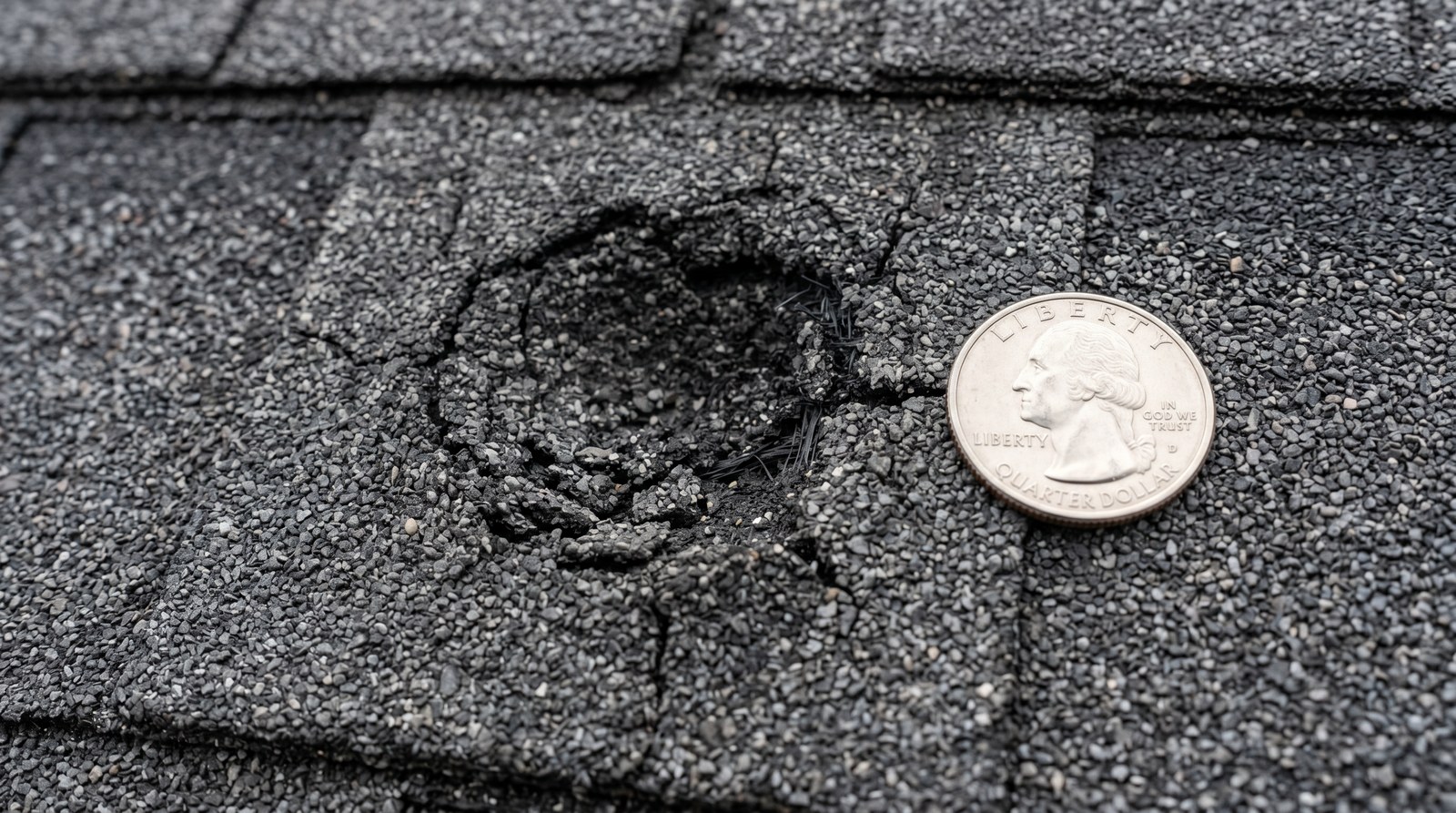
I’ll show you the difference.
A typical adjuster report might include 8 to 12 photos. Maybe a roof diagram. Maybe a note about general condition. That’s what gets filed.
A RoofsOnly.com damage report looks like this. Photos from every slope. Test squares chalked onto the roof in 10-by-10 foot sections showing hit counts. Close-up photos of impact marks with a quarter for scale. Metal flashing documentation. Gutter and downspout documentation. Soft metal impact counts. A written narrative explaining the damage pattern and what it indicates about storm severity. Sometimes weather data from the nearest verified hail report.
When that lands on an underwriter’s desk, the conversation shifts. You’re not asking them to trust you. You’re giving them evidence they can process.
About That Round Rock Homeowner
Her claim got reopened. We did the inspection, wrote the report, sent it to the carrier. Reinspection got scheduled within ten days. Different adjuster came out this time — senior field guy. Spent about ninety minutes up there. Called the homeowner two days later.
They approved full replacement. Roof, gutters, two sections of flashing, and the porch repair that got denied the first time.
The whole process from denial letter to approval took about six weeks. If she’d accepted the initial denial, she’d have been looking at a $22,000 bill she’d be paying herself while her roof kept failing.
A Few Things Worth Knowing
Most policies give you two years to file suit after a denial. That’s a deadline most people don’t know about.
Your deductible applies whether or not the claim is fully covered. If your deductible is 2% on a $400,000 home, that’s $8,000 out of pocket regardless. Doesn’t matter if the roof is $15,000 or $35,000.
Don’t let a contractor tell you they’ll “cover your deductible.” That’s insurance fraud in Texas. Which means if something goes wrong later, you have nothing to stand on.
You can switch contractors at any point. Even after the adjuster has met with someone else. Even after paperwork has been signed. The claim belongs to you, not whoever showed up first.
When To Call a Roofer Instead of Your Insurance
Before you file a claim, have a roofer inspect the roof.
This sounds backwards. It isn’t. Here’s why.
Filing a claim that gets denied counts against your claim history. Insurance companies track claims even when they don’t pay out. Too many claims, your rates go up or your policy gets non-renewed. And the denial becomes part of the record — harder to revisit later.
A pre-claim inspection tells you whether you’ve got a claim worth filing. If the damage doesn’t meet the threshold, you know before you file. If it does, you file with documentation already in hand, which flips the dynamic entirely. Adjuster shows up knowing they’re going to get pushback if they try to write it off.
We do these inspections for free. No obligation. Just an honest assessment of what’s up there and whether your carrier is likely to pay.
Explore More Roofing Services
Storm Damage Repair in Round Rock
Free Inspection — No Games
If you’ve been denied, or if you suspect damage and don’t know where to start, we’ll come out and tell you straight. GAF Certified, Owens Corning Preferred and 350-plus five-star reviews, and we’ve been doing this in Austin long enough to know what the adjusters are looking at.
Call RoofsOnly at (512) 746-7090. Or book an inspection online. Either way, we’ll get eyes on your roof within a week.
