
How Long Does an Austin Roof Actually Last? (And the 5 Things That Cut Its Life in Half)

Ask ten roofers how long an asphalt shingle roof lasts and you’ll get ten different answers.
The boxes say thirty years. The salesman says forty. Your neighbor swears he’s been on the same roof since the Bush administration.
Here in Austin, the real answer is somewhere between fifteen and twenty-two years, and that’s only if you’ve been lucky.
Why Texas Is Hard on Roofs
A shingle roof in Ohio and a shingle roof in Austin live two completely different lives.
Up north, a roof gets snow load and freeze-thaw cycles. Tough, but predictable. Down here, a roof spends ten months a year baking in direct UV, then gets pelted with golf-ball hail twice a season and asked to keep doing its job.
By year fifteen, the average Austin roof has already been through more than most “thirty-year” warranties were ever designed to handle.
What “Thirty Year Shingle” Really Means
This part trips people up.
When a manufacturer prints “30-year” on a bundle of shingles, that number isn’t a guarantee. It’s a rating based on lab conditions — controlled temperature, no UV abuse, no impact, no installation mistakes.
In real life, especially in Central Texas, that same shingle might give you eighteen good years before it starts curling at the edges. Sometimes less if the attic is poorly ventilated (which we covered in our post on ridge vents).
The Five Things That Cut a Roof’s Life in Half
If your roof is failing earlier than it should, the cause is almost always one of these five.
1. Poor Attic Ventilation
Heat trapped in the attic cooks shingles from underneath. We’ve pulled twelve-year-old roofs off Austin homes that looked like they were thirty, and almost every time, the attic was sealed up like a Yeti cooler.
Good ventilation isn’t optional in Texas. It’s the difference between a roof that ages gracefully and one that goes brittle by year ten.
2. Hail Damage That Was Never Documented
Hail bruises the mat under a shingle even when the surface still looks fine. Two or three years later, the bruised spots fail, granules wash off, and the underlayment starts taking on water.
If your roof took a hit during a storm season and nobody ever climbed up to check, you might already be on borrowed time. (More on that in our guide to insurance denials.)
3. UV Exposure on South and West Slopes
Walk around your house on a hot afternoon and pay attention to which side of the roof gets the most sun. Nine times out of ten, that’s the slope that fails first.
South- and west-facing slopes in Austin can show heavy granule loss five years before the rest of the roof. Sometimes a partial replacement makes more sense than waiting for the whole thing to give up.
4. Skipped or Botched Flashing
Flashing is the metal that seals the edges around chimneys, skylights, valleys, and pipe boots. It’s also the first thing a cheap roofer skips.
A perfectly good shingle field can leak for years if the flashing is wrong. And by the time you see a stain on the ceiling, the decking underneath is usually rotted.
5. The Wrong Installer
This one stings, but it’s true. The number one factor in how long your roof actually lasts isn’t the brand of shingle. It’s whether the crew that installed it knew what they were doing.
Nailing pattern. Starter strip. Ridge cap ventilation. Step flashing. There are a dozen places a roof can be quietly built wrong, and you’d never know until it’s too late.
How to Read the Age of Your Own Roof
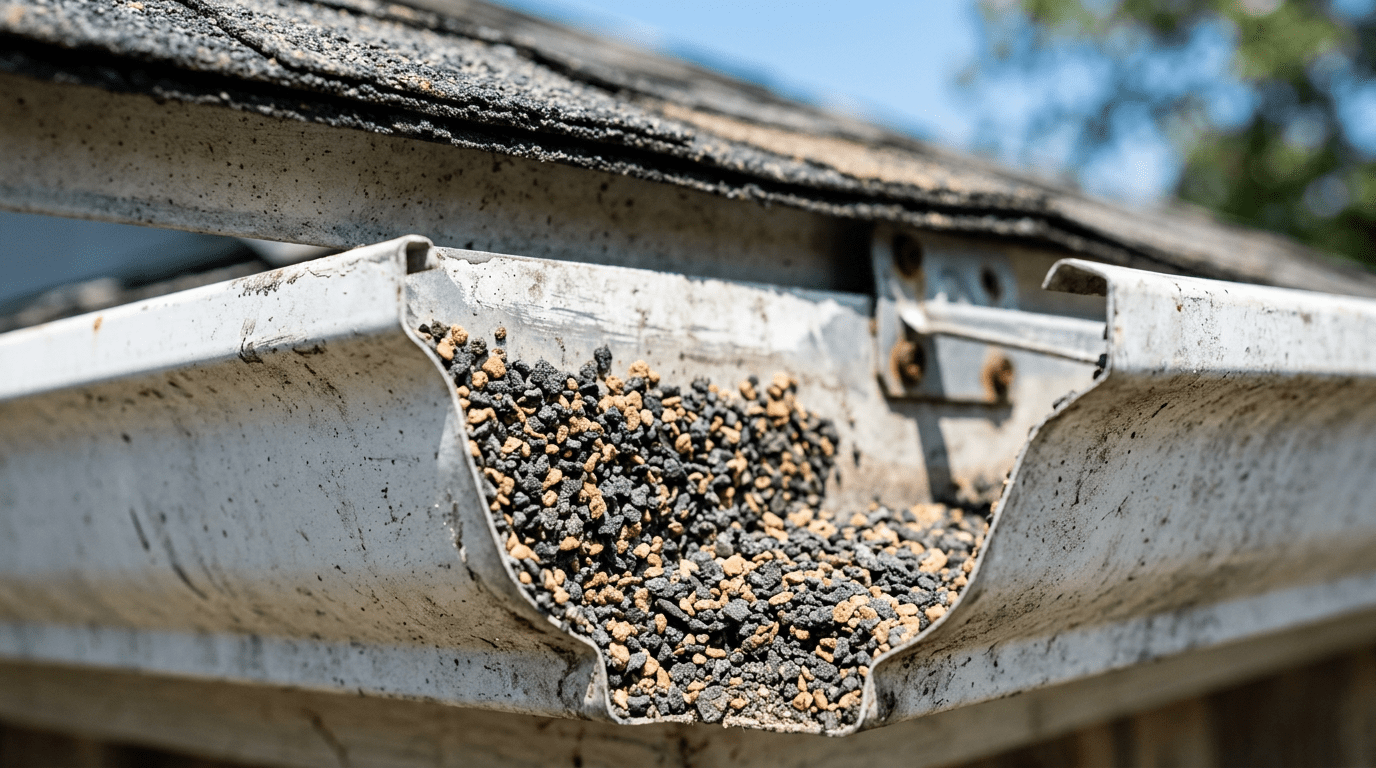
You don’t need a ladder to get a rough sense of where your roof is in its lifespan. Stand in the yard, look up, and check for these signs:
- Granules in the gutters or downspout splash zones. A handful is normal. A pile means the shingles are losing their protective layer.
- Curling or cupping edges. Especially visible against the sky on the upper rows. That’s heat damage announcing itself.
- Dark streaks running down the slopes. Sometimes algae, sometimes asphalt bleed-through. Either way, your roof is telling you something.
- Visible nail heads on the ridge. If you can see the silver from the ground, the cap shingles have shifted.
- Sagging between rafters. That’s a structural conversation, not a shingle one. Call somebody quickly.
Repair, Restore, or Replace?
If your roof is under ten years old and you’re seeing problems, it’s almost always a repair situation. Something installed wrong, a flashing detail that failed, a vent boot that cracked.
If it’s between ten and fifteen, it depends on what we find up there. Sometimes a targeted repair buys you another five years. Sometimes the deck is already too far gone.
If it’s past fifteen and you’re starting to see granule loss, curling, or interior staining, the math usually points toward replacement. Not because anyone’s trying to upsell you, but because patching an old roof tends to cost more than it saves.
The Honest Inspection Conversation
Here’s how we do it at RoofsOnly.com. We come out, walk the roof, and tell you exactly what year we think it’s in. Not what year the warranty says — what year the actual condition says.
Sometimes the answer is “you’ve got another six or seven years if you ventilate the attic and keep the gutters clean.” Sometimes it’s “you should be planning a replacement in the next twelve months.” We’ve never been in the business of selling a roof somebody didn’t need.
If you’ve been wondering where your roof actually stands — not what the salesman three years ago promised, but what it really has left — give us a call at (512) 677-6011 or schedule an inspection on our site. We’ll come out and shoot you straight.
