

Standing Seam Metal Roofing in Austin, TX

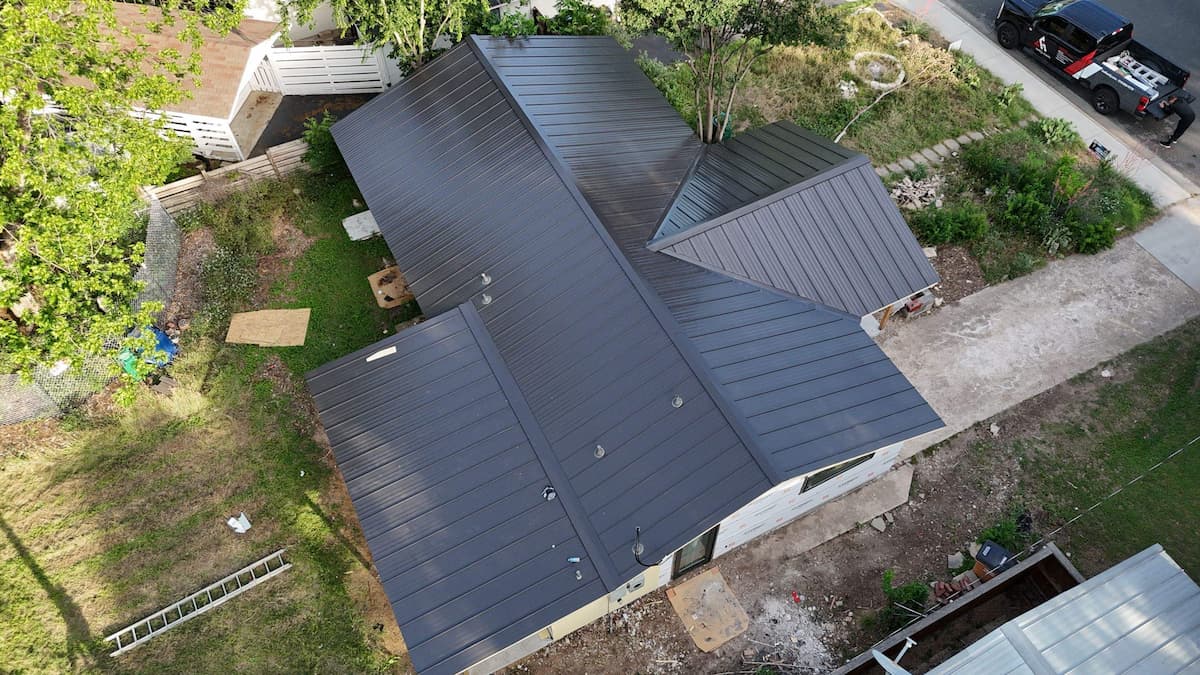
Standing Seam Metal Roofing in Austin, TX — RoofsOnly.com
Standing seam metal roofing is the highest-performing residential roofing system available in Austin today. It’s not the right fit for every home or every budget — but for homeowners who want the last roof they’ll ever install, the strongest hail protection on the market, and a system that genuinely holds up in Central Texas conditions, nothing else comes close.
At RoofsOnly.com, standing seam is one of our most-installed premium systems across Austin and the surrounding Hill Country communities. We spec it, source it, and install it with our own certified crew — and we’ve seen firsthand how it performs after the hailstorms and heat cycles that shorten the life of every other roofing material in this market.
This page covers everything you need to know about standing seam metal roofing in Austin — how it works, why it outperforms the alternatives in our climate, what it costs relative to what you get, and whether it’s the right choice for your specific home and situation.
A Note From Our Owner
“Standing seam is the system I’d put on my own house. The concealed fastener design, the Kynar finish, the lifespan — when you add it all up, it’s the most defensible roofing decision you can make in this market. The upfront cost is higher, I won’t pretend otherwise. But I’ve never had a homeowner come back to us five years later wishing they’d gone with asphalt instead.”
— Jake Mullin, Owner, RoofsOnly.com
What Makes Standing Seam Different From Other Metal Roofing
The term “metal roofing” covers a wide range of products — from corrugated agricultural panels to stone-coated steel shingles to standing seam. They’re not all the same, and the differences matter significantly for long-term performance in Austin’s climate.
What sets standing seam apart is its concealed fastener system. Panels run continuously from the ridge down to the eave, locking together at raised seams that sit above the waterline. All fasteners are hidden beneath those seams — there are no exposed screws, nails, or penetrations in the field of the roof. That single design feature eliminates the most common long-term failure point in metal roofing.
- No exposed fasteners means no fastener holes to work loose during Austin’s heat cycling — the primary cause of leaks in exposed-fastener metal systems over time.
- Continuous panels from ridge to eave eliminate the horizontal seams and laps where water can back up during heavy rain events.
- Floating clip system allows panels to expand and contract freely with temperature changes without stressing the metal — critical in a climate that swings from 20°F in winter to 105°F in summer.
- Factory or field-formed panels can be fabricated to your exact roof dimensions, minimizing waste and ensuring a precise fit regardless of roof geometry.
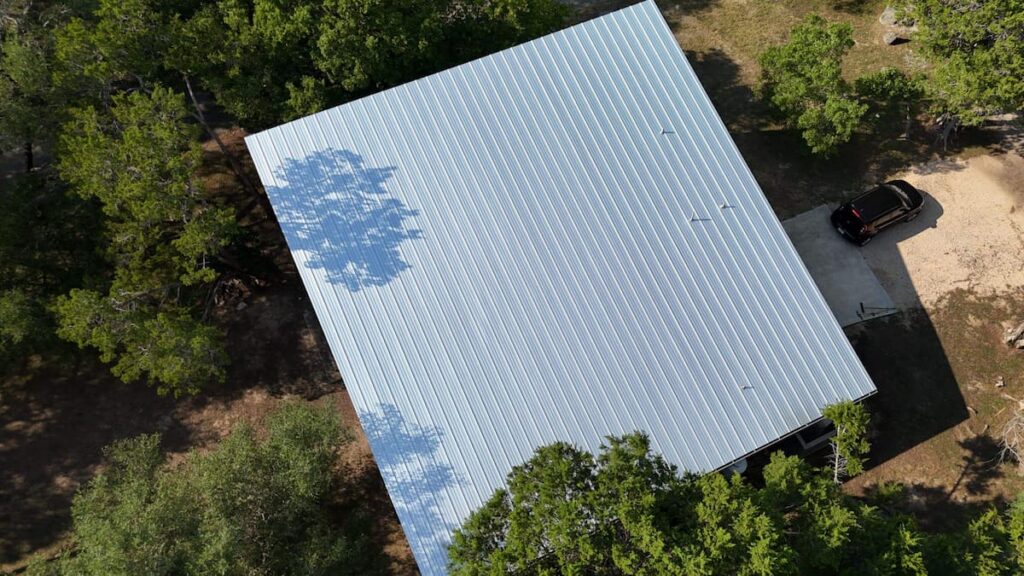
Standing Seam Panel Options — Steel vs. Aluminum
Standing seam panels are fabricated from either galvanized steel or aluminum, and the choice between them matters depending on your home’s specific situation.
Galvanized Steel Panels
Steel is the more common choice for residential standing seam installations in Austin and the most cost-effective option within the standing seam category. It’s strong, widely available in a full range of profiles and colors, and holds up well in our climate when properly coated. Steel panels are typically offered in 24-gauge or 26-gauge thickness — we generally recommend 24-gauge for residential applications in Central Texas as it provides better dent resistance in hail events.
Aluminum Panels
Aluminum is lighter than steel, naturally corrosion-resistant, and a good choice for homes near bodies of water or in areas where salt air is a concern. It’s also softer than steel, which means it can show cosmetic denting from large hail more readily than a heavier-gauge steel panel. For most Austin homeowners, steel is the right call — but aluminum has its place and we’ll discuss both options during your consultation.
The Kynar 500® Finish — Non-Negotiable in This Climate
The coating on a standing seam panel is not a cosmetic decision — it’s an engineering one. Austin’s UV intensity, heat, and temperature swings demand a finish system that was specifically built for those conditions. Kynar 500® is that system.
Kynar 500® is a PVDF (polyvinylidene fluoride) coating developed for the most demanding architectural applications in the world — curtain walls on high-rises, stadium roofing, industrial facilities. It’s the same technology we specify on residential standing seam installations in Austin because the conditions here demand it.
What Kynar 500® Delivers That Cheaper Coatings Can’t
- Color retention — your chosen color stays true for decades without streaking, dulling, or patchy fade from UV exposure. Cheaper polyester paint systems begin showing visible degradation within 5–10 years in Central Texas conditions.
- Chalk resistance — chalking is the powdery surface breakdown that makes lower-grade metal roofs look old well before their time. Kynar 500® resists chalking at a level that cheaper coatings simply can’t match.
- Reflective performance — Kynar 500® reflective variants keep roof surface temperatures meaningfully lower, reducing heat transfer into the attic and lowering the load on your HVAC system through Austin’s long cooling season.
- Manufacturer warranty backing — Kynar 500® panels carry finish warranties that cheaper coatings don’t qualify for, giving you documented protection for the life of the product.
When we spec a standing seam project, Kynar 500® is not a line item we negotiate out. Panels without it are not the same product, and we won’t install them as a substitute for the real thing.
Standing Seam Performance Specs for Austin Homeowners
- Lifespan: 40–70 years with proper installation and maintenance. Many standing seam roofs outlast the original homeowner.
- Wind resistance: Rated to withstand winds up to 140 mph — relevant during Texas thunderstorm season when straight-line winds regularly cause damage across the metro.
- Hail resistance: Most 24-gauge steel standing seam panels achieve Class 4 impact ratings — the highest available — without any additional modification or treatment.
- Heat performance: Reflective Kynar 500® finish reduces rooftop surface temperatures and attic heat gain. ENERGY STAR qualified products available.
- Fire rating: Class A fire rating — the highest available — providing significant protection in a region where wildfire interface risk is a real consideration in communities west of Austin.
- Weight: Significantly lighter than tile or slate, with no structural reinforcement required for the vast majority of Austin-area homes.
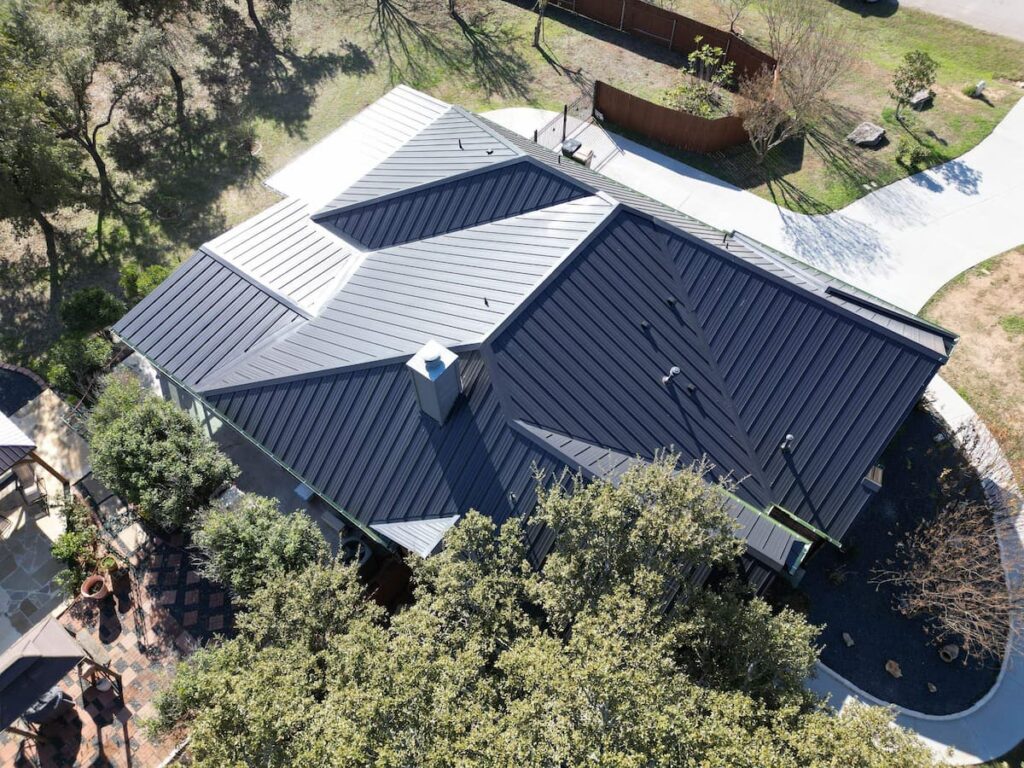
Standing Seam vs. Other Metal Roofing Options
If you’re researching metal roofing, you’ll quickly find that “metal roofing” is a broad category. Here’s how standing seam compares to the two other systems we install — so you can understand exactly what you’re choosing between.
Standing Seam vs. Stone-Coated Steel
Stone-coated steel is our most common alternative recommendation when standing seam isn’t the right fit. It delivers excellent hail resistance and a much longer lifespan than asphalt, but it uses a different construction — individual panels with exposed fasteners rather than continuous concealed-fastener panels. The main advantages of stone-coated steel over standing seam are its traditional shingle or tile appearance and its more accessible price point. The tradeoff is that it doesn’t carry the same long-term waterproofing integrity as standing seam, and the exposed fasteners introduce the same potential failure point over time that standing seam eliminates.
Standing Seam vs. Metal Shingles
Metal shingles are individual interlocking panels — lighter and easier to handle on complex rooflines, and the most budget-accessible metal option. They’re a genuine upgrade over asphalt in longevity and heat resistance. But like stone-coated steel, they use exposed fasteners and don’t achieve the watertight integrity of a concealed-fastener standing seam system. For homeowners primarily motivated by long-term performance and minimal future maintenance, standing seam is the stronger choice.
Energy Savings and Insurance Benefits in Texas
Lower Cooling Costs
Reflective standing seam roofing reduces the amount of solar heat transferred into your attic by reflecting a significant portion of incoming solar radiation rather than absorbing it. In Austin, where summer cooling accounts for a substantial share of annual energy spend, that’s a real financial benefit. ENERGY STAR-qualified metal roofing products have been shown to reduce cooling costs by 20–40% in hot climates — and Central Texas qualifies firmly as a hot climate. Over the life of the roof, those annual savings accumulate into a meaningful offset against the higher upfront installation cost.
Insurance Premium Reductions
The Class 4 impact rating that most standing seam steel panels carry can qualify your home for significant discounts on your homeowner’s insurance premium with many Texas carriers. We recommend calling your insurer before finalizing any roofing material decision to ask specifically what your premium would look like with a Class 4 rated product installed. We document the impact resistance rating on every installation so you have the paperwork to provide to your carrier. If your current roof was damaged by hail and you’re navigating a claim, we can also walk you through our insurance claim process.
Is Standing Seam the Right Choice for Your Home?
Standing seam is the strongest roofing system we install — but it’s not automatically the right answer for every situation. Here’s how we think about it with homeowners during our consultation.
Standing Seam Is Usually the Right Call When:
- You’re planning to stay in your home long-term and want the last roof replacement you’ll ever deal with.
- You’ve already replaced your asphalt roof once due to hail damage and want to eliminate that cycle going forward.
- Your home has a modern, contemporary, or Hill Country architectural style where the standing seam profile fits the aesthetic naturally.
- You’re building new and want to spec the best available system from day one.
- Energy efficiency is a priority and you want ENERGY STAR-qualified roofing to reduce your cooling costs.
Standing Seam May Not Be the Best Fit When:
- Your HOA requires a traditional shingle or tile appearance — in that case, stone-coated steel may be a better fit.
- You’re planning to sell within the next few years and want to optimize for upfront cost rather than long-term value — a high-quality Class 4 asphalt replacement may make more financial sense.
- Your home has a very low-slope or flat roof section — standing seam has minimum pitch requirements and isn’t always appropriate for every section of a complex roofline.
We’ll always give you an honest answer about which system makes the most sense for your specific situation. We have no financial incentive to push you toward a more expensive product if it isn’t genuinely the right fit.
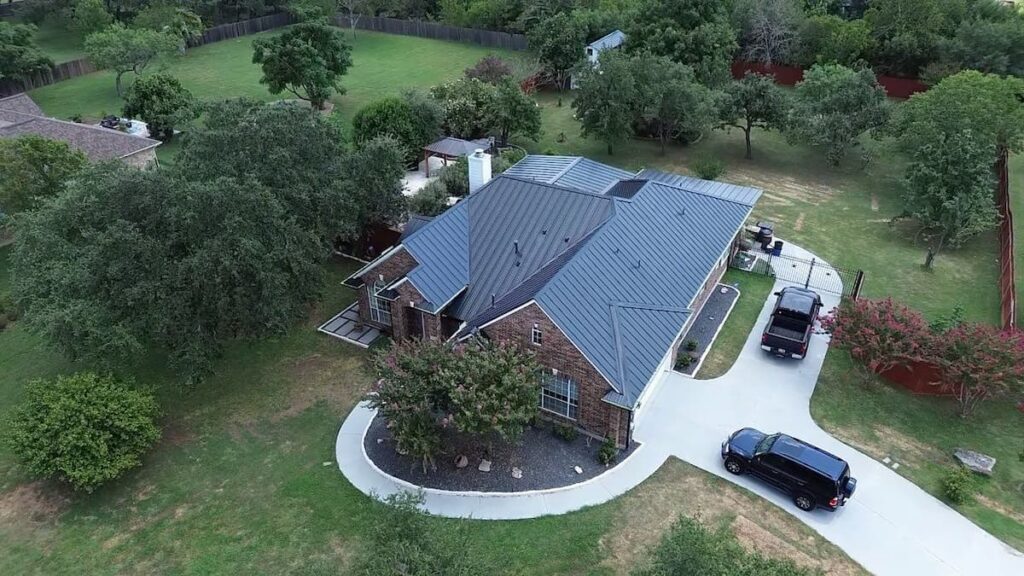
Our Standing Seam Installation Process
Standing seam is a precision system — the quality of the installation is just as important as the quality of the panels. We don’t sub out our metal roofing work. Every standing seam roof we install is handled by our own certified crew from the first nail to the final walkthrough.
- Step 1 — Free Roof Inspection: We evaluate your current roof, document existing damage with photos, assess the deck condition, and check structural integrity before anything else. You’ll know exactly what we’re working with before we quote.
- Step 2 — Panel Selection and Consultation: We walk you through panel profile options, gauge selection, color choices, and Kynar 500® finish variants. You’ll see physical samples and we’ll explain the tradeoffs at each decision point — no guessing.
- Step 3 — Full Tear-Off and Deck Inspection: We remove the existing roofing material down to the deck, inspect every square foot for rot, water damage, or structural issues, and make any necessary repairs before panels go on. This step is non-negotiable on every installation we do.
- Step 4 — Underlayment and Panel Installation: Proper high-temp underlayment goes down first, then panels are installed to manufacturer specifications. Most residential standing seam installs complete in 3–7 days depending on roof size and complexity.
- Step 5 — Final Walkthrough and Warranty Documentation: We walk the completed roof with you, confirm all flashing, penetrations, and ridge caps are finished to our standards, and hand over your full warranty documentation before we leave the job site.
Frequently Asked Questions About Standing Seam Metal Roofing
How much does standing seam metal roofing cost in Austin?
Standing seam carries a higher upfront cost than asphalt shingles, stone-coated steel, and metal shingles. For an average Austin home, installed costs typically range from $18,000 to $40,000+ depending on roof size, complexity, panel selection, and whether any deck repairs are required. The only way to get an accurate number is a free in-person estimate — costs vary too much by project for a reliable ballpark without seeing the roof.
Will a standing seam roof be loud when it rains?
No — not with a proper installation. When standing seam panels are installed over solid decking with high-temp underlayment, the sound difference from a shingle roof during rain is minimal. This is one of the most persistent myths about metal roofing, and nearly every homeowner tells us afterward that it’s quieter than they expected.
How long will a standing seam roof last in Austin’s climate?
A properly installed standing seam roof with Kynar 500® finish will last 40–70 years in Central Texas conditions. That compares to 15–18 years for a standard asphalt shingle roof in the same climate. Over a 40-year window, a homeowner with asphalt may go through two to three full replacements while a standing seam owner replaces theirs zero times.
Does standing seam roofing hold up against hail?
Yes — better than any other residential roofing material available. Most 24-gauge steel standing seam panels carry Class 4 impact ratings, the highest classification in the UL 2218 standard. That means they’re tested to withstand a 2-inch steel ball dropped from 20 feet without tearing, cracking, or creating an opening. In Austin’s hail environment, that rating is not a marketing footnote — it’s the primary reason we recommend standing seam to homeowners who have been hit multiple times.
Can standing seam be installed on any roof pitch?
Standing seam has a minimum pitch requirement — typically 3:12 or greater, though some panel profiles can go lower. For homes with flat or very low-slope sections, a different system may be required for those areas while standing seam covers the rest of the roof. We assess pitch and roof geometry during our free inspection and will identify any sections that require a different approach before we quote.
Do I need to do anything to maintain a standing seam roof?
Standing seam requires significantly less ongoing maintenance than asphalt roofing, but it’s not entirely maintenance-free. We recommend keeping gutters clear, ensuring penetrations and flashing remain properly sealed, and scheduling a periodic inspection every 5–10 years to catch any minor issues before they develop into larger ones. The panels themselves require essentially no ongoing maintenance — it’s the transition points and accessories that warrant occasional attention.
Ready to Get a Standing Seam Estimate?
Get a Free Standing Seam Estimate in Austin
If you’re seriously considering standing seam, the best next step is a free in-person inspection and consultation. We’ll walk your property, evaluate your current roof, walk through panel and color options with you, and give you a transparent quote — with no pressure and no obligation to move forward.
Call us at (512) 746-7090 or reach out through our contact form to get scheduled. We serve homeowners across Austin, Cedar Park, Round Rock, Leander, Georgetown, Pflugerville, and surrounding communities throughout the greater Austin metro.
Also see: Metal Roofing in Austin → | Compare all roofing materials →
Contact Us for Expert Standing Seam Installation in Austin
RoofsOnly.com installs standing seam metal roofing across Austin and the surrounding communities. We know the products, we know the climate, and we’ll give you a straight answer about whether standing seam is the right call for your home. Call (512) 746-7090 or visit our main office at 1005 Meredith Drive, Suite B, Austin, TX 78748.
GET A FREE ESTIMATE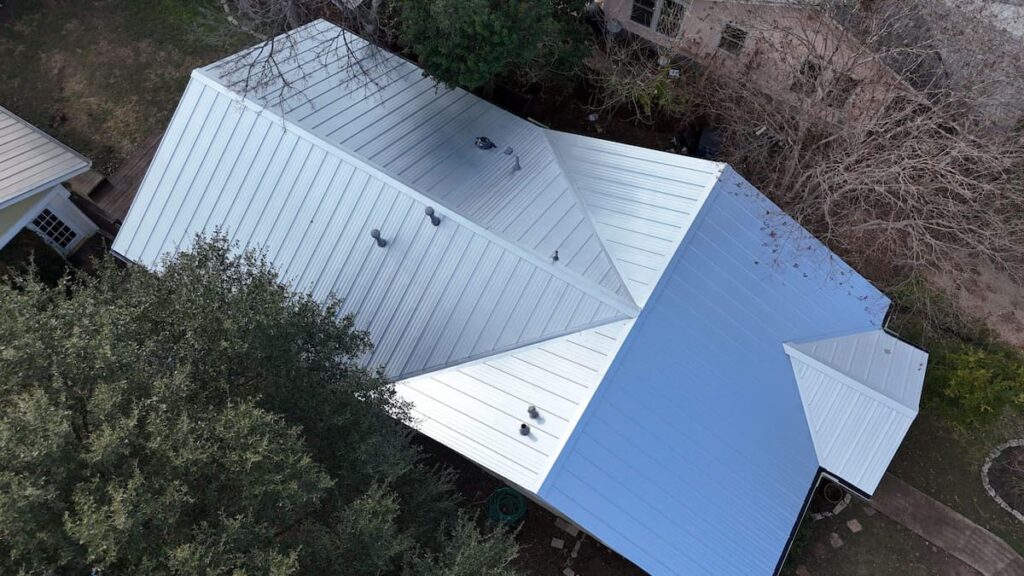
Schedule Your FREE Roof Inspection