

Steel Roofing in Austin, TX


Steel Roofing in Austin, TX
Austin roofs take a beating. Summers push temperatures past 100 degrees. Spring storms bring hail, high winds and heavy rain. A standard asphalt roof lasts 15 to 20 years under those conditions. A steel roof lasts two to three times longer.
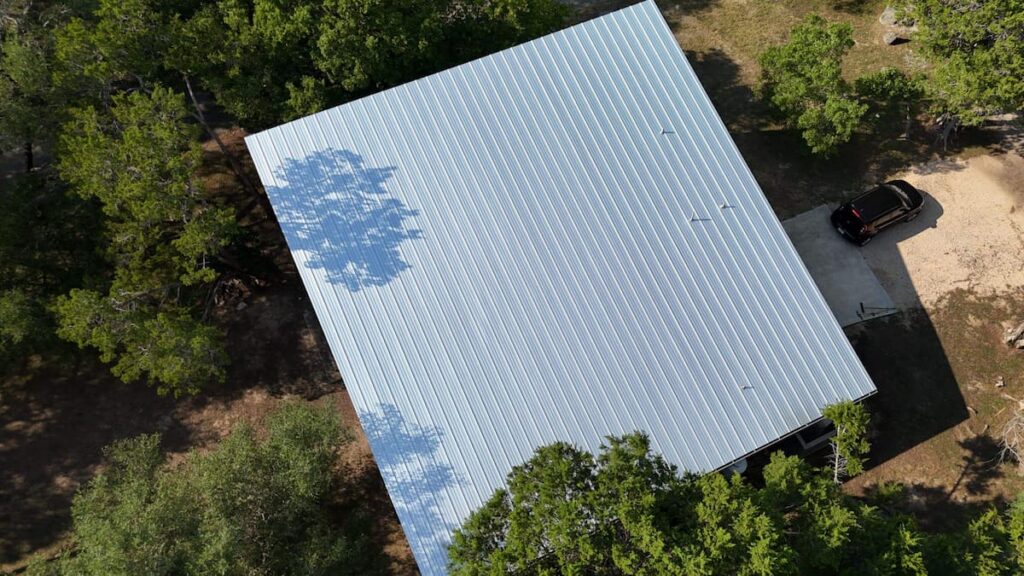
RoofsOnly.com installs steel roofing for homes and businesses across the Austin metro area. We work with stone-coated steel, standing seam and corrugated steel systems depending on your property, budget and goals.
Steel roofing costs more upfront than asphalt. It lasts 40 to 70 years. Over the full lifespan of your property, steel is typically the more cost-effective choice.
Why Austin Homeowners Choose Steel Roofing
Austin’s climate puts roofing systems under stress year-round. These are the main reasons property owners in the area are switching to steel.
Hail Resistance
Central Texas sits in a hail corridor. Standard asphalt shingles dent, crack and lose granules after a significant hail event. Steel panels rated Class 4 withstand impacts that would total an asphalt roof. Class 4 is the highest impact-resistance rating available, and many Texas insurers offer premium discounts for it.
Heat Performance
Austin averages over 100 days per year above 90 degrees. Steel roofing reflects solar radiation rather than absorbing it. That keeps attic temperatures lower and reduces the load on your HVAC system. Some homeowners report cooling cost reductions of 10 to 25 percent after switching from asphalt.
Storm and Wind Resistance
Spring and fall storms bring high winds that peel and crack asphalt shingles. Steel panels are engineered to hold at wind speeds well above what most Austin storms produce. A properly installed steel roof is far less likely to need emergency repairs after a storm.
Low Maintenance
Steel roofs do not crack, curl, warp or lose granules. They do not support moss or algae growth. Outside of inspections after major storms, they require very little ongoing attention.
Types of Steel Roofing We Install
Not every steel roof is the same. The right system depends on your roof’s pitch, your property type and how long you plan to own the building.
Stone-Coated Steel
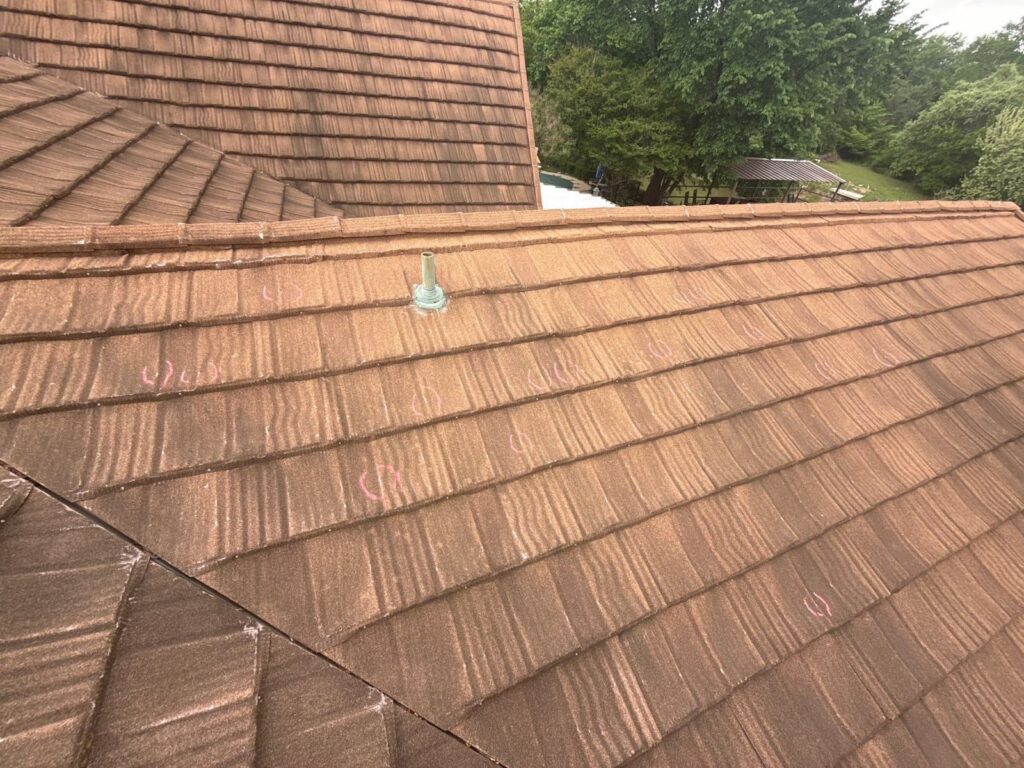
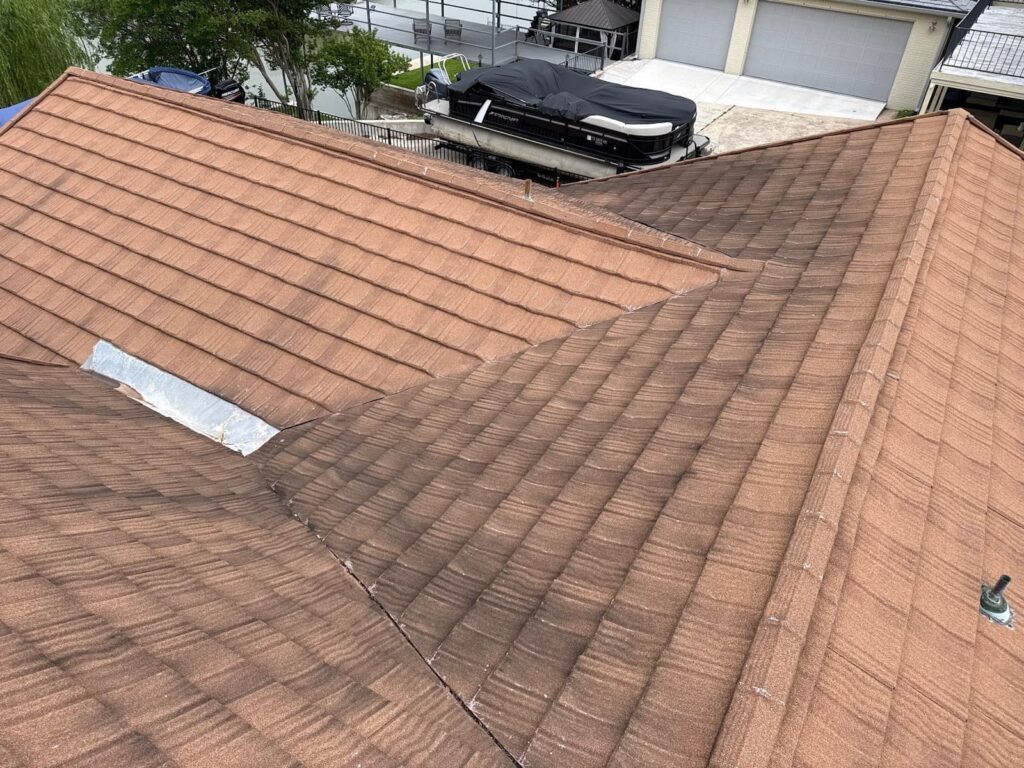
Stone-coated steel panels are designed to look like traditional roofing materials including shingles, tile and shake. They carry the durability of steel with the appearance of a conventional roof. If you want the longevity of metal without the industrial look, stone-coated steel is worth considering.
- Rated for winds up to 120 mph
- Class 4 impact resistance, the highest available rating
- Resistant to UV degradation in Austin’s high-heat summers
- Lifespan of 40 to 70 years
Standing Seam Metal
Standing seam is the most common metal roofing system for residential and commercial properties. Panels interlock vertically with no exposed fasteners, which eliminates a major source of leaks over time. If your roof has a low slope or you want the cleanest possible long-term performance, standing seam is the strongest option.
- No exposed screws or nails to rust or back out
- Performs well on low-slope and flat rooflines
- Reflects solar heat, reducing cooling costs
- Lifespan of 40 to 60 years
Learn more about standing seam metal roofing →
Corrugated Steel
Corrugated steel is a cost-effective option for commercial buildings, agricultural structures and some residential applications. It provides solid weather protection at a lower price point than other metal systems.
- Lightweight and easy to install over existing structures
- Strong resistance to rain and wind
- Low maintenance over its lifespan
- Lifespan of 25 to 40 years
Steel Roofing and Your Homeowners Insurance
Texas homeowners insurance rates have increased significantly in recent years. Insurers are adjusting premiums based on the materials on your roof, not just the age of your home.
Steel roofing rated Class 4 for impact resistance qualifies for premium discounts with many Texas insurers. The discount varies by carrier, but savings of 20 to 30 percent on your roof-related premium are common. Before you decide on a roofing material, ask your insurance agent whether a Class 4 rated steel roof changes your rate.
In some cases, the insurance savings over 10 years cover a significant portion of the cost difference between asphalt and steel. Run the numbers with your agent before you decide.
How to Choose the Right Steel Roof for Your Property
The right system depends on four things: your roof’s pitch, your property type, your budget and how long you plan to own the building.
Stone-coated steel fits most residential properties where appearance matters. Standing seam is the strongest long-term performer for both residential and commercial roofs. Corrugated steel works well for commercial or agricultural buildings where cost per square foot is the primary factor.
We inspect your current roof, walk you through your options and give you a straight recommendation based on what we actually see, not what costs the most. If asphalt makes more sense for your situation, we’ll tell you that too.
Steel Roofing vs. Asphalt: A Straight Comparison
| Steel Roofing | Asphalt Shingles | |
|---|---|---|
| Lifespan | 40 to 70 years | 15 to 25 years |
| Hail Rating | Class 4 (highest) | Class 1 to 4 (varies) |
| Heat Reflection | Yes | No |
| Insurance Discount | Eligible with Class 4 | Eligible only with Class 4 asphalt |
| Maintenance | Very low | Moderate |
| Upfront Cost | Higher | Lower |
Get a Free Steel Roof Inspection in Austin
Not sure if steel is the right fit for your property? We inspect your current roof, walk you through your options and give you a straight answer on what makes sense for your budget and goals. No pressure to move forward on the spot.
We serve Austin and the surrounding metro area including Cedar Park, Round Rock, Pflugerville, Georgetown, Buda, Kyle and Bee Cave.
SCHEDULE YOUR FREE INSPECTIONContact Us for Steel Roofing in Austin
RoofsOnly.com installs and replaces steel roofs for homes and businesses throughout the Austin metro area. Call (512) 746-7090 or visit us at 1005 Meredith Drive, Suite B, Austin, TX 78748.
Schedule Your FREE Roof Inspection