
Why Is Roofing More Expensive in Central Austin?

Why Is Roofing More Expensive in Central Austin?
Roofing costs in Central Austin neighborhoods like Travis Heights, Clarksville, Hyde Park, Bouldin Creek and Zilker typically run 15 to 30 percent higher than a comparable job in the suburbs. The difference is not markup. It comes from four real factors specific to these older, denser neighborhoods: home age and roof complexity, tree canopy density affecting crew access, tighter lot access for staging equipment and material, and material expectations that run higher in these markets. This post breaks down exactly why, with real numbers behind each factor.
If you own a home in Central Austin and want a straight answer on what your specific roof will cost, call (512) 677-6011 or schedule a free inspection. We will walk your property and give you a written estimate the same day.

Older Homes Mean More Complex Roof Lines
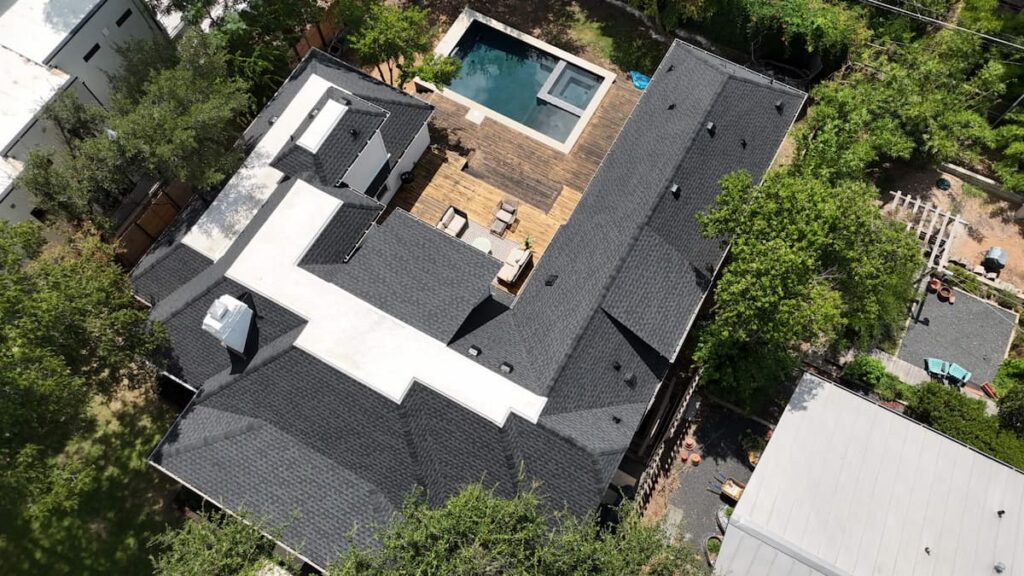
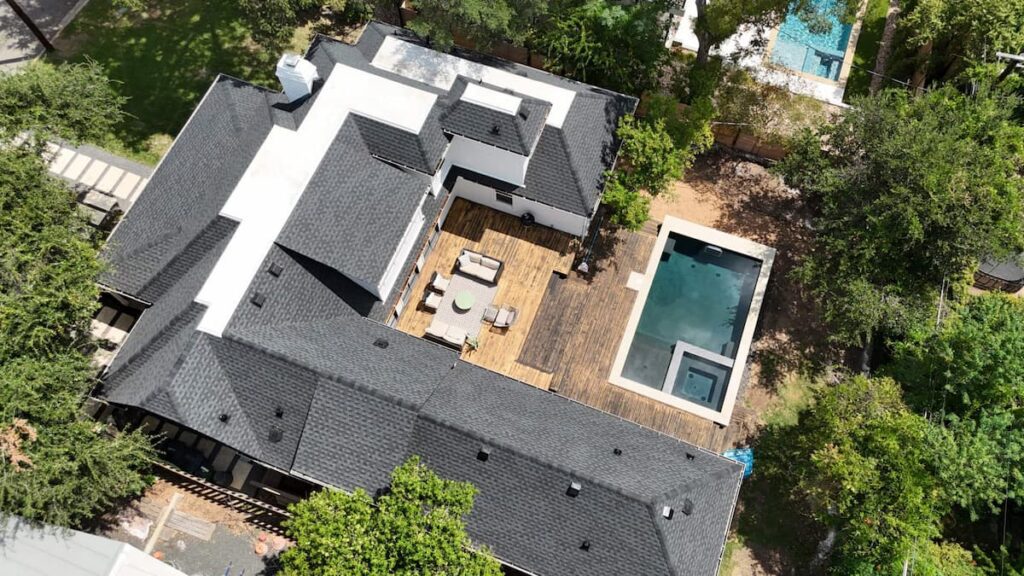
Central Austin neighborhoods were largely built between the 1920s and 1960s, decades before the master-planned subdivisions of Cedar Park, Round Rock and Pflugerville standardized simple gable and hip roof designs on new construction. Craftsman bungalows, Tudor cottages and mid-century homes common in Travis Heights, Hyde Park, Bouldin Creek and Zilker frequently feature steeper pitches, multiple dormers, intersecting gables and complex ridge lines that take significantly longer to tear off and reinstall than a straightforward suburban roof of the same square footage.
A steep pitch above 7:12, common on many Central Austin homes, adds 15 to 25 percent to labor cost because crews move slower and require additional safety equipment. Multiple valleys, dormers and roof-to-wall transitions each add cutting, flashing and labor time that a simple two-slope suburban roof does not require. Two roofs of identical square footage, one in a 2005 Cedar Park subdivision and one in a 1948 Travis Heights bungalow, can differ in installed cost by several thousand dollars purely due to complexity.
Older Decking and Structural Surprises
Homes built before 1970 in Central Austin were often framed with dimensional lumber and decking standards that differ from modern plywood sheathing. When we tear off an older roof in these neighborhoods, we more frequently find original wood plank decking, undersized rafters by current code standards, or decades of layered repairs that need to be addressed before new material goes on. This is not universal, but it is common enough in homes over 60 years old that we budget for a higher likelihood of decking and structural findings on Central Austin jobs compared to a 2010-built home in the suburbs.
Tree Canopy Density Slows Down Every Job
Central Austin’s mature tree canopy is one of the neighborhood’s defining features and one of the real cost drivers on a roofing job. Live oaks, pecans and other mature trees that have grown for 60 to 100 years create direct access challenges for tear-off, material staging and dumpster placement that simply do not exist on a newer suburban lot with young or minimal landscaping.
Crews often need to hand-carry material further from the truck to the roof when a driveway or yard cannot accommodate a conveyor or crane setup due to overhanging branches. Debris removal takes longer when a dumpster cannot be positioned directly beneath the work area. In some cases, protective measures are needed to avoid damaging valuable mature trees during tear-off and material delivery. None of this is insurmountable, but it adds real time to a job compared to a suburban lot with a clear driveway and open sky above the roof.
Tighter Lot Access Changes How a Job Gets Staged
Central Austin lots, particularly in Bouldin Creek, Zilker and parts of Hyde Park, tend to be smaller and more tightly built than suburban lots in Williamson County subdivisions. Narrower driveways, closer property lines and street parking restrictions in some neighborhoods all affect how efficiently a crew can stage material, position a dumpster and set up safe tear-off logistics.
A suburban job with a wide driveway and open side yard allows a crew to position everything for maximum efficiency. A Central Austin job on a narrow urban lot sometimes requires material to be staged on the street with permits, or carried further by hand, both of which add labor time that shows up in the final invoice.
Material Expectations Run Higher in These Markets
Homeowners in Central Austin’s higher-value neighborhoods more frequently choose upgraded materials, Class 4 impact-resistant shingles, standing seam metal, or in some cases tile, rather than the standard architectural shingle that dominates insurance replacements in newer subdivisions. This is a preference trend rather than a requirement, but it means the average quoted job in Travis Heights or Zilker skews toward higher material tiers than the average job in a newer Cedar Park or Round Rock neighborhood, which pulls the average cost up in these areas.
If your Central Austin home is in a specific HOA or falls under any design review process that affects material or color choices, confirm those requirements directly with your HOA or the relevant city office before finalizing material selection. We are happy to help you navigate that conversation once you know what applies to your specific property.
What This Means for Your Estimate
None of these factors mean Central Austin homeowners are being charged more for the same job. They reflect real differences in the work itself, more complex roof geometry, a higher chance of decking surprises on older homes, slower staging and access on denser lots, and a market that more often selects premium materials. A fair estimate accounts for these factors specifically for your property rather than applying a flat suburban rate to a fundamentally different job.
When we quote a Central Austin home, we walk the full roof, assess pitch and complexity, check attic access for decking condition where possible, and evaluate the lot for staging logistics before finalizing a price. You get a written estimate that reflects your actual roof, not an average.
“Every time I quote a job in Travis Heights or Hyde Park next to one in Cedar Park, someone asks why the number is different for what looks like a similar sized roof. It usually comes down to pitch, tree cover and what we find once we get the old material off. I’d rather explain that upfront than have someone feel surprised later.”
— Jake Mullin, Owner, RoofsOnly.com
Frequently Asked Questions: Roofing Costs in Central Austin
Why is roofing more expensive in Central Austin than the suburbs?
Central Austin roofing costs run higher due to older homes with more complex roof geometry, a higher likelihood of decking or structural surprises on homes over 60 years old, dense tree canopy that slows tear-off and material staging, tighter lot access on narrower urban lots, and a market that more frequently selects upgraded materials over standard architectural shingles.
How much more does a Central Austin roof cost compared to a suburban roof?
Central Austin roofing jobs typically run 15 to 30 percent higher than a comparable job in the suburbs, driven by roof complexity, access constraints and material selection rather than a flat markup for the area.
Do older Central Austin homes have more roofing problems?
Homes built before 1970 more frequently have original wood plank decking, undersized framing by current standards, or decades of layered repairs that surface during tear-off. This is not universal but is common enough that estimates for these homes typically account for a higher chance of decking-related findings than a newer suburban home.
Does tree coverage affect roofing cost in Austin?
Yes. Dense, mature tree canopy common in neighborhoods like Travis Heights, Hyde Park and Zilker creates access challenges for material staging, tear-off logistics and dumpster placement. Crews sometimes need to hand-carry material further or take extra precautions to protect mature trees, which adds labor time compared to an open suburban lot.
What roofing material is most common in Central Austin?
Class 4 impact-resistant shingles and standing seam metal are more commonly selected in Central Austin’s higher-value neighborhoods compared to standard architectural shingles, which remain the most common choice in newer suburban subdivisions. This is a market preference rather than a code requirement.
Do I need HOA or design review approval for a roof replacement in Central Austin?
This depends on your specific neighborhood and whether it falls under an HOA or historic design review process. Requirements vary by property. Confirm directly with your HOA or the relevant city office for your address, and we can help you navigate material selection once you know what applies.
Is it worth paying more for a roof in Central Austin?
The higher cost typically reflects the actual scope of work required on these properties rather than an area-based markup. A fair estimate for a Central Austin home accounts for the roof’s specific pitch, complexity, decking condition and site access, the same way any accurate estimate should for any property.
Get a Written Roofing Estimate for Your Central Austin Home
We walk every Central Austin roof individually and account for pitch, complexity, tree access and material selection before giving you a price. No flat suburban rate applied to a different job. Call (512) 677-6011 or schedule your free inspection online.
