

Roof Replacement in Round Rock, TX

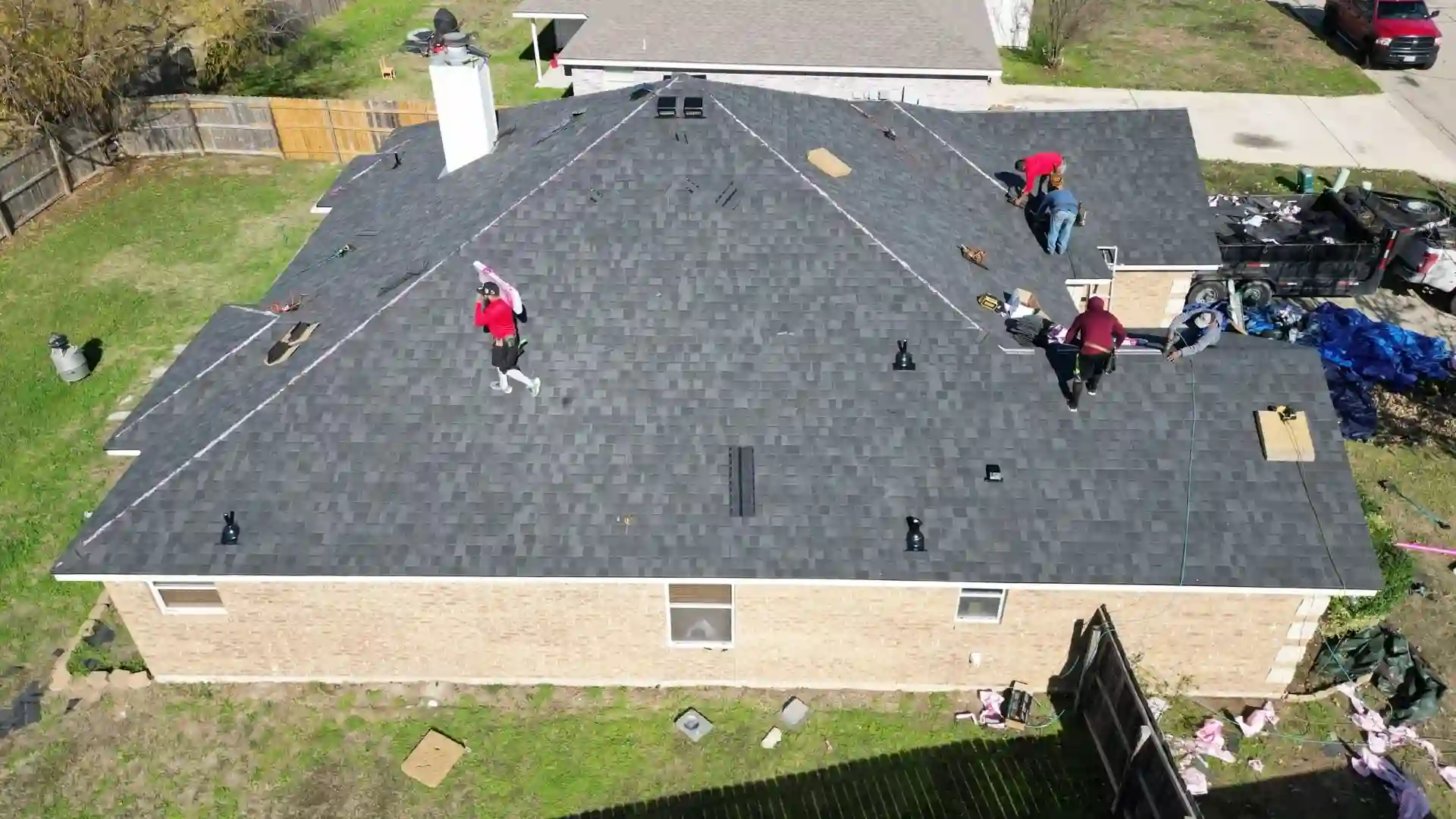
How old is your roof? That’s not a rhetorical question. If you bought a Round Rock home in the late 1990s or early 2000s — during the Dell era boom when Williamson County was adding subdivisions faster than most cities add streets — your original roof is 20 to 25 years old. In Central Texas heat, that means it’s done. Not “getting close.” Done. Asphalt shingles in this climate don’t routinely make it to 25. And if your house has been through any of the significant hail events that have moved through the Round Rock–Georgetown corridor in the past decade, that timeline may have accelerated considerably. Roof replacement in Round Rock, TX is work we do every week, and the most common conversation we have is telling a homeowner their roof aged out years ago and nobody told them.
The Story Nobody Wants to Hear About Their 2003 Subdivision
Round Rock grew at a remarkable pace through the 1990s and 2000s. Dell drove it. The economy followed. Neighborhoods spread northwest toward Hutto, southwest toward Pflugerville, out along 79 and up toward Georgetown — tens of thousands of homes built fast for families who needed space and were willing to drive for it. Those homes were real quality for the era. The roofs, though, were production-grade asphalt shingles installed at scale. They were fine for their time.
Here’s what happens to those shingles in Central Texas: the granule layer — the mineral coating that protects the asphalt mat from UV radiation — sheds slowly but continuously under relentless summer sun. After 15 or 20 years, it’s significantly diminished. The mat underneath hardens. Goes brittle. Starts cracking at stress points. Storm damage that a newer roof might absorb and handle can cause real failure on a 20-year-old shingle because the material simply doesn’t have the flexibility it once did. You don’t always get a dramatic leak as the first sign. Sometimes it shows up as a slow drip near a pipe boot. A ceiling stain you write off as condensation. Water finding its way in along a valley that was fine for years and then suddenly isn’t.
We pulled a roof off a house on Chandler Creek Boulevard a couple springs ago — 2,400 square feet, original shingles, no obvious leaks from inside. When we got the decking exposed, two full sections were soft from moisture infiltration that had been going on for probably two to three years without producing any interior symptoms. The homeowner had no idea. The house looked fine. That’s how it goes.
Spring Storms Make It Worse
Round Rock sits at the eastern edge of the Hill Country where Gulf moisture pushing in from the southeast collides with drier air from the west. That’s one of the most active severe weather corridors in Texas. March through May, residents know the drill. Some years the same neighborhood takes hail twice in a single season. And honestly? The hail out here isn’t polite. Golf ball-sized stones aren’t a freak event — we’ve documented that on claims more times than we can count. The patchwork pattern is what catches people: your neighbor’s roof looks fine, yours took a direct hit, and you’d only know by getting someone up there to look carefully.
After a big hail event, out-of-state storm chasers flood Round Rock going door to door. Some of them do legitimate work. A lot don’t. We understand why homeowners feel skeptical after a few of those interactions. Our approach is the opposite: inspect honestly, show you exactly what we found and what we didn’t find, let you make an informed decision. We document storm damage slope by slope, with photos of every hit, in the format adjusters review. If your roof qualifies for a claim, we document it completely. If it doesn’t, we tell you that instead of manufacturing a case that’ll get contested anyway. More on how we assess hail damage and what the documentation involves. And when it comes time to move forward, here’s what the insurance claim process looks like start to finish.
What We Actually Look at During an Inspection
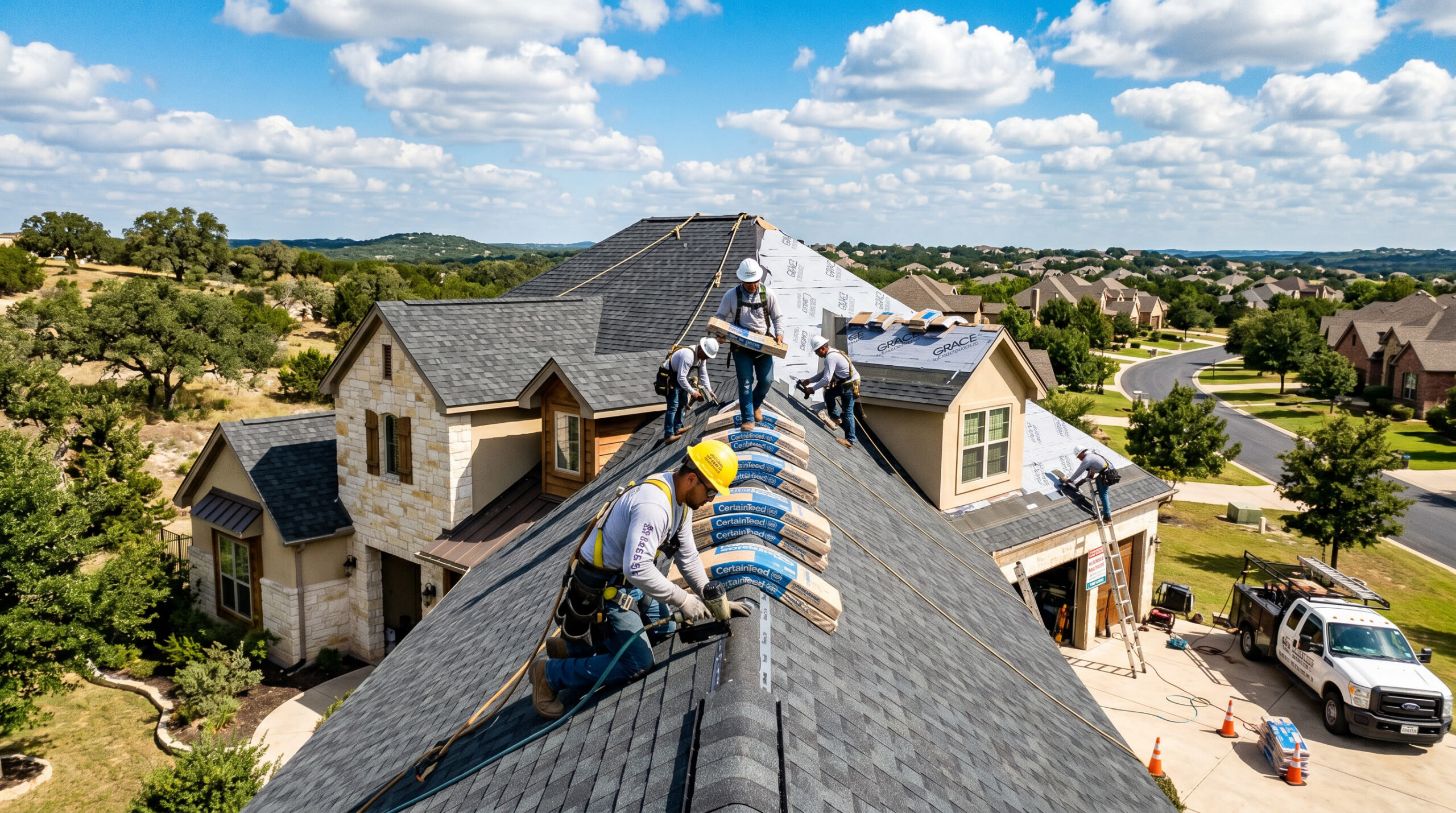
A thorough inspection goes well past the shingle surface. Pipe boot seals are one of the most common failure points on homes over 10 years old and almost nobody thinks to check them. Flashing at chimneys, dormers, and skylights. Ridge and soffit ventilation — on older Round Rock homes from the early 2000s build wave, we regularly find inadequate ventilation that’s been quietly cooking the decking from the inside for years. Gutters, because granule accumulation in the gutter is one of the most reliable signs of shingle wear. Decking, probed for soft spots and water infiltration.
All of that information comes back to you in plain terms. You understand what’s happening with your roof before you make any decisions. No pressure, no manufactured urgency. If the roof is fine, we tell you that. If it’s not, we tell you exactly what’s wrong and what fixing it involves.
Choosing Your Material: Shingles vs. Metal
Most Round Rock homes are a good fit for architectural asphalt shingles. As an Owens Corning Preferred Contractor, we install the Duration series — lifetime limited warranty, 130 mph wind resistance, which is relevant for a city that gets the kind of thunderstorms Round Rock sees. The Duration Storm version adds Class 4 impact resistance, which can qualify you for a discount on your homeowner’s insurance premium. Ask your agent about that before we finalize material selection. It’s worth knowing upfront.
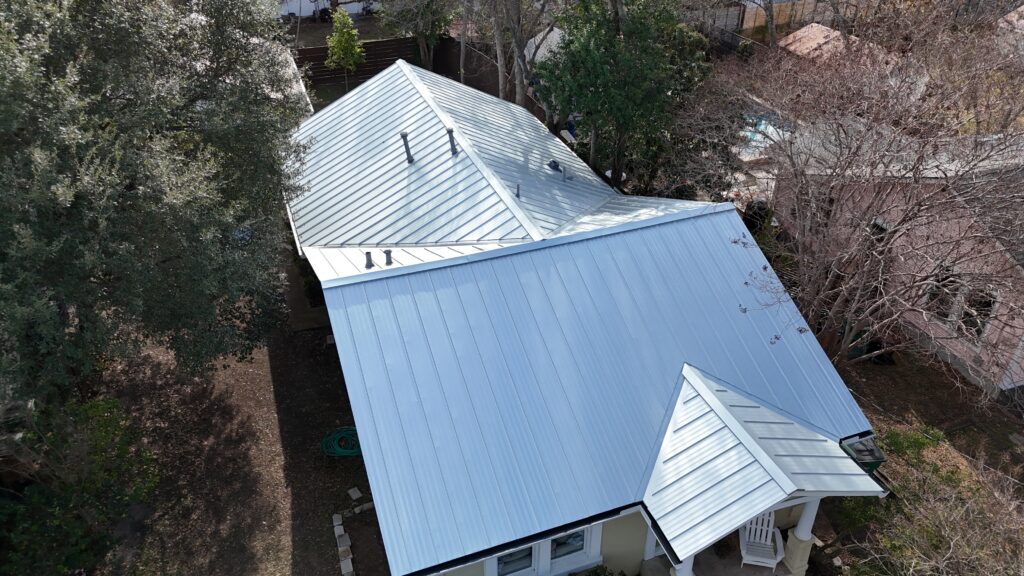
If you’re already doing a full replacement, it’s worth putting standing seam metal roofing on the table. Here’s the honest case for it: metal costs more upfront — roughly two to three times a quality shingle installation. It lasts 40 to 50 years with proper installation. It handles hail better than asphalt. It reflects heat more effectively, which can take real money off your summer cooling bills. And if you’re planning to stay in your Round Rock home for another 25 or 30 years, the cost-per-year math on metal looks very different than the sticker shock does at first. We’ll walk you through the comparison during your estimate visit. No pressure either direction — it’s your house and your call.
Why RoofsOnly.com for Roof Replacement in Round Rock, TX
We’re Austin-based. Twenty miles down the road, not a company dispatching Round Rock jobs from a regional center in another state. Cedar Park, Georgetown, Round Rock — we work this area constantly, and we’re accountable to this community in a way that out-of-town storm chasers never will be. Our 5.0-star rating across 104+ Google reviews is built on consistency over years, not a marketing campaign. The people behind those reviews are actual Williamson County homeowners.
GAF certification plus Owens Corning Preferred Contractor status is real credentialing. Both mean our installations meet manufacturer requirements for warranty coverage. We’re family-owned. Call (512) 677-6011 and you’ll talk to someone directly. No call center, no sales queue, no pitch to sit through before you can ask a straightforward question.
Explore More Roofing Services
Roof Replacement In Cedar Park
Roof Replacement In Georgetown
Get a Free Roof Replacement Estimate in Round Rock
If your Round Rock roof is overdue for a look — whether a storm forced the question or you just realize it’s been a while since anyone checked — call us at (512) 677-6011. Free inspection, written estimate, no obligation. We cover all of Round Rock: the historic downtown neighborhoods, the Dell corridor, the northwest part of the city out near Chandler Creek and Walsh Ranch, and everything in between.
How much does roof replacement cost in Round Rock?
For a typical Round Rock home — 2,000 to 2,500 square feet, architectural shingles, moderate pitch — you’re generally looking at $9,000–$15,000. What pushes the number up: steep pitch, multiple valleys, decking damage that needs to be addressed, and premium material upgrades like impact-resistant shingles or metal. We provide written, itemized estimates so you know exactly what you’re paying for before committing to anything.
Schedule Your FREE Roof Inspection