
How Long Do You Have to File a Hail Damage Claim in Texas?

How Long Do You Have to File a Hail Damage Claim in Texas?
In Texas, homeowners have two years from the date of the storm to file a hail damage insurance claim. This deadline is established under Texas Insurance Code Section 542A.003 and applies to most residential property insurance policies in the state. Two years sounds like a long time. It is not, and here is why: the clock starts on the date of the storm, not the date you discover the damage, not the date you call a roofer and not the date the leak starts. If the storm hit your Austin area home on May 28, 2025, your filing deadline is May 28, 2027.
Missing that deadline means your carrier has legal grounds to deny your claim entirely regardless of how clear the damage is. This post explains the Texas filing deadline in plain terms, what can shorten it, what to do if you are approaching it and how to protect your right to coverage before time runs out.
If you have a storm date and are not sure whether your roof has damage worth claiming, call us at (512) 677-6011 for a free inspection. We will tell you honestly whether the damage meets your policy threshold before you file anything.
What Does the Two-Year Deadline Actually Mean?
Texas Insurance Code Section 542A.003 sets the statute of limitations for residential property damage claims, including hail and wind damage, at two years from the date of loss. The date of loss is the date the storm occurred, confirmed by weather data, not the date you noticed damage or the date a contractor inspected your roof.
This means three things in practice:
You do not need to complete the claim within two years. You need to file it, meaning initiate contact with your carrier and submit notice of the claim, within two years. The adjustment, negotiation and payment process can extend beyond that window once the claim is filed.
The clock does not reset when you find new damage. If an inspector finds additional damage three months after you first reported the claim, that supplemental damage still traces back to the original storm date. Supplement claims are common and legitimate, but they do not restart the statute of limitations.
Your policy may impose a shorter deadline than state law. Texas law sets the maximum window at two years, but your individual policy may contain a notice provision requiring you to report damage within a shorter timeframe, sometimes 30, 60 or 90 days of discovering it. Read your policy declarations page carefully. If you do not have it, call your carrier and ask for the notice requirements specific to your policy.
What Can Shorten Your Filing Window in Texas?
Your Policy’s Notice Provision
Many Texas homeowner policies contain a “prompt notice” or “timely notice” requirement separate from the two-year statutory deadline. This provision requires you to notify your carrier of a loss within a reasonable time after discovering it. While Texas courts have generally interpreted this broadly in favor of policyholders, a carrier can use delayed notice as grounds to dispute or reduce a claim. If you know a storm hit your area, notify your carrier you may have a claim even before you have a professional inspection. You are not committing to filing by making contact.
Policy Renewal or Cancellation
If your policy was cancelled or non-renewed after the storm date, the claim window may be affected. Contact your prior carrier directly and confirm the claims process for a policy that is no longer active. Texas law still provides protections for claims that occurred during the policy period, but the process is different and requires direct engagement with the carrier.
ACV Policy Depreciation Recovery Deadlines
If you have an ACV policy, Actual Cash Value, your initial payout reflects the depreciated value of the roof at the time of the storm. Many ACV policies allow you to recover the held-back depreciation after repairs are completed. That recovery is a separate deadline. Most policies give you 180 days to 2 years after the initial payment to submit proof of completed repairs and claim the depreciation recovery. Missing this deadline means leaving real money on the table.
The May 28, 2025 Hail Event in Austin and Cedar Park
The May 28, 2025 storm affected thousands of homes across Travis and Williamson counties, including neighborhoods in Cedar Park, Round Rock, Pflugerville and North Austin. The event produced hail ranging from .75 inches to 1.5 inches across different parts of the metro area.
If your home was in the path of that storm and you have not had a professional inspection, your filing deadline is May 28, 2027. That is the outer boundary. In practice, waiting until 2027 creates real problems. Adjusters are harder to schedule. Roof conditions change. Weather data becomes harder to correlate. Contractor availability during peak claims periods can affect timelines. The strongest position for any insurance claim is an inspection and filing within the first six to twelve months of the storm date.
We are currently inspecting homes affected by the May 28, 2025 event. Call (512) 677-6011 or schedule your free inspection online.
What to Do Before You File a Hail Claim in Texas
Step 1: Get a Professional Inspection Before You Call Your Carrier
Do not file a claim based on a neighbor’s advice or a door-to-door contractor’s assessment. File based on documented findings from a trained inspector. An inspection before filing gives you an independent record of the damage that exists before the adjuster arrives. This documentation strengthens your claim and gives you a baseline to compare against the adjuster’s findings.
Step 2: Pull Your Policy and Find the Date of Loss
Confirm the storm date using weather data for your specific address. The National Weather Service maintains historical storm records by zip code. Your insurance carrier will also have this on file. Confirm your policy’s notice requirements and any specific language around the claims process before you make your first call to the carrier.
Step 3: File Notice With Your Carrier
Call your carrier’s claims line and report the potential claim. Give them the storm date, your address and confirm that you have had or will be scheduling a professional inspection. You do not need to have a completed inspection report in hand to file notice. Filing notice stops the clock and preserves your right to coverage while the inspection and adjustment process plays out.
Step 4: Be Present for the Adjuster Meeting
The adjuster meeting is one of the most important steps in the claims process. Have your inspection documentation ready. Walk the adjuster through every finding. If you have a roofing contractor present who is familiar with the documentation, they can point out items the adjuster may otherwise miss or undervalue. A missed item at the adjuster meeting is difficult to recover later.
Step 5: Review the Adjuster’s Estimate Before You Accept
The adjuster’s estimate is a starting point, not a final number. Line items are routinely missed, undervalued or coded incorrectly. Compare the adjuster’s scope against your contractor’s inspection findings. Any discrepancy is a supplement claim. Supplements are standard and expected on complex storm damage claims. Do not sign a final release until you are confident the scope is complete.
RCV vs ACV: How Your Policy Type Changes the Math
Your policy type determines how much your carrier pays and when. This distinction matters more than most homeowners realize going into a claim.
RCV, Replacement Cost Value: Your carrier pays the full cost to replace your roof with like materials at current prices, minus your deductible. You pay your deductible. The carrier covers the rest. This is the best policy type for homeowners and the most common on newer homes in Travis and Williamson counties.
ACV, Actual Cash Value: Your carrier pays the depreciated value of your roof at the time of the storm. A 15-year-old asphalt shingle roof has depreciated significantly from its original value. On a roof that would cost $14,000 to replace today, an ACV payout might be $6,000 to $8,000 after depreciation. You pay your deductible plus the depreciation gap out of pocket.
Some ACV policies allow depreciation recovery after repairs are completed. If yours does, the process is: receive initial ACV payment, complete the replacement with a licensed contractor, submit proof of completion to the carrier and claim the held depreciation. The deadline for depreciation recovery varies by policy but is typically 180 days to 2 years from the initial payment date.
If you are not sure which policy type you have, look at your declarations page or call your agent and ask directly: do I have an RCV or ACV policy for my roof? The answer changes your financial planning significantly.
What If You Are Approaching the Two-Year Deadline?
If your storm date was more than 18 months ago and you have not filed, act now. Do not wait. Here is the minimum required:
Call your carrier and file notice of the claim today. You do not need an inspection completed first. Filing notice preserves your right to coverage under the two-year window. Then schedule a professional inspection and begin the documentation process. An experienced roofing contractor familiar with insurance claims can help you reconstruct the timeline and correlate the damage to the original storm date using weather records and physical evidence on the roof.
The window is not gone until it is actually gone. But it closes fast and the quality of your claim weakens the longer you wait.
Why the Inspection Matters More Than Most Homeowners Realize
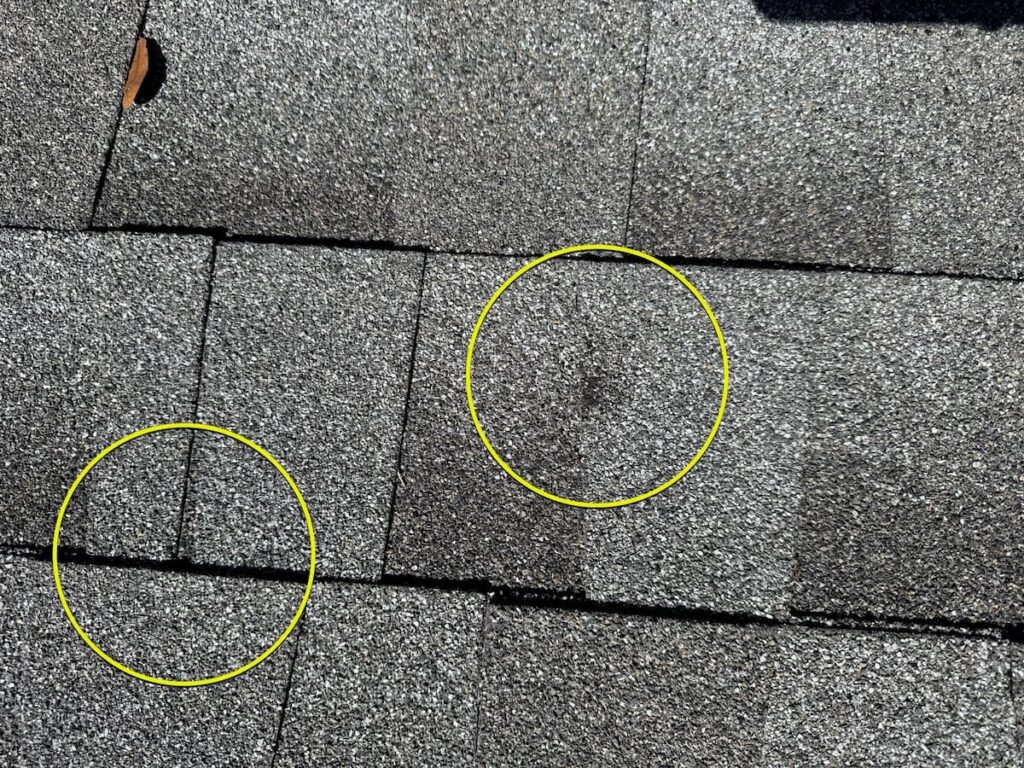
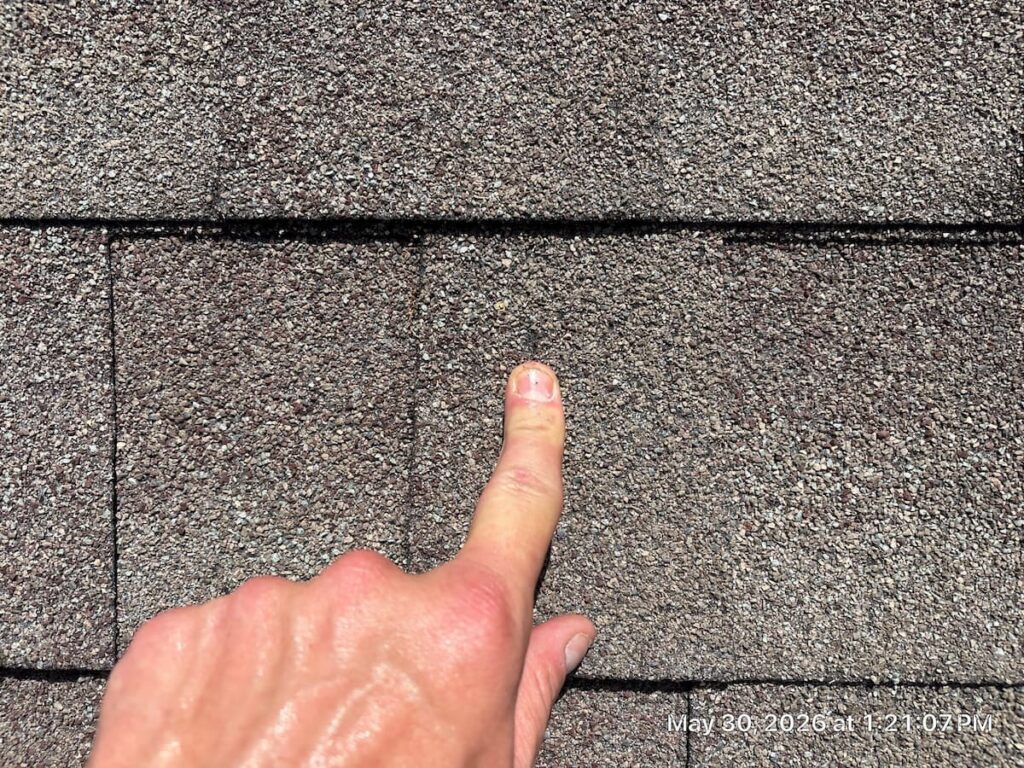
The inspection report is the foundation of your claim. It establishes the damage before the adjuster arrives, creates a photographic record that exists independent of the carrier and gives you a specific scope to compare against the adjuster’s estimate.
At RoofsOnly.com, every inspection is documented through CompanyCam with labeled photos of every impact point, every penetration, every slope and every area of collateral damage on soft metals. That documentation is structured to support an insurance claim from the start. We are not just looking at your roof. We are building your case.
We have assisted hundreds of Austin-area homeowners through the claims process across Travis and Williamson counties. We do not charge for inspections. We work directly with adjusters. And we explain every step in plain language before you make any decision. Learn more about how the insurance claim process works on our dedicated claims page.
Frequently Asked Questions: Hail Damage Claims in Texas
How long do I have to file a hail damage claim in Texas?
Two years from the date of the storm. Texas Insurance Code Section 542A.003 sets this as the statute of limitations for residential property damage claims including hail and wind. The clock starts on the storm date, not the date you discover damage or call a contractor.
What happens if I miss the two-year deadline in Texas?
Your carrier has legal grounds to deny the claim entirely. Once the statute of limitations expires, you lose your right to file regardless of how clear the damage is or how legitimate the claim would have been. There are very limited exceptions and they are difficult to invoke. Do not miss the deadline.
Does my Texas homeowner policy have a shorter deadline than two years?
It might. Texas law sets the maximum at two years but your individual policy may contain a notice provision requiring you to report damage within 30, 60 or 90 days of discovering it. Read your policy declarations page or call your carrier and ask specifically about the notice requirements for storm damage claims.
Can I file a hail claim in Texas if I just discovered the damage?
Yes, as long as the storm date is within the two-year window. The damage does not need to be recent. It needs to be traceable to a specific storm event that occurred within the filing period. Weather records, hail maps and physical evidence on the roof are used to correlate damage to a specific storm date.
Should I get a roof inspection before filing a hail claim in Texas?
Yes. A professional inspection before you file gives you an independent record of the damage that exists before the adjuster arrives. This documentation strengthens your claim and gives you a baseline to compare against the adjuster’s findings. Filing without documentation puts you at a disadvantage from the start.
What is the difference between an RCV and ACV policy in Texas?
An RCV policy pays the full cost to replace your roof at current prices minus your deductible. An ACV policy pays the depreciated value of the roof at the time of the storm, which on a 15-year-old asphalt roof is significantly less than replacement cost. Knowing which policy you have before the adjuster meeting changes how you plan for out-of-pocket costs.
Can I recover depreciation on an ACV policy in Texas?
Some ACV policies include a depreciation recovery provision that allows you to claim the held depreciation after repairs are completed. The deadline for recovery is typically 180 days to 2 years from the initial payment. Submit proof of completed repairs to your carrier within that window. If you miss it, the depreciation is forfeited.
Do I need a roofing contractor at the adjuster meeting?
You are not required to have one but having a contractor present who is familiar with your inspection documentation is a significant advantage. Adjusters routinely miss line items or undervalue damage. A contractor on-site can walk the adjuster through every finding in real time. Items missed at the adjuster meeting require a supplement claim to recover, which takes more time and more documentation.
What if the adjuster’s estimate is lower than my contractor’s estimate?
File a supplement claim. Supplement claims are standard on complex storm damage jobs and are expected by carriers. Compare your contractor’s scope line by line against the adjuster’s estimate, identify every discrepancy and submit a written supplement with supporting documentation and photos. Most legitimate discrepancies are resolved through the supplement process.
Does RoofsOnly.com help with insurance claims in Austin?
Yes. We assist Austin-area homeowners through the full claims process at no charge beyond our normal roofing services. We document the damage, explain your policy type, help you prepare for the adjuster meeting and handle supplement claims when the initial scope is incomplete. We serve all of Travis and Williamson counties including Cedar Park, Round Rock, Pflugerville, Leander and Georgetown. Call (512) 677-6011 or read our full insurance claim process guide.
Schedule Your Free Hail Damage Inspection in Austin
If your home was in the path of any storm in the last two years and you have not had a professional inspection, call us today. The inspection is free. The documentation is thorough. And you will know exactly where you stand before you make any decision about filing.
Call (512) 677-6011 or schedule your free inspection online.
