
What Is the Best Roof for Heat in Austin, TX?

What Is the Best Roof for Heat in Austin, TX?
The best roofing material for Austin’s heat is standing seam metal. It reflects significantly more solar radiation than asphalt shingles, withstands Austin’s UV exposure without degrading and carries a 40 to 50 year lifespan that outlasts asphalt by two to one in Central Texas conditions. For homeowners who want the performance of metal at a lower upfront cost, Class 4 impact-resistant architectural shingles with a cool roof coating are the next best option. Stone-coated steel sits between the two in both cost and performance.
Austin averages 228 sunny days per year. Summer temperatures regularly exceed 100 degrees Fahrenheit for weeks at a time. Attic temperatures in poorly ventilated Austin homes reach 140 to 160 degrees during peak summer months. That heat does not just make your home uncomfortable. It accelerates shingle degradation from the inside out, shortens the effective lifespan of your roofing system and drives up cooling costs year over year.
This guide breaks down the best roofing materials for Austin’s climate by performance, cost and lifespan so you can make an informed decision before your next replacement. Call (512) 746-7090 or schedule a free inspection if you want a material recommendation specific to your home.

Why Austin’s Climate Is Harder on Roofs Than Most of the Country
Austin sits in a climate zone that combines three conditions that accelerate roof deterioration faster than national shingle lifespan averages account for.
Intense UV exposure. With 228 sunny days per year, Austin roofs absorb UV radiation at a rate that oxidizes asphalt binders, bleaches granule color and breaks down the fiberglass mat beneath the surface. A shingle rated for 30 years by the manufacturer under standard test conditions often reaches end of life in 18 to 22 years in Austin’s UV environment.
Heat cycling. Austin temperatures swing dramatically between seasons and even within a single week. Roofing materials expand in heat and contract in cold. Repeated cycling over years causes shingles to crack, curl and lose adhesion at the tabs. Metal roofing handles thermal expansion and contraction significantly better than asphalt because it flexes rather than fractures.
Hail frequency. The Austin metro area sits in one of the most active hail corridors in the United States. Travis and Williamson counties average 4 to 6 significant hail events per year. Asphalt shingles absorb impact energy by fracturing the fiberglass mat and displacing granules. Impact-resistant materials, including Class 4 shingles and metal roofing, are engineered to withstand this stress without structural damage.
The Best Roofing Materials for Austin’s Heat, Ranked
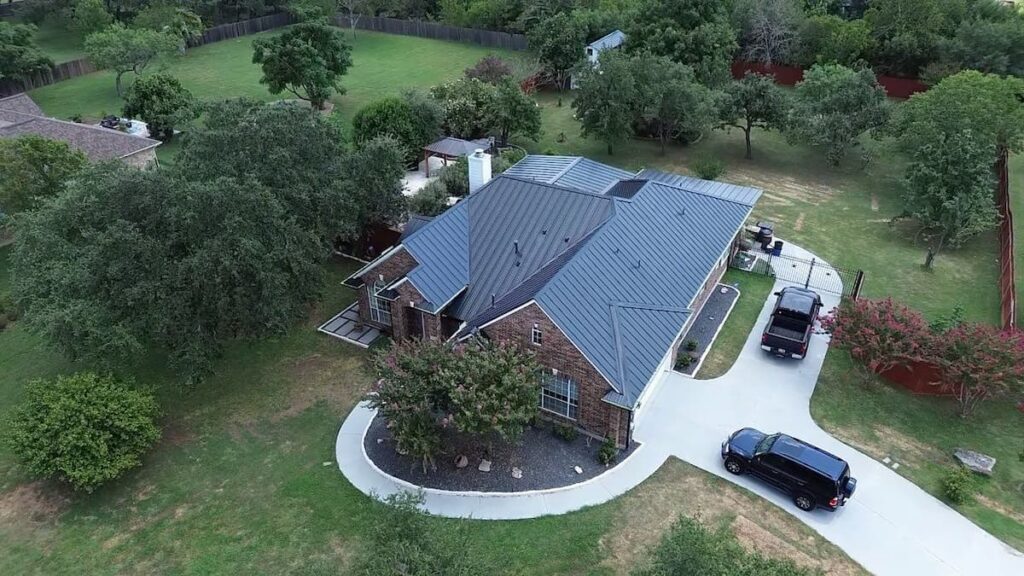
1. Standing Seam Metal Roofing
Standing seam metal is the top-performing roofing material for Austin’s climate across every relevant metric. A properly installed standing seam roof reflects 60 to 70 percent of solar radiation compared to 5 to 15 percent for standard asphalt shingles. That difference translates directly to lower attic temperatures, reduced HVAC load and meaningfully lower cooling costs during Austin summers.
Lifespan in Central Texas: 40 to 50 years. Installed cost on a typical Austin home: $18,000 to $35,000 depending on home size, pitch and panel profile. The premium over asphalt is real but the math often favors metal for homeowners planning to stay long term. One metal roof versus two or three asphalt replacements over the same period frequently puts metal ahead on total cost of ownership.
Metal roofing also performs well in hail events. Standing seam panels with a 24-gauge steel substrate hold up to hail impacts that would fracture asphalt shingles. Many Texas insurance carriers offer premium discounts for metal roofs for this reason. See our full standing seam metal roofing page for details.
2. Stone-Coated Steel
Stone-coated steel delivers metal performance with a traditional shingle aesthetic. It is a good option for homeowners in HOA communities where standing seam profiles are not permitted or for those who prefer the look of a shingle roof. Lifespan: 30 to 40 years in Austin’s climate. Installed cost: $14,000 to $22,000 on a typical home. Heat performance is better than asphalt but not as strong as standing seam due to the granule coating layer absorbing more heat than bare metal panels. Learn more on our stone-coated steel page.
3. Class 4 Impact-Resistant Architectural Shingles
Class 4 shingles are the best asphalt option for Austin’s heat and hail environment. They use a reinforced fiberglass mat that resists hail impact significantly better than standard architectural shingles, and many manufacturers now produce Class 4 products with cool roof granule technology that reflects more solar radiation than standard shingles.
Lifespan in Austin: 20 to 25 years with proper ventilation. Installed cost: $12,000 to $17,000 on a typical Austin home. Many Texas carriers offer insurance premium discounts of 15 to 28 percent for Class 4 roofs, which offsets the cost premium over standard shingles over time. This is the most cost-effective upgrade available within the asphalt category for Austin homeowners.
4. Standard Architectural Asphalt Shingles
Standard architectural shingles are the most common roofing material in Austin and the baseline for most insurance replacements. They are not the best performer in Austin’s heat but they are the most affordable entry point. Lifespan in Austin: 18 to 22 years. Installed cost: $10,000 to $14,500 on a typical home. If budget is the primary constraint, standard architectural shingles with proper attic ventilation is a reasonable choice. Without proper ventilation, lifespan drops significantly.
5. Tile Roofing
Clay and concrete tile performs well in heat. The air gap between individual tiles creates natural ventilation that keeps the roof deck cooler than a direct-contact shingle system. Lifespan: 40-plus years. Cost: $20,000 to $38,000 installed on a typical Austin home. Tile requires structural assessment before installation on most homes due to weight, and individual tiles break over time requiring ongoing maintenance. Common in West Lake Hills, Barton Hills and Hill Country area homes. See our tile roofing page for more detail.
Why Attic Ventilation Matters as Much as the Material You Choose
The most heat-resistant shingle in the world underperforms in an attic that hits 160 degrees. Ventilation is not a secondary consideration in Austin’s climate. It is a primary one.
A properly ventilated attic requires one square foot of net free ventilation area for every 150 square feet of attic floor space, split evenly between low intake at the soffits and high exhaust at the ridge. When that balance is off, heat and moisture build up beneath the decking, accelerating shingle degradation from below and warping the plywood decking over time.
The most common ventilation failures we find on Austin-area homes during inspections are insulation packed against soffit vents, blocking intake airflow, and ridge vents that are too short or improperly installed to create adequate exhaust. Both problems are fixable without a full roof replacement. We assess attic ventilation on every free inspection we conduct.
Adding a properly installed ridge vent to an under-ventilated Austin home typically reduces attic temperatures by 20 to 30 degrees during peak summer conditions. That drop extends the life of your shingles, reduces HVAC runtime and lowers your monthly energy costs. It is one of the highest-return improvements available on any roofing system regardless of material choice.
Cool Roof Coatings and Reflective Granules
Several shingle manufacturers now produce products with reflective granule technology designed specifically for hot climate markets like Austin. These products carry ENERGY STAR certification and can qualify for federal energy efficiency tax credits under current IRS guidelines.
Owens Corning Duration Cool and GAF Timberline CS are two widely available options in the Austin market. They perform meaningfully better than standard shingles in heat reflection while maintaining the same install process and cost structure as standard architectural shingles. The cost premium over standard shingles is typically $500 to $1,500 on a full replacement job. For most Austin homeowners replacing a storm-damaged roof, upgrading to a cool roof product at replacement time is an easy decision.
What RoofsOnly.com Recommends for Austin Homes
The right material for your home depends on your budget, your timeline and your specific roof characteristics. Here is how we think about it:
If you plan to stay in the home 15 or more years: Standing seam metal is worth the investment. One replacement versus two or three over your ownership period puts the total cost of ownership in metal’s favor, and the performance difference in Austin’s heat is significant.
If you are replacing due to a storm claim: Class 4 impact-resistant shingles are the best upgrade within the insurance replacement framework. The cost difference over standard shingles is modest. The insurance discount and extended performance are meaningful.
If budget is the primary constraint: Standard architectural shingles with cool roof granules and a properly balanced ventilation system. Do not skip the ventilation assessment. It costs nothing during a free inspection and is the single highest-impact way to extend the life of any shingle product in Austin’s climate.
“Austin’s heat does not care what the manufacturer’s warranty says. It operates on its own schedule. The best thing you can do for any roofing material in Central Texas is pair it with a ventilation system that actually works. We check that on every inspection we do because it changes the math on every material recommendation we make.”
— Jake Mullin, Owner, RoofsOnly.com

Frequently Asked Questions: Best Roof for Heat in Austin TX
What is the best roofing material for Austin’s heat?
Standing seam metal is the best roofing material for Austin’s heat. It reflects 60 to 70 percent of solar radiation, handles thermal expansion and contraction better than asphalt and carries a 40 to 50 year lifespan in Central Texas conditions. For homeowners who want asphalt, Class 4 impact-resistant shingles with cool roof granules are the best option within that category.
How hot does an Austin attic get in summer?
An Austin attic without adequate ventilation reaches 140 to 160 degrees Fahrenheit during peak summer months. Properly ventilated attics run 20 to 30 degrees cooler. That temperature difference directly affects shingle lifespan, HVAC performance and monthly energy costs.
Does metal roofing keep a house cooler in Austin?
Yes. Standing seam metal reflects significantly more solar radiation than asphalt shingles, which reduces attic temperatures, lowers HVAC load and can reduce cooling costs by 10 to 25 percent in Austin’s climate depending on the home’s insulation and ventilation system.
How long do asphalt shingles last in Austin TX?
Standard architectural asphalt shingles last 18 to 22 years in Austin’s climate under normal conditions. The combination of intense UV exposure, heat cycling and frequent hail events shortens the effective lifespan compared to national manufacturer averages, which are typically 25 to 30 years under standard test conditions.
Are Class 4 shingles worth it in Austin?
Yes. Class 4 impact-resistant shingles offer better hail resistance, longer lifespan and often trigger insurance premium discounts of 15 to 28 percent from Texas carriers. The cost premium over standard architectural shingles is typically $1,500 to $3,000 on a full replacement. The insurance discount alone frequently recovers that cost within a few years.
What is a cool roof and does it work in Austin?
A cool roof is any roofing system designed to reflect more solar radiation than a standard roof. In Austin, cool roof options include standing seam metal, ENERGY STAR certified shingles with reflective granules and white TPO membrane on flat roofs. They work in Austin’s climate and are one of the most practical ways to reduce cooling costs on a residential property.
Is tile roofing good for Austin’s heat?
Yes. Clay and concrete tile performs well in heat because the air gap between individual tiles creates natural ventilation that keeps the roof deck cooler than direct-contact shingle systems. The tradeoff is cost, weight and ongoing maintenance as individual tiles break over time. Tile is most common in West Lake Hills, Barton Hills and Hill Country area homes in the Austin metro.
Does roof color affect heat in Austin?
Yes, but less than material choice and ventilation. Lighter colored shingles reflect more solar radiation than dark ones. The difference in attic temperature between a dark charcoal shingle and a light gray shingle on the same roof is approximately 10 to 15 degrees. Material choice and ventilation have a larger impact on attic temperature than color alone. We covered this in more detail in our post on what your roof color is costing you in an Austin summer.
What roofing material is best for hail and heat in Austin?
Standing seam metal handles both conditions best. It reflects heat and withstands hail impact without the granule loss and fiberglass mat fracturing that occurs on asphalt shingles. For homeowners who prefer shingles, Class 4 impact-resistant shingles with cool roof granules are the best dual-purpose option within the asphalt category.
How do I know if my roof is ventilated properly in Austin?
A professional inspection that includes attic access is the only reliable way to assess ventilation. Signs of inadequate ventilation include attic temperatures above 130 degrees in summer, moisture staining on decking or rafters, premature shingle curling and high cooling bills relative to similar homes in your area. We assess attic ventilation on every free inspection we conduct. Call (512) 746-7090 to schedule.
Get a Free Roofing Material Consultation in Austin
If you are replacing your roof and want a straight comparison of materials for Austin’s specific climate, schedule a free inspection. We will assess your current system, your ventilation, your attic and your specific roof characteristics and give you a written estimate for every material option that makes sense for your home.
Call (512) 746-7090 or schedule online. We serve all of Austin, Cedar Park, Round Rock, Pflugerville, Leander, Georgetown and surrounding communities across Travis and Williamson counties.
