
How Texas Heat Affects Shingle Roofs: Damage Signs & Prevention Strategies

Austin summers push asphalt shingles harder than most homeowners realize. Direct sun, daily temperature swings and weeks of 100-degree afternoons wear a shingle roof down slope by slope. The damage rarely looks dramatic. It builds for years, then shows up as a leak.
This post explains how heat damages shingles, what the damage looks like, how to tell heat damage from hail damage and what to do about it.
How Heat Damages Asphalt Shingles
UV Exposure
UV rays break down the asphalt binder that holds your shingles together. The binder gives shingles their flexibility and waterproofing. As it ages, shingles dry out and crack. The granules on the surface shield the asphalt from UV. When granules wash into your gutters, the shingle underneath ages faster. Read more about what granular loss on a roof means for your home.
Thermal Expansion and Contraction
A roof surface in direct summer sun reaches well over 150°F. Overnight temperatures drop sharply. Every day your shingles expand and contract. Over years this cycle loosens granules and opens small cracks. See how Texas weather affects the lifespan of your roof.
Dark Colors and Attic Heat
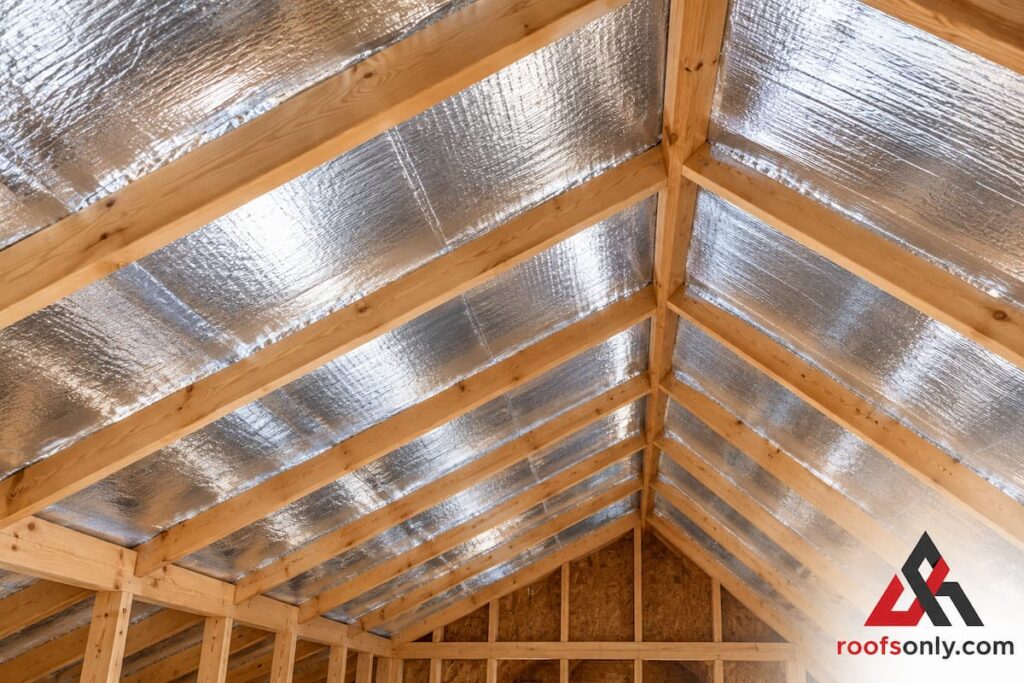
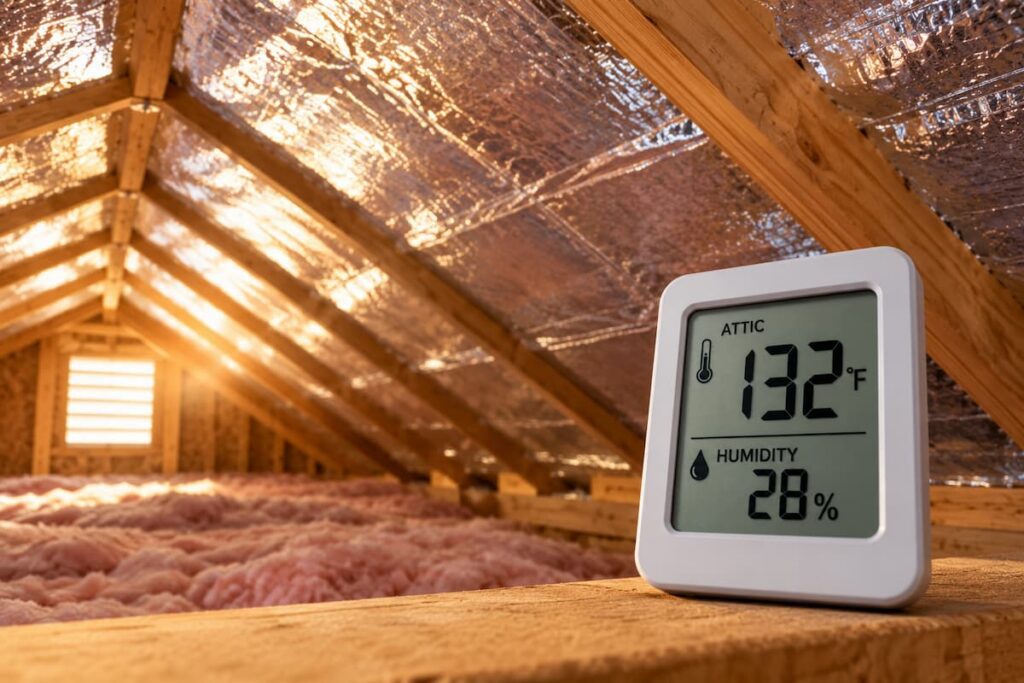
Dark shingles absorb more heat than light ones. Heat trapped in your attic cooks the roof from underneath, so shingles age from both sides. Poor ventilation makes this worse. Learn how cool roofs for Texas climates reduce the load.
Warning Signs of Heat Damage
Do not wait for a leak. Look for these signs.
Granule loss. Check your gutters after a rain. Heavy granule buildup means your shingles are aging fast. Bare patches show dark asphalt.
Cracks and splits. Heat-dried shingles crack along edges and seams. Cracks let water reach your decking.
Curling or cupping edges. Shingle edges lift or turn upward. Curling shingles lose their seal and fail in the next windstorm.
Blisters. Small raised bubbles on the surface. Blisters break open and shed granules.
Dried or cracked flashing and sealant. Heat dries out the sealant around vents, chimneys and skylights. Read our guide to roof flashing.
Hot upstairs rooms or rising cooling bills. A hot attic points to ventilation trouble. See why roof ventilation matters.
Heat Damage vs. Hail Damage
The two look different and insurance treats them differently. Hail leaves random, circular bruises where stones hit. Dented vents, gutters or flashing often sit nearby. Heat damage shows as slow, widespread wear: curling, cracking and granule loss across whole slopes. The south and west sides usually go first because they take the most sun.
Most Texas policies cover sudden storm and hail damage. Wear and tear does not qualify. If your roof shows both, photos from a full inspection show which damage is which. A free inspection sorts this out before you call your insurer. See our Hail Damage page and the most common claim mistakes.
How to Protect Your Roof From Texas Heat
Choose Materials Built for Heat
If you replace your roof, ask about lighter-colored and reflective shingles. Metal roofing reflects heat instead of absorbing it and lasts 40 to 50 years. Class 4 impact-resistant shingles protect against hail, not heat. They are still a strong upgrade in Austin’s hail market. See how a new roof helps save energy costs.
Fix Attic Ventilation
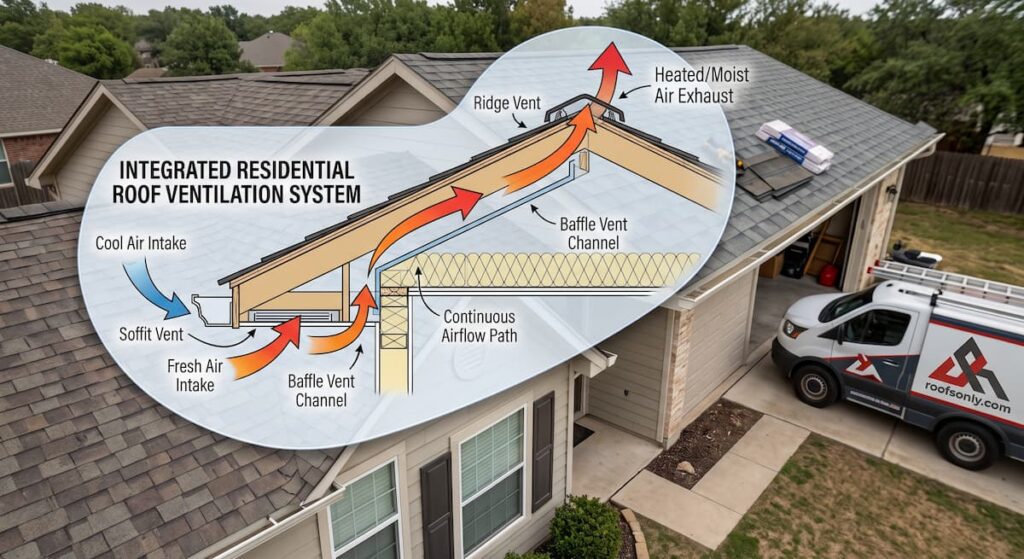
A well-ventilated attic lets hot air escape instead of baking your roof from below. The common code ratio is one square foot of vent area per 150 square feet of attic floor. Balanced intake and exhaust allow one per 300. If your upstairs runs hot, ask us to check your ridge vent and soffit vents. We assess ventilation on every inspection.
Inspect Once a Year
Inspect your roof every year and after any major storm. The end of summer is a good time. Clear debris from valleys and gutters. Trim branches that touch the roof, as covered in our post on tree damage to roofs. Our free roof inspection includes photos and an honest written assessment.
“Heat does not leave one dramatic mark. It wears a roof down slope by slope. The south and west sides go first. Most owners never look up there until a stain shows on the ceiling.”
Jake Mullin, Owner, RoofsOnly.com
Repair or Replace?
Roofs under 15 years old with isolated damage are almost always repair candidates. A few cracked shingles or a dried-out pipe boot costs $200 to $1,500 to fix. See our roof repair page.
Roofs 15 to 20 years old need evaluation. A repair makes sense when it costs less than 30% of a replacement and the damage stays isolated. Replacement is the better investment when several slopes show granule loss, curling or cracking.
Roofs over 20 years old are at or near the end of their service life. Plan a replacement. A repair on a roof this age typically buys 12 to 24 months. See what a complete roof replacement includes.
What It Costs
Most residential replacements in Austin fall between $8,000 and $25,000. Architectural shingles typically run $10,000 to $14,500 on a 2,000 sq ft home. Class 4 shingles run $12,000 to $17,000. Read our full cost breakdown and use the instant cost estimator for your home.
Frequently Asked Questions About Heat and Shingle Roofs
Does Texas heat damage shingle roofs?
Yes. Heat, UV exposure and daily temperature swings age asphalt shingles faster than cooler climates do. The damage builds slowly as granule loss, cracking and curling.
How long do shingles last in Austin?
3-tab asphalt shingles last 15 to 18 years. Architectural asphalt shingles last 20 to 25 years. Metal roofing lasts 40 to 50 years. Austin’s UV exposure and heat cycles push shingles toward the low end of their range.
Does homeowner’s insurance cover heat damage?
Most Texas policies cover sudden storm and hail damage. Heat damage is wear and tear, which does not qualify. If hail also hit your roof, that part is claimable. See our insurance claim process.
Do light-colored shingles help in Texas heat?
Lighter shingles absorb less heat and lower stress on your roof and attic. They do not stop UV aging, so ventilation still matters.
How often should I inspect my roof in Austin?
Once a year, plus after any significant storm. The best times are after spring hail season (April through June) and at the end of summer. Our inspections are free.
What does a roof replacement cost in Austin?
Most residential replacements fall between $8,000 and $25,000. Architectural shingles typically run $10,000 to $14,500 on a 2,000 sq ft home. Class 4 shingles run $12,000 to $17,000. See our cost breakdown or use the instant cost estimator.
Get a Straight Answer on Your Roof
Schedule a free roof inspection or call (512) 746-7090. We photograph every finding and give you a written estimate. We serve Austin, Cedar Park, Round Rock, Pflugerville, Leander, Kyle, Buda and surrounding communities. Have more questions? Read our Austin roofing FAQ.
