
What Is the Most Heat-Resistant Roofing Material?

What Is the Most Heat-Resistant Roofing Material?
Clay and concrete tile rank as the most heat-resistant roofing materials in independent testing, followed closely by standing seam metal with a reflective finish. Both perform well by two measures that matter for heat: solar reflectance, how much sunlight the surface bounces away rather than absorbs, and thermal emissivity, how efficiently the material releases absorbed heat rather than holding onto it. Slate performs well on emissivity but is heavy and expensive. Standard dark asphalt shingles sit at the bottom of the list on both measures, which is why cool roof shingle products now exist specifically to close that gap.
This post ranks every major roofing material by heat performance and explains the two properties that actually determine how hot a roof gets. If you want a comparison specific to Austin’s climate and cost data for each material installed locally, see our full guide on the best roof for heat in Austin TX.
The Two Properties That Determine Heat Resistance
Roofing materials are evaluated for heat performance using two separate measurements defined by testing standards from the ENERGY STAR program and the Cool Roof Rating Council.
Solar reflectance measures the percentage of solar energy a surface reflects rather than absorbs, expressed on a scale from 0 to 1. A higher number means more sunlight is bounced away before it becomes heat. Dark, non-reflective surfaces score low. Light-colored or specially coated surfaces score higher.
Thermal emissivity measures how efficiently a material releases the heat it does absorb, also on a scale from 0 to 1. A material can absorb some heat but still perform well if it sheds that heat quickly rather than radiating it downward into the attic space below.
The combination of these two properties determines a material’s overall heat performance far more accurately than color or material category alone. A dark material with high emissivity can outperform a lighter material with poor emissivity.
Ranking Roofing Materials by Heat Resistance
1. Clay and Concrete Tile
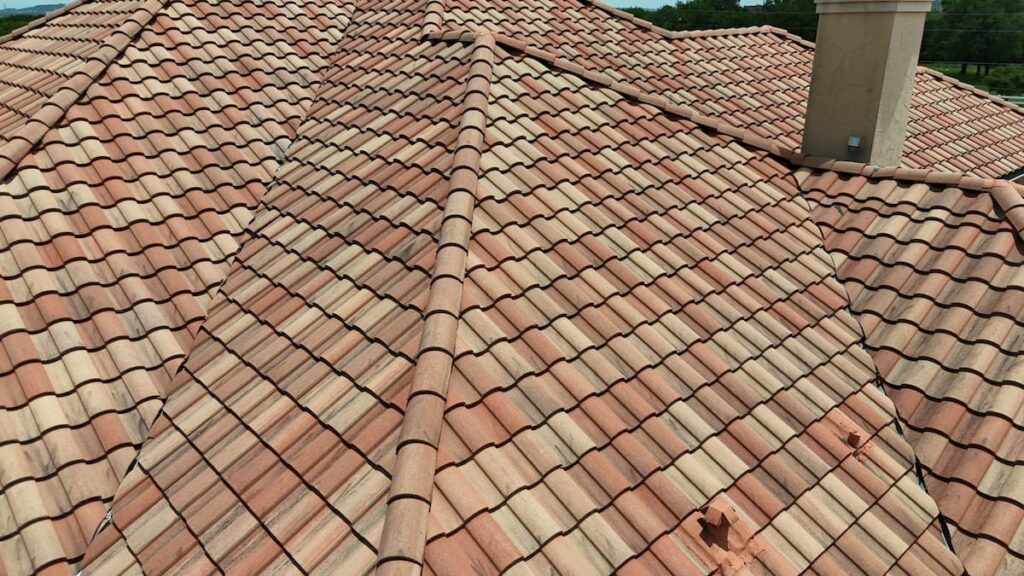
Tile ranks at the top for a structural reason as much as a material one. Beyond the tile surface itself, the profile of barrel and S-shaped tiles creates an air gap between the tile and the roof deck below. That air gap allows convective airflow that continuously carries heat away from the structure, which is a ventilation advantage that flat materials cannot replicate regardless of their surface properties. Light-colored clay and concrete tile combine strong solar reflectance with this structural ventilation benefit, making it the most consistently heat-resistant category of roofing material available.
2. Standing Seam Metal with Reflective Coating
Uncoated metal alone is not automatically heat resistant. A bare dark metal panel can get extremely hot. What makes standing seam metal a top performer is the combination of a high-reflectance factory-applied finish and metal’s inherently high emissivity, meaning it releases absorbed heat quickly rather than holding it. Cool-rated metal roofing products, identifiable by their ENERGY STAR or CRRC rating, achieve solar reflectance values competitive with tile while adding the structural advantage of an air gap when installed over battens rather than direct decking contact.
3. Slate
Natural slate has excellent thermal mass and emissivity, meaning it releases heat efficiently once absorbed. Its solar reflectance is lower than tile or reflective metal since slate is typically dark gray or black, but its emissivity performance keeps it from trapping heat as aggressively as other dark materials. Slate’s primary drawbacks for heat-driven material selection are weight and cost rather than thermal performance.
4. Cool Roof Asphalt Shingles
Standard asphalt shingles rank at the bottom of the heat performance list, but manufacturers have developed cool roof shingle products specifically engineered to close that gap. These use reflective granule technology that increases solar reflectance significantly above standard shingles while maintaining the same asphalt shingle installation profile and cost structure. ENERGY STAR certified shingle products from major manufacturers now reach solar reflectance values that meaningfully reduce attic heat gain compared to standard dark shingles, though they still fall short of tile or reflective metal in direct comparison.
5. Standard Architectural Asphalt Shingles
Standard dark asphalt shingles perform the worst on both measures. Low solar reflectance means most sunlight converts directly to heat at the surface. Moderate emissivity means that heat is released more slowly than metal, allowing it to conduct into the decking and attic space below. This is the baseline every other material and every cool roof upgrade is measured against.

Why Ventilation Matters as Much as the Material Itself
Solar reflectance and emissivity describe the material’s own performance, but the roofing system’s ventilation design determines how much of that absorbed or reflected heat actually reaches the living space below. A roof with excellent material-level heat resistance installed over a poorly ventilated attic will still allow significant heat buildup, because trapped hot air beneath the roof deck has nowhere to escape.
This is why tile’s structural air gap is such a meaningful advantage. It is not just a reflectance number, it is a built-in ventilation channel that continuously moves heat away from the structure regardless of attic design below it. Metal roofing installed over battens rather than direct decking contact gains a similar advantage. Asphalt shingle systems rely entirely on separate attic ventilation, meaning ridge vents, soffit vents and adequate airflow, to achieve comparable heat management, since the shingle itself sits in direct contact with the decking.
Color’s Role Is Smaller Than Most People Assume
Color affects solar reflectance, but material and coating technology now matter more than color alone. A dark-colored cool roof shingle with reflective granule technology can outperform a lighter-colored standard shingle without that technology. The difference between a dark and light standard asphalt shingle in solar reflectance is real but modest compared to the difference between a standard shingle and a purpose-built cool roof product regardless of color.
This means homeowners are not limited to light colors if heat performance is a priority. Cool roof technology exists specifically so dark colors remain available without sacrificing reflectance performance entirely.
Cost Versus Heat Performance Tradeoff
The materials that perform best on heat resistance also tend to cost more upfront. Tile and reflective standing seam metal sit at the higher end of installed cost. Cool roof asphalt shingles cost only modestly more than standard shingles, making them the most accessible upgrade for meaningful heat performance improvement without a major budget increase.
The right choice depends on budget, expected time in the home and regional climate. In hot climates with high annual cooling costs, the investment in tile or reflective metal often pays back through reduced energy costs over the life of the roof, in addition to the comfort and longevity benefits of lower attic temperatures.
Frequently Asked Questions: Heat-Resistant Roofing Materials
What is the most heat-resistant roofing material?
Clay and concrete tile rank as the most heat-resistant roofing materials due to a combination of strong solar reflectance and a structural air gap between the tile and roof deck that allows continuous convective ventilation. Standing seam metal with a reflective finish ranks close behind.
What is solar reflectance in roofing?
Solar reflectance measures the percentage of solar energy a roofing surface reflects rather than absorbs, rated on a scale from 0 to 1. Higher values mean more sunlight is bounced away before converting to heat at the roof surface. It is one of two properties, along with emissivity, that determine a material’s heat performance.
What is thermal emissivity in roofing?
Thermal emissivity measures how efficiently a roofing material releases the heat it absorbs, rated on a scale from 0 to 1. A material with high emissivity sheds absorbed heat quickly rather than radiating it downward into the attic space, which matters even for materials that are not highly reflective.
Is metal roofing more heat resistant than tile?
Reflective standing seam metal performs close to tile in solar reflectance and has high natural emissivity. Tile edges out metal primarily due to its structural air gap, which provides ongoing ventilation that a directly-installed metal panel does not replicate unless installed over battens with an air space.
Are cool roof shingles as heat resistant as tile or metal?
Cool roof shingles significantly outperform standard asphalt shingles but generally do not match the heat performance of tile or reflective metal. They remain the most cost-accessible upgrade for homeowners who want improved heat performance without the higher installed cost of tile or metal.
Does roof color matter more than material for heat resistance?
Material and coating technology matter more than color alone. A dark cool roof shingle with reflective granule technology can outperform a lighter standard shingle without that technology. Color affects reflectance, but modern cool roof products allow dark colors without fully sacrificing heat performance.
What is the best heat-resistant roofing material for hot climates like Austin TX?
For Austin’s specific climate, standing seam metal is generally the top recommendation when accounting for cost, hail performance and heat resistance together, since it performs nearly as well as tile on heat while costing less and handling Central Texas hail better than tile. See our full guide to the best roof for Austin’s heat for local cost comparisons and material recommendations.
Does slate perform well in heat?
Slate has strong thermal emissivity, meaning it releases absorbed heat efficiently, but its dark color limits solar reflectance compared to tile or reflective metal. Its primary limitations for widespread use are weight and installed cost rather than heat performance itself.
Talk to a Local Roofer About Heat-Resistant Materials
Material performance data is useful, but the right choice for your home depends on your specific roof, budget and climate. If you are in the Austin area, we will walk you through real installed costs and performance for every heat-resistant option available locally. Call (512) 746-7090 or schedule a free inspection online.
