
How Oak Trees and Falling Branches Damage Central Texas Roofs, and Who Pays for Repairs

A live oak limb doesn’t need a storm to come down. Dead wood, drought stress, or just enough weight and it lands on your roof on a calm afternoon. Here’s what that damage actually looks like and who’s on the hook for fixing it.
Central Texas roofs sit under more mature tree canopy than most parts of the state, live oaks, pecans, and cedar elms that predate the houses beneath them. That canopy is part of what makes Austin’s older neighborhoods desirable. It’s also a roofing liability most homeowners don’t think about until a limb is already through the decking.
Why Oak Trees Cause More Roof Damage Than People Expect
Live oaks hold their leaves year-round and grow dense, heavy limb structures that extend well past the trunk. A mature limb overhanging a roofline carries real weight, and unlike a pine or a smaller ornamental tree, a live oak limb doesn’t need high wind to fail. Age, drought stress, oak wilt, and simple structural weight are enough on their own.
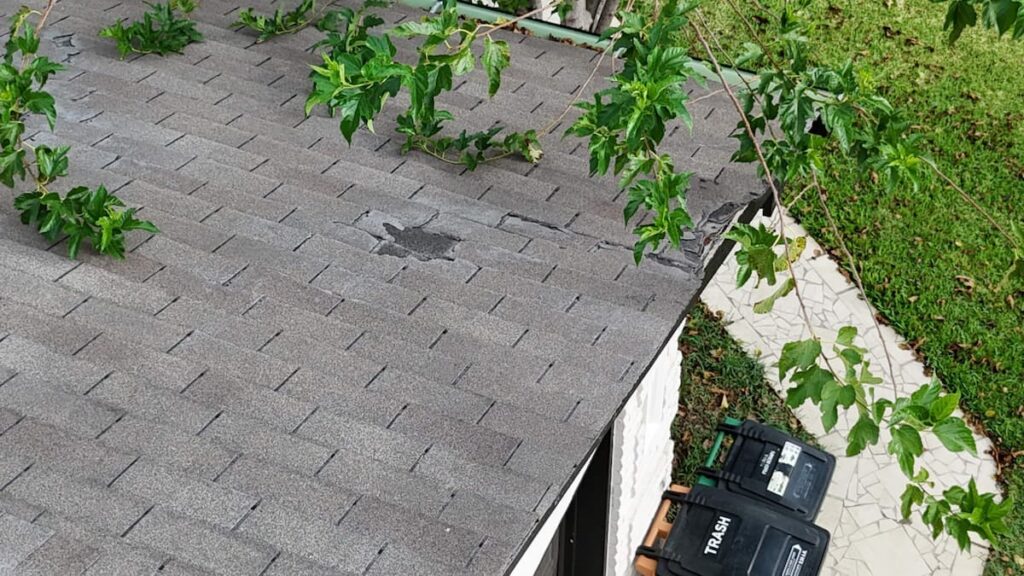
Damage from overhanging branches isn’t always a dramatic limb-through-the-roof event. More often it’s slow: branches scraping shingles bare during every windy day, leaves and debris packing into valleys and gutters, and moisture sitting against the roof surface longer than it should because a section stays shaded and damp after every rain.
Who Pays: Your Property Line vs. Your Neighbor’s Tree
This is the question we get asked most on tree-damage calls, and the answer depends on where the tree’s trunk sits, not where the branch that fell was hanging.
If the tree trunk is on your property, even if the branch that damaged your roof was hanging over a neighbor’s yard, it’s generally your responsibility and your homeowner’s insurance claim to file.
If the tree trunk is on your neighbor’s property and a branch falls onto your roof, most homeowner policies still have you file under your own policy first. Your insurer may then pursue your neighbor’s insurer to recover costs, but that process happens between the insurance companies, not between you and your neighbor directly.
The exception that changes everything: if you can document that you warned your neighbor about a visibly dead or diseased tree before it fell, and they ignored it, liability can shift. Photos and a dated written request to a neighbor about a hazardous tree are worth keeping if that situation ever applies to you.
What to Do After a Branch Hits Your Roof
- Photograph the damage and the branch or debris before anything gets moved or cleared
- Check for interior signs of a breach, water stains, light coming through the attic, sagging drywall
- Get a roofer’s inspection before assuming the damage is only where the branch made contact
- File your claim promptly, most policies have a shorter window for wind and tree-fall claims than people assume
Preventing Tree Damage Before It Happens
Trimming overhanging limbs back from the roofline is the single most effective prevention step, and it’s a tree-service job, not a roofing job. What is a roofing job: an annual inspection that catches slow damage, scraped shingles, debris packed into valleys, granule loss from branch contact, before it turns into a leak.
“Most of the tree damage we get called for isn’t the dramatic kind, a limb through the ceiling. It’s a roof that’s been getting scraped by the same overhanging branch for two years straight, and nobody noticed until the shingles wore through. That’s the damage that costs the most in the end, because it went unnoticed the longest.”
— Jake Mullin, Owner, RoofsOnly.com
Tree Damage on Your Roof? Get It Inspected.
Whether a branch just came down or you suspect months of slow damage from overhanging limbs, RoofsOnly documents what’s actually there and tells you honestly what needs repair. If it’s an insurance claim, we help you file it right the first time.
Schedule an Emergency or Routine Roof Inspection
Schedule Your Inspection