
What is “Ordinance or Law” coverage and why it matters for an older Austin roof

If you own an older home in Austin and file an insurance claim for storm damage, you could be hit with a hidden $1,500 to $4,000+ surprise: code upgrade costs. Standard home insurance pays to replace damaged materials with “like-kind and quality.” But if local building codes have updated since your roof was installed, your carrier won’t cover mandatory modern code upgrades—unless your policy includes Ordinance or Law coverage.
This coverage pays for the required structural and safety upgrades that go beyond basic storm repairs, such as modern drip edge flashing, deck re-nailing, or ventilation adjustments. In this guide, we break down the specific Austin roof codes that trigger these out-of-pocket costs, how to check your policy declarations page, and what questions to ask your insurance agent before storm season hits.
“This is one of the most overlooked parts of a homeowner’s policy. Most people have never heard of it until they need it, and by then it’s too late to add it. If your home is older, it’s worth a five-minute call to your agent just to find out whether you have it and how much.”
— Jake Mullin, Owner, RoofsOnly.com
Note: This article provides general educational information for Austin-area homeowners. Policy terms vary by carrier. Confirm your specific policy terms with your insurance agent or declarations page. Have questions about an active claim? Call (512) 746-7090 or read our full insurance claim process guide.
What Does Ordinance or Law Coverage Actually Pay For?
When a storm damages your roof, a standard homeowners insurance policy pays for Restoration—repairing or replacing what was damaged with “like-kind and quality.” However, building codes evolve over time. If your roof was installed 15 to 30 years ago, it was built under outdated requirements that may no longer meet the International Residential Code (IRC) enforced in Austin today.
Ordinance or Law coverage (often listed as an HO 04 77 endorsement) pays for Compliance. It covers the additional cost of bringing the undamaged structural elements and installation methods up to modern code during a storm-related replacement. Without this coverage, your insurer will only pay for the basic repair, leaving you responsible for any mandatory code upgrades required by local inspectors.
4 Austin Building Codes That Trigger Out-of-Pocket Gaps
If you own an older home in Central Austin, Hyde Park, Crestview, or surrounding Travis County neighborhoods, these are the four most common code-required upgrades that pop up during an insurance claim:
1. Mandatory Metal Drip Edge (IRC R905.2.8.5)
Older Austin homes frequently relied on shingles overhanging the roof edge without metal flashing. Modern code strictly mandates corrosion-resistant metal drip edge installed along all eaves and gables to protect fascia boards and decking from water intrusion.
Typical Out-of-Pocket Cost: $500 – $1,200
2. Decking Thickness & Re-Nailing Schedules
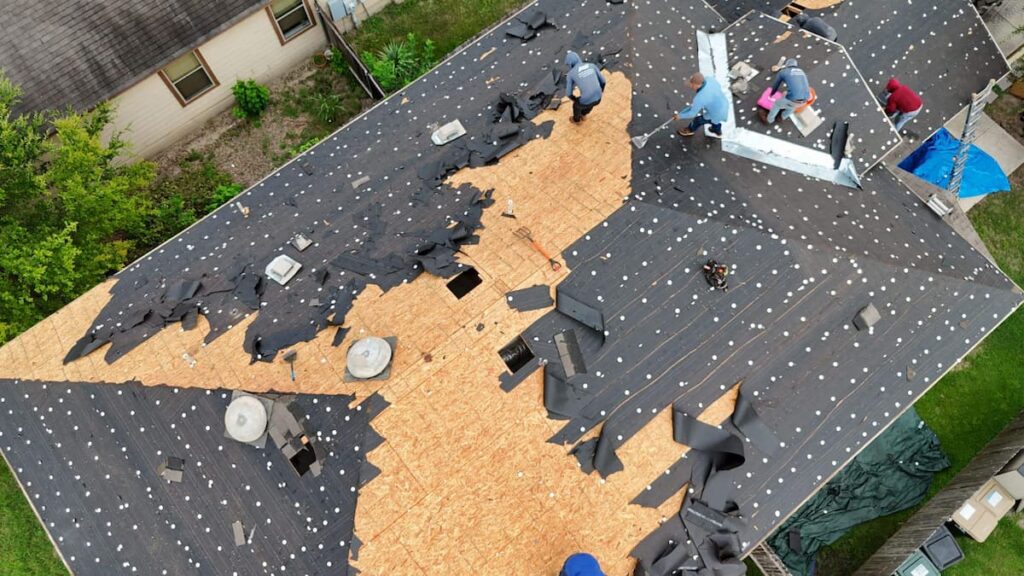
1960s–1980s Austin builds often used spaced plank decking or thin 3/8-inch plywood. Current codes require solid 7/16-inch minimum sheathing and specific wind-resistant nailing schedules (spaced 6 inches on center along edges). If your existing decking fails inspection, entire sections may need to be re-secured or replaced.
Typical Out-of-Pocket Cost: $1,500 – $4,000+
3. Net Free Attic Ventilation Ratios (IRC R806)
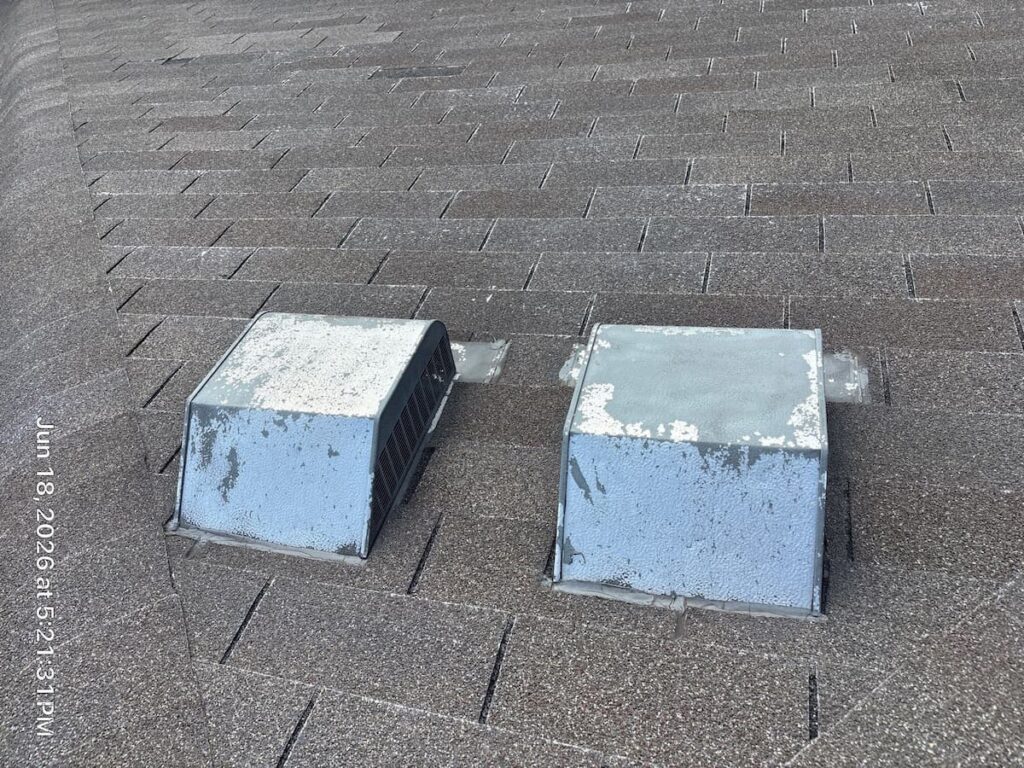
To combat Austin’s intense summer heat and prevent moisture rot, modern codes enforce strict 1:150 (or 1:300) intake-to-exhaust ventilation ratios. Replacing a roof often triggers a mandatory upgrade to ridge vents or additional soffit vents to pass city inspection.
Typical Out-of-Pocket Cost: $400 – $1,000
4. Valley Underlayment & Water Leak Barriers
Modern IRC standards require self-adhered polymer modified bitumen sheets (ice & water shield) in roof valleys and low-slope transitions to handle heavy Texas rainstorms. Older roofs often used simple 15lb felt paper, which no longer meets code in critical roof transitions.
Typical Out-of-Pocket Cost: $300 – $800
How Much Ordinance or Law Coverage Do You Need?
When included, Ordinance or Law coverage is expressed as a percentage of your Dwelling Coverage (Coverage A) limit:
- 10% Coverage (Standard Baseline): On a home with a $350,000 dwelling limit, this provides up to $35,000 toward code upgrades.
- 25% Coverage (Recommended for homes 20+ years old): Gives you up to $87,500 in code protection—ideal for older properties with significant structural code gaps.
Some carriers include a 10% baseline automatically, while others require you to add it manually as an endorsement for a small annual premium increase (often less than $50/year). Because coverage limits vary by carrier and policy, check your declarations page or ask your agent to verify your exact limit before storm season hits.

How to Check Your Policy for Ordinance or Law Coverage
The most reliable place to look is your Insurance Declarations Page (the renewal summary sent annually by your carrier). Scan the “Section I – Coverages” or “Endorsements” line items for one of the following terms:
- Ordinance or Law Coverage
- Law and Ordinance Endorsement (HO 04 77)
- Building Code Upgrade Option
If you don’t see it listed, or if a percentage limit isn’t specified, call your insurance agent directly to confirm. Important: You must add or adjust this coverage before a storm hits. Once a loss occurs, coverage cannot be added retroactively to an open claim.
How RoofsOnly.com Protects You During a Claim
When an insurance adjuster inspects your roof, they typically write an estimate based on a standard like-for-like replacement. They may inadvertently omit mandatory building code upgrades, leaving you with an unexpected bill from your municipality or contractor later on.
Our team bridges this gap during our detailed inspection process:
- Detailed Code Identification: We photograph non-compliant decking, missing drip edge, improper valley flashing, or inadequate ventilation.
- IRC Code Referencing: We cite the exact local International Residential Code (IRC) provisions required by Austin-area building inspectors.
- Supplement Support: We provide these line items directly to your insurance adjuster so your Law & Ordinance coverage can be applied smoothly toward the full scope of work.
Note: Code compliance requirements are distinct from local permitting rules. For more details on municipal guidelines across Travis, Williamson, and Hays counties, read our guide to Austin roof replacement permit requirements.
5 Questions to Ask Your Agent Before Storm Season
If your Austin home is over 15 years old, call your insurance agent and run through this quick 2-minute checklist:
- 1. “Do I currently have Ordinance or Law coverage on my home insurance policy?”
- 2. “Is the limit set at 10%, 25%, or a specific dollar amount of my Dwelling Limit (Coverage A)?”
- 3. “Is this coverage standard on my policy, or do I need to add an endorsement?”
- 4. “If I don’t have it, how much would it cost annually to add a 10% or 25% Law & Ordinance endorsement?”
- 5. “Does my policy require a separate deductible for code-upgrade claims?”
Frequently Asked Questions: Ordinance or Law Coverage
What is ordinance or law coverage on a homeowner’s insurance policy?
Ordinance or law coverage is a policy provision that helps pay for the additional cost of bringing a damaged structure up to current building code during a repair or replacement, beyond what it would cost to simply restore the structure to its prior condition. It’s most relevant on older homes where code has changed significantly since original construction.
Do all homeowner’s insurance policies include ordinance or law coverage?
No. Some policies include a baseline amount automatically, some require it to be added as a separate endorsement for an additional premium, and some don’t include it at all. Coverage varies significantly by carrier and policy, so you need to check your specific declarations page or ask your agent directly.
How much ordinance or law coverage do I need?
This depends on the age of your home and the likelihood that a major repair would trigger significant code-related upgrades. Older homes generally carry more exposure to this gap. A common range for this coverage, when included, is 10 to 25 percent of the dwelling coverage limit, but this varies by policy and isn’t something we can tell you specifically without seeing your declarations page.
Does ordinance or law coverage apply to a roof replacement?
It can, if the replacement is significant enough to trigger current code requirements that didn’t exist when the roof was originally built. Whether it applies to your specific situation depends on your policy and the scope of code-required work, which is a determination made by your carrier.
How do I find out if my policy includes ordinance or law coverage?
Check your insurance declarations page, the summary document your carrier provides at each renewal, for a line item labeled “Ordinance or Law” or “Law and Ordinance.” If you can’t find it or aren’t sure, call your insurance agent directly and ask.
Is ordinance or law coverage the same as a permit requirement?
No, these are two separate things. A permit is a municipal requirement to have work inspected and approved by your local building department. Ordinance or law coverage is an insurance provision that helps pay for code-related upgrade costs. A city can require a permit without any insurance implication, and ordinance or law coverage can be relevant even in cities that don’t require a permit for a standard roof replacement. See our guide on roof replacement permit requirements for the permit side of this topic.
Can RoofsOnly.com tell me if my policy includes ordinance or law coverage?
No. We don’t have access to your policy and can’t tell you what your specific coverage includes. What we can do is document your roof’s condition accurately, flag anything during our inspection that looks like it may trigger code-related costs, and support your claim documentation. The coverage determination itself comes from your insurance carrier.
Questions About Your Roof Replacement or Insurance Claim?
We help Austin-area homeowners navigate the full insurance claim process, from documentation through the adjuster meeting. If you’re not sure how a code-related issue might affect your specific claim, we’re happy to walk through what we see during a free inspection.
Call (512) 746-7090 or schedule your free inspection online. Read our full insurance claim process guide for more detail on how we support Austin-area homeowners through a claim.
