
What to Do Right After a Hailstorm: An Austin Homeowner’s Step-by-Step

The storm rolls through, the sirens stop, and you walk outside to a yard full of leaves, branches, and that peculiar quiet that follows a Texas hail event.
What you do in the next 72 hours matters more than most homeowners realize. Move too slow and you risk insurance complications. Move too fast and you can sign yourself into a bad contract.
Here’s the step-by-step we walk Austin homeowners through after every hailstorm — what to do today, this week, and this month.
What Should I Do Immediately After a Hailstorm?
Three things, in this order: stay safe, document everything, and don’t sign anything. The first hour is about evidence, not action.
The First Hour Checklist
1. Wait Until It’s Safe
Don’t go out while there’s still lightning, high wind, or the chance of more hail in the cell behind it. Roofs that were already weakened by the first round can come down on the second.
2. Walk the Perimeter, Don’t Climb
Stay on the ground. Look up. Look around. You’re checking for obvious damage — torn shingles, dented gutters, cracked siding, broken windows, downed limbs.
3. Photograph Everything
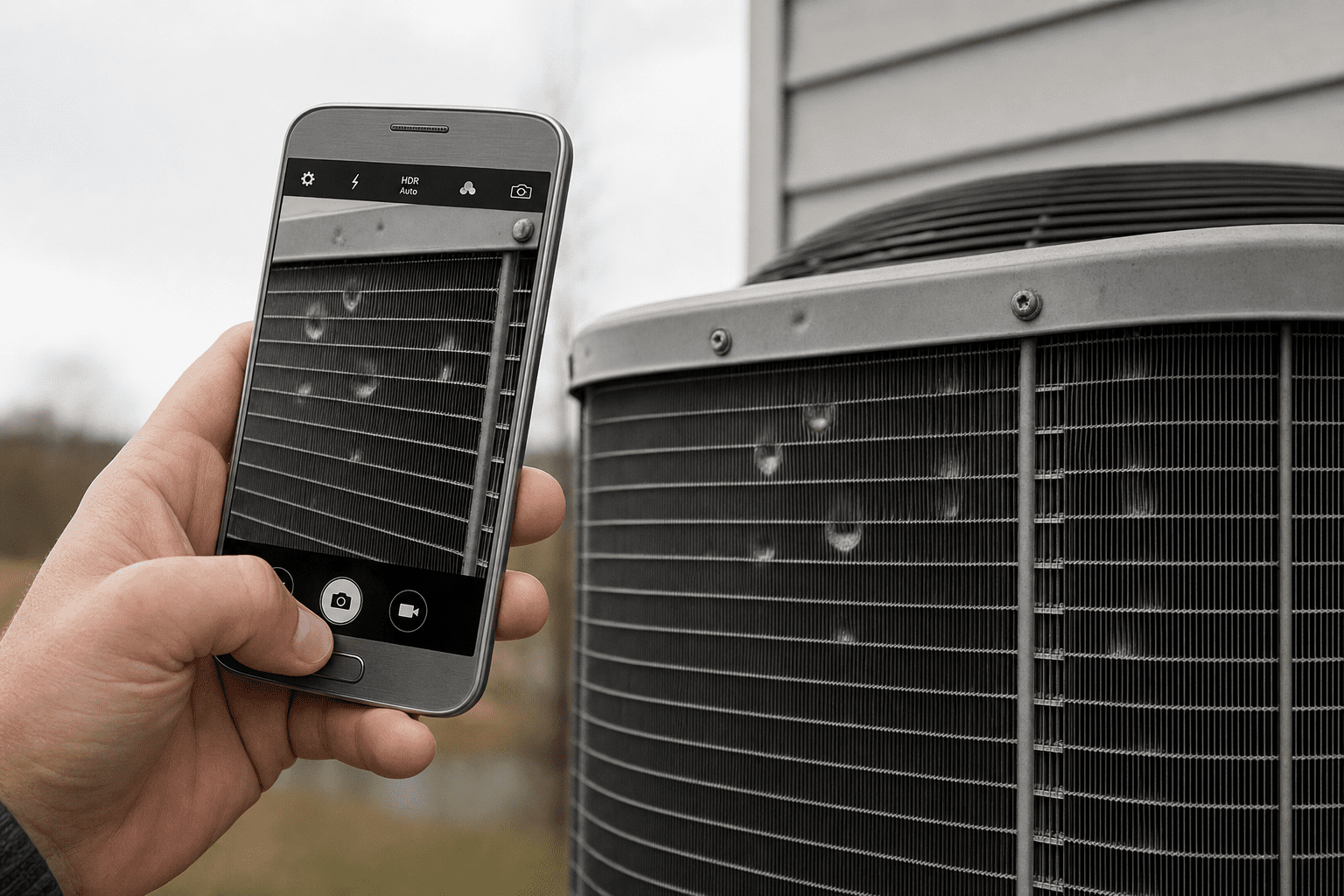
Pull out your phone and take a lot of pictures. Wide shots of the whole house, then close-ups of any damage you can see — gutters, AC condenser fins, garage door dimples, downspouts, fence boards, mailbox dents. Insurance carriers love car hood photos and AC fin photos because they’re easy proof of hail size.
4. Save Hail Stones if You Can
Stick one or two of the biggest stones in a Ziploc and put them in the freezer. Photograph them next to a quarter or a ruler. Hail size is the single biggest variable in claim adjusting.
5. Check the Date and Time
Save a screenshot of any local weather alert, news report, or storm radar showing the event over your address. NWS hail reports and apps like RadarScope keep records, and you’ll want them later.
The First 24 Hours
6. Document Interior Signs Too
Walk through every room and check the ceilings for fresh stains, drips, or wet drywall. Pay extra attention to areas under skylights, plumbing stacks, and chimneys. New leaks often show up within hours.
7. Tarp Active Leaks (Carefully)
If water is actively coming in, you can put a bucket under the leak and tape plastic to the ceiling to direct it. Do not try to climb up and tarp the roof yourself — it’s how people end up in the ER.
8. Call a Local Roofer for an Inspection
This is where most homeowners go wrong. Don’t call your insurance company first. Call a trusted local roofer to come out and document the damage. They’ll get on the roof, mark hail strikes with chalk, photograph everything, and tell you whether you actually have a claim worth filing.
If they say “you don’t have enough damage to justify a claim,” that’s a roofer worth keeping. Honest roofers will tell you when not to file.
9. Do Not Sign Anything Yet
Storm chasers will be in the neighborhood within hours of the storm. Some are legit. Most are not. Anyone asking you to sign a “contingency agreement” or “assignment of benefits” before you’ve even talked to your insurance company is trying to lock you in. We covered this in detail in our storm chaser post.
Days 2 through 7
10. File the Claim with Your Insurance
Once you have an inspection in hand from a roofer who confirmed real damage, call your insurance carrier. Have your policy number ready. Document who you spoke to, when, and what they said.
11. Get a Claim Number and Adjuster Assignment
The carrier will assign an adjuster and give you a claim number. The adjuster will schedule a visit to your home, usually within 5 to 14 days.
12. Meet the Adjuster With Your Roofer Present
This is huge. Have your roofer at the inspection. The adjuster might spend 20 minutes on the roof. Your roofer can walk them through every flagged area, every chalk mark, every detail the adjuster might miss in a hurry.
If you’ve ever wondered why so many claims get denied, see our guide to insurance denial — most of it traces back to incomplete adjuster inspections.
13. Save Every Receipt
Tarp materials, towels, fans, dehumidifiers, hotel stays if you had to evacuate. Most policies cover reasonable mitigation expenses. Keep receipts.
Days 7 through 30
14. Read the Adjuster’s Report Carefully
You’ll get a scope of work and a payment estimate. Compare it line-by-line against what your roofer documented. If items are missing, that’s normal — adjusters work fast and miss things. Your roofer can submit a supplement to the carrier with the missing scope.
15. Pick Your Roofer (For Real Now)
Once the claim is approved, you choose who does the work. Your insurance carrier doesn’t pick for you, and you don’t have to use whoever knocked on your door first. Get the actual repair from a local company with a real address, real warranty, and real reputation.
16. Don’t Pay Your Deductible to the Roofer
Texas Insurance Code §707 makes it illegal for a contractor to pay, waive, or rebate your deductible. If they offer, they’re crossing a line that can void your claim. Pay your deductible to the roofer as part of normal payment — that’s it.
17. Get the Permit and Schedule the Work
Your roofer should pull the permit. Most Austin-area jurisdictions require it for replacements. Schedule the work for a stretch of dry weather — Central Texas summers are usually predictable enough for this.
What If My Claim Gets Denied?
Don’t panic. Denials get reversed all the time when there’s good documentation. The fastest path forward is a re-inspection with a GAF Certified or experienced roofer who can submit additional evidence, or in some cases, a public adjuster. We walked through the denial reversal process in detail here.
Frequently Asked Questions
How long do I have to file a hail damage claim in Texas?
Most policies require notice within one year of the storm date, but some carriers have shorter windows. Check your specific policy. The sooner the better — fresh damage is easier to document and harder for a carrier to argue is wear and tear.
Will filing a hail claim raise my insurance premium?
Hail and other “act of God” claims are generally non-fault and don’t directly raise your individual premium the way an at-fault auto claim would. Carriers do raise rates regionally after big storm seasons, regardless of whether you filed.
Can I file a claim if the hail was small?
Yes, if it caused damage. Hail as small as 1 inch can dent shingles and bruise the underlying mat, especially on older roofs. Get an inspection — don’t assume small hail means no damage.
What’s the average payout for a hail damage roof claim in Austin?
Full replacement claims in Central Texas typically settle between $14,000 and $28,000 depending on home size, roof complexity, and shingle grade. Partial repair claims are usually $1,500 to $5,000.
Should I get multiple roofer inspections after a storm?
One thorough inspection from a trusted local roofer is usually enough. If your first roofer says you have no claim and you want a second opinion, that’s reasonable, but be wary of any roofer who promises a paid claim before they’ve been on the roof.
What if I haven’t filed and the storm was months ago?
You can still file as long as you’re inside your policy’s notice window. The bigger challenge is proving the damage came from that specific storm versus normal wear or a later event. Date-stamped photos and weather records are your friends here.
The Bottom Line
The homeowners who come out of a hail event well aren’t the ones who moved fastest — they’re the ones who moved deliberately. Document, inspect, file, repair, in that order. Don’t let anyone push you off that sequence.
If you’ve had a hailstorm hit your house in the last few weeks and you’re not sure what your roof looks like, we’ll come out and walk it for free. No claim, no obligation, just a real answer. Call (512) 677-6011 or schedule online at roofsonly.com.
